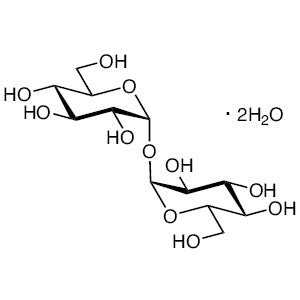
Trehalose Dihydrate is a carbohydrate compound widely used in scientific and industrial applications. As a natural sugar, it has a unique molecular structure composed of two glucose molecules linked covalently. In the laboratory, it serves as a key reagent for the synthesis of other compounds and is commonly utilized in biochemical and pharmacological research. Its versatility makes it an essential component in various experimental setups, supporting both basic and applied research.
The properties that make Trehalose Dihydrate a preferred choice include its chemical stability against heat and light, which ensures consistent performance across different experimental conditions. It also exhibits high solubility in water, making it easy to incorporate into aqueous solutions. Additionally, its resistance to degradation and hydrolysis under normal conditions simplifies storage and long-term use. These characteristics contribute to its reliability in laboratory settings.
In Indonesian laboratories, Trehalose Dihydrate is frequently used in biochemical, pharmacological, and biotechnological research. It plays a vital role in studies related to metabolism, protein stabilization, and cellular protection. Its hydrophobic nature also makes it suitable for specific applications in pharmaceutical and molecular biology research, enhancing its utility across diverse scientific fields.
TCI brochures (PDF)
- Obesity_Diabete Research Reagents 2026-07-10 · p. 1
- Reagents for Glyco Chemistry & Biology 5th Edition · p. 88
- Reagents for Biological Research 2025-03-11 · p. 52
Related TCI products
- Biochemical research utilizes Trehalose Dihydrate for stabilizing proteins and enzymes during experiments due to its protective properties against denaturation.
- Pharmacological studies benefit from its use in drug formulation as it helps maintain the integrity of active ingredients under various storage conditions.
- Biotechnological applications rely on Trehalose Dihydrate for its role in preserving cell cultures and supporting the growth of sensitive biological materials.
- Metabolic studies often incorporate this compound to investigate its effects on cellular energy pathways and osmotic balance.
- Molecular biology experiments use Trehalose Dihydrate to maintain the stability of nucleic acids and other biomolecules during purification and analysis.
| Brand | TCI |
|---|---|
| CAS number | 6138-23-4 |
| Molecular formula | — |
| Purity | — |
| Category | Chemistry > Chemical Biology > Glycoscience |
| Pack sizes | Available in various quantities as per supplier specifications |
| Physical form | White crystalline powder |
| Storage | Store in a cool, dry place away from direct sunlight |
Trehalose Dihydrate should be stored in a cool, dry environment to maintain its chemical stability and prevent moisture absorption. It is recommended to use airtight containers to protect it from humidity and potential contamination. Since it is a fine powder, it should be handled with care to avoid inhalation or skin contact. Proper personal protective equipment, such as gloves and safety goggles, should be worn during handling. It is not flammable and does not react with common laboratory reagents, making it safe for routine use in standard laboratory conditions. Regular inspection of storage conditions ensures the material remains in optimal condition for research applications.
—
Product Categories
- GlycoscienceApplications Using Glyco-materialsGlyco-utilization [Applications Using Glyco-materials]
- GlycoscienceApplications Using Glyco-materialsGlyco-chemical Analysis [Applications Using Glyco-materials]
- GlycoscienceDisaccharides [Glycoscience]
- GlycoscienceFunctional OligosaccharidesNatural Oligosaccharides [Functional Oligosaccharides]
- GlycoscienceFunctional OligosaccharidesNatural Glycosides [Functional Oligosaccharides]
- Biochemicals and ReagentsCarbohydrates
- Cell BiologyNutrition ResearchSweetener Research Reagents (for Experimental Use)
- Cell BiologyObesity and Diabetes ResearchSweetener Research Reagents (for Experimental Use)
Produk Terkait
-
D-(+)-TrehaloseAnhydrous TCI T0832
Regular price From Rp 1.167.600,00Regular priceRp 831.600,00Sale price From Rp 1.167.600,00 -
PalatinoseHydrate TCI P1234
Regular price From Rp 717.150,00Regular priceRp 516.600,00Sale price From Rp 717.150,00 -
MonoammoniumGlycyrrhizinate TCI G0151
Regular price Rp 769.650,00Regular priceRp 553.350,00Sale price Rp 769.650,00 -
D-(+)-MelibioseMonohydrate TCI M0050
Regular price From Rp 557.550,00Regular priceRp 405.300,00Sale price From Rp 557.550,00 -
MonoammoniumGlycyrrhizinate TCI M3857
Regular price From Rp 662.550,00Regular priceRp 478.800,00Sale price From Rp 662.550,00 -
2-O-alpha-D-Glucopyranosyl-L-ascorbicAcid TCI G0394
Regular price From Rp 1.113.000,00Regular priceRp 793.800,00Sale price From Rp 1.113.000,00 -
Xylobiose TCI X0067
Regular price From Rp 4.320.750,00Regular priceRp 3.036.600,00Sale price From Rp 4.320.750,00 -
Xylosucrose TCI X0065
Regular price From Rp 2.093.700,00Regular priceRp 1.479.450,00Sale price From Rp 2.093.700,00