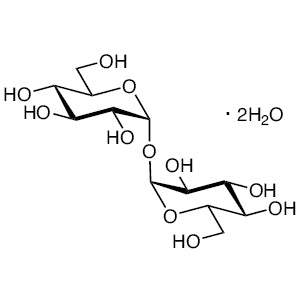
TCI T0832 99-20-7 D-(+)-Trehalose Anhydrous is a chemical compound widely utilized in laboratory settings, particularly within the fields of chemical biology and glycoscience. As a naturally occurring disaccharide, it is known for its exceptional stability and resistance to degradation, making it a valuable tool for researchers. Its unique properties allow it to serve as a protective agent for biological materials under extreme conditions, such as high temperatures or mechanical stress. This compound is especially useful in preserving the integrity of proteins and enzymes during storage and packaging processes.
The preferred choice for many laboratory applications is due to its high purity, molecular symmetry, and non-hydrolytic nature. These characteristics ensure consistent performance across various experimental conditions, including different pH levels and temperature ranges. Additionally, its ability to form complexes with proteins makes it an ideal candidate for biochemical and pharmacological research. The stability of TCI T0832 ensures that it remains effective even when exposed to prolonged storage or repeated use, enhancing its reliability in scientific studies.
In Indonesian laboratories, TCI T0832 is commonly used in biotechnology, pharmaceutical, and food chemistry research. Its non-toxic and stable nature makes it suitable for applications requiring high safety standards. Researchers in Indonesia rely on this compound for its versatility and reliability, ensuring accurate and reproducible results in their experiments. Its widespread use underscores its importance in advancing scientific research in the region.
TCI brochures (PDF)
- Obesity_Diabete Research Reagents 2026-07-10 · p. 1
- Reagents for Glyco Chemistry & Biology 5th Edition · p. 88
- Reagents for Biological Research 2025-03-11 · p. 52
- Biochemical research utilizes TCI T0832 for its ability to stabilize proteins and enzymes during storage, ensuring consistent experimental outcomes.
- Pharmaceutical development benefits from its protective properties, making it ideal for preserving drug formulations under extreme conditions.
- Food chemistry applications rely on its stability and non-hydrolytic nature to maintain the integrity of food components during processing.
- Biotechnology experiments use TCI T0832 as a protective agent for cellular structures, enhancing the viability of biological samples.
- Glycoscience studies leverage its molecular symmetry and stability for accurate structural analysis and functional studies.
| Brand | TCI |
|---|---|
| CAS number | 99-20-7 |
| Molecular formula | — |
| Purity | — |
| Category | Chemistry > Chemical Biology > Glycoscience |
| Pack sizes | — |
| Physical form | Anhydrous powder |
| Storage | Store in a cool, dry place away from moisture and direct sunlight. |
TCI T0832 should be stored in a cool, dry environment to maintain its stability and prevent degradation. It is recommended to keep the compound in a sealed container to avoid exposure to moisture and humidity. Due to its non-hydrolytic nature, it remains chemically inert under normal laboratory conditions. When handling, it is advisable to use appropriate personal protective equipment to ensure safety. The compound is non-toxic and safe for use in standard laboratory practices, making it suitable for routine handling. Proper storage and handling protocols help preserve its quality and effectiveness for extended use in research applications.
—
Product Categories
- GlycoscienceApplications Using Glyco-materialsGlyco-chemical Analysis [Applications Using Glyco-materials]
- GlycoscienceDisaccharides [Glycoscience]
- GlycoscienceFunctional OligosaccharidesNatural Oligosaccharides [Functional Oligosaccharides]
- GlycoscienceFunctional OligosaccharidesNatural Glycosides [Functional Oligosaccharides]
- Biochemicals and ReagentsCarbohydrates
- Cell BiologyNutrition ResearchSweetener Research Reagents (for Experimental Use)
- Cell BiologyObesity and Diabetes ResearchSweetener Research Reagents (for Experimental Use)
Produk Terkait
-
D-(+)-TrehaloseDihydrate TCI T0331
Regular price From Rp 557.550,00Regular priceRp 405.300,00Sale price From Rp 557.550,00 -
PalatinoseHydrate TCI P1234
Regular price From Rp 717.150,00Regular priceRp 516.600,00Sale price From Rp 717.150,00 -
MonoammoniumGlycyrrhizinate TCI G0151
Regular price Rp 769.650,00Regular priceRp 553.350,00Sale price Rp 769.650,00 -
Xylobiose TCI X0067
Regular price From Rp 4.320.750,00Regular priceRp 3.036.600,00Sale price From Rp 4.320.750,00 -
Xylosucrose TCI X0065
Regular price From Rp 2.093.700,00Regular priceRp 1.479.450,00Sale price From Rp 2.093.700,00 -
D-(+)-MelibioseMonohydrate TCI M0050
Regular price From Rp 557.550,00Regular priceRp 405.300,00Sale price From Rp 557.550,00 -
Lactulose TCI L0140
Regular price Rp 2.068.500,00Regular priceRp 1.461.600,00Sale price Rp 2.068.500,00 -
D-(+)-LactoseMonohydrate TCI L0008
Regular price Rp 637.350,00Regular priceRp 460.950,00Sale price Rp 637.350,00