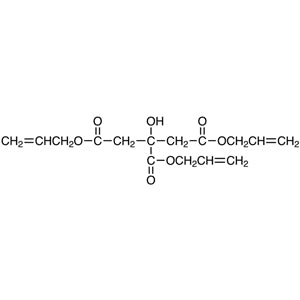
Triallyl Cyanurate (TCI T0333), with CAS number 101-37-1, is a chemical compound widely used in scientific and industrial applications, particularly in the fields of materials science and polymer chemistry. This compound is a key reagent in polymer synthesis due to its unique molecular structure, which consists of three allyl groups attached to a cyanurate core. Its versatility makes it a valuable tool in laboratories for developing advanced materials and polymers. As a monomer, it plays a crucial role in creating composite materials and thermoplastic polymers, supporting innovation in both academic and industrial research settings.
The reactivity and chemical stability of Triallyl Cyanurate make it a preferred choice for polymerization studies and material modification. It exhibits the ability to undergo both thermal and photopolymerization, which is essential for producing polymers with desirable mechanical and thermal properties. This dual reactivity enables researchers to tailor the properties of the final product, making it ideal for applications requiring high-performance materials. Its stability under controlled conditions further enhances its reliability in laboratory environments.
In Indonesian laboratories, Triallyl Cyanurate is commonly used in scientific research, especially in material technology and industrial chemistry. It is a key component in the development of new materials and polymers, contributing to advancements in various scientific disciplines. Its availability and performance make it a sought-after reagent for researchers aiming to explore innovative material solutions.
TCI brochures (PDF)
- Monomers 2025-05-28 · p. 18
Related TCI products
- Polymer synthesis for creating composite and thermoplastic materials due to its reactivity and structural versatility.
- Material modification research to enhance mechanical and thermal properties of polymers through controlled polymerization.
- Photopolymerization studies for applications requiring light-induced polymer formation in advanced material development.
- Industrial chemistry applications in the production of high-performance polymers for specialized engineering and manufacturing needs.
- Scientific research in material science for exploring new polymer structures and improving existing material properties.
| Brand | TCI |
|---|---|
| CAS number | 101-37-1 |
| Molecular formula | — |
| Purity | — |
| Category | Materials Science > Polymer/Macromolecule Reagents > Monomers |
| Pack sizes | Available in various quantities as per supplier specifications |
| Physical form | Solid |
| Storage | Store in a cool, dry place away from direct sunlight and heat sources |
Triallyl Cyanurate should be stored in a cool, dry environment, away from direct sunlight and heat sources to maintain its chemical stability. It is recommended to use sealed containers made of materials that are chemically inert to prevent degradation. Due to its reactivity, it should be handled with care, using appropriate personal protective equipment such as gloves and safety goggles. Avoid exposure to high temperatures or UV radiation during storage and use. Ensure proper ventilation in the laboratory to minimize inhalation risks. Keep the material in a secure location, away from incompatible substances to prevent unwanted reactions. Always follow standard laboratory safety protocols when handling this compound.
—
Produk Terkait
-
Triallyl1,3,5-Benzenetricarboxylate TCI T1203
Regular price Rp 4.479.300,00Regular priceRp 3.132.150,00Sale price Rp 4.479.300,00 -
TriallylPhosphate TCI P0264
Regular price From Rp 4.929.750,00Regular priceRp 3.462.900,00Sale price From Rp 4.929.750,00 -
TriallylIsocyanurate(stabilizedwithBHT) TCI I0279
Regular price From Rp 742.350,00Regular priceRp 534.450,00Sale price From Rp 742.350,00 -
TriallylCitrate TCI C1038
Regular price Rp 1.908.900,00Regular priceRp 1.334.550,00Sale price Rp 1.908.900,00 -
TriallylPhosphite TCI P3270
Regular price From Rp 1.510.950,00Regular priceRp 1.056.300,00Sale price From Rp 1.510.950,00 -
2,4,6-Trimethyl-2,4,6-trivinylcyclotrisiloxane TCI T3745
Regular price From Rp 689.850,00Regular priceRp 497.700,00Sale price From Rp 689.850,00 -
DiallylTerephthalate TCI T1483
Regular price Rp 1.273.650,00Regular priceRp 890.400,00Sale price Rp 1.273.650,00 -
9,9-Bis(4-allyloxyphenyl)fluorene TCI B4622
Regular price From Rp 3.155.250,00Regular priceRp 2.206.050,00Sale price From Rp 3.155.250,00