9,9-Bis(4-allyloxyphenyl)fluorene is a chemical compound widely used in materials science and polymer chemistry. It serves as a monomer in the synthesis of complex polymers, particularly in the development of conductive polymers or polymers with specific optical properties. This compound is essential for researchers working on organic materials, such as in the fabrication of polymer films or organic electronic components. Its role in laboratory settings is critical for creating compounds with defined structures, which are vital for the advancement of new material technologies.
The compound's molecular structure features a complex fluorene core with allyloxy side chains, contributing to its high reactivity. This reactivity makes it suitable for polymerization reactions and other chemical processes requiring active functional groups. Its ability to participate in various chemical transformations enhances its versatility in synthetic applications. The chemical stability of 9,9-Bis(4-allyloxyphenyl)fluorene under specific conditions also ensures reliable performance during laboratory experiments, making it a preferred choice for researchers.
In Indonesian laboratories, this compound is commonly used in research focused on organic materials and polymer synthesis. It is a key component in the development of advanced materials for electronic and optoelectronic applications. Its availability and chemical properties make it a standard material in material science research, supporting innovation in both academic and industrial settings.
TCI brochures (PDF)
- Fluorenes and Fluorenones 2026-04-15 · p. 5
- Monomers 2025-05-28 · p. 17
Related TCI products
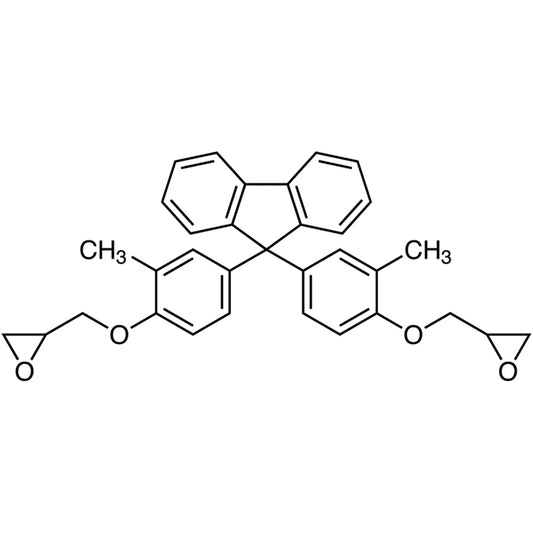
- TCI B4666 114205-89-9 9,9-Bis(4-glycidyloxy-3-methylphenyl)fluorene
- TCI B4269 47758-37-2 9,9-Bis(4-glycidyloxyphenyl)fluorene
- TCI B2693 107934-60-1 9,9-Bis(4-amino-3-methylphenyl)fluorene
- TCI B2691 127926-65-2 9,9-Bis(4-amino-3-fluorophenyl)fluorene
- TCI B2690 107934-68-9 9,9-Bis(4-amino-3-chlorophenyl)fluorene
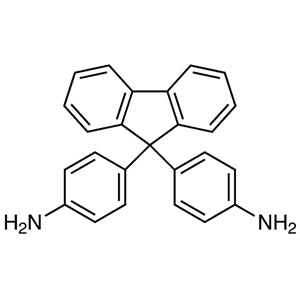
- TCI B2654 15499-84-0 9,9-Bis(4-aminophenyl)fluorene (purified by sublimation)
- Organic Electronics Research – This compound is ideal for synthesizing organic semiconductors due to its conjugated structure and reactivity, enabling the development of flexible and efficient electronic devices.
- Polymer Film Fabrication – Its ability to form complex polymer structures makes it suitable for creating thin films with tailored optical and electrical properties for various applications.
- Conductive Polymer Development – The allyloxy groups allow for controlled polymerization, making it a valuable reagent in the creation of conductive polymers used in sensors and energy storage.
- Material Science Innovation – Researchers use it to explore new material properties, such as thermal stability and mechanical strength, in the context of advanced material design.
- Optical Material Synthesis – Its molecular structure supports the development of materials with specific optical responses, useful in photonic and display technologies.
| Brand | — |
|---|---|
| CAS number | — |
| Molecular formula | — |
| Purity | — |
| Category | — |
| Pack sizes | — |
| Physical form | — |
| Storage | — |
- Brand – TCI
- CAS Number – 142494-81-3
- Category – Materials Science > Polymer/Macromolecule Reagents > Monomers
- Pack Sizes – Available in standard laboratory quantities
- Physical Form – Solid, crystalline appearance
- Storage Note – Store in a cool, dry place away from light and moisture
This compound should be stored in a cool, dry environment, away from direct light and moisture to maintain its chemical stability. It is recommended to use airtight containers to prevent exposure to air and humidity, which may affect its reactivity. In laboratory settings, it should be handled with appropriate personal protective equipment, such as gloves and safety goggles, to ensure safe handling. Due to its reactive nature, it should be stored separately from incompatible substances to avoid unwanted chemical interactions. Proper labeling and storage conditions are essential to ensure the material remains effective for research applications. Always follow standard laboratory safety protocols when working with this compound.
—
Produk Terkait
-
9,9-Bis(4-glycidyloxy-3-methylphenyl)fluorene TCI B4666
Regular price From Rp 2.518.950,00Regular priceRp 1.760.850,00Sale price From Rp 2.518.950,00 -
9,9-Bis(4-glycidyloxyphenyl)fluorene TCI B4269
Regular price From Rp 1.035.300,00Regular priceRp 723.450,00Sale price From Rp 1.035.300,00 -
9,9-Bis(4-amino-3-methylphenyl)fluorene TCI B2693
Regular price From Rp 1.060.500,00Regular priceRp 757.050,00Sale price From Rp 1.060.500,00 -
9,9-Bis(4-amino-3-fluorophenyl)fluorene TCI B2691
Regular price Rp 8.983.800,00Regular priceRp 6.297.900,00Sale price Rp 8.983.800,00 -
9,9-Bis(4-amino-3-chlorophenyl)fluorene TCI B2690
Regular price Rp 2.835.000,00Regular priceRp 1.998.150,00Sale price Rp 2.835.000,00 -
9,9-Bis(4-aminophenyl)fluorene(purifiedbysublimation) TCI B2654
Regular price Rp 2.650.200,00Regular priceRp 1.869.000,00Sale price Rp 2.650.200,00 -
9,9-Bis(4-hydroxyphenyl)fluorene TCI B1715
Regular price From Rp 1.829.100,00Regular priceRp 1.278.900,00Sale price From Rp 1.829.100,00 -
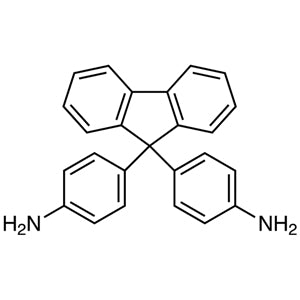
9,9-Bis(4-aminophenyl)fluorene TCI B1549
Regular price From Rp 3.365.250,00Regular priceRp 2.368.800,00Sale price From Rp 3.365.250,00