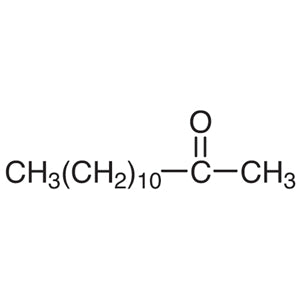
Tridecanal is a chemical compound widely used in laboratory settings for constructing complex molecular structures. As a non-heterocyclic building block, it plays a crucial role in organic synthesis by providing a versatile platform for chemical modifications. Its aliphatic structure allows it to participate in various reactions, making it a valuable tool for researchers aiming to develop new compounds. In the laboratory, Tridecanal is often used as a starting material for further chemical transformations, contributing to the development of advanced chemical products.
One of the key properties that make Tridecanal a preferred choice is its chemical stability under controlled conditions. However, it is also sensitive to oxidation and reactive with active chemical agents. This sensitivity necessitates careful handling and storage to maintain its integrity. Additionally, its liquid form facilitates easy handling and integration into a wide range of chemical reactions, enhancing its usability in both academic and industrial research environments.
In Indonesian laboratories, Tridecanal is commonly found in organic chemistry research, particularly in higher education institutions and research centers. Its role in synthesizing long-chain compounds makes it an essential component in studies involving molecular structure development. Due to its reactivity and versatility, it is frequently used in experiments that require precise chemical manipulation and controlled reaction conditions.
TCI brochures (PDF)
- Lipids 2025-12-17 · p. 14
- Organic synthesis applications benefit from Tridecanal's ability to serve as a building block for creating complex molecular structures.
- It is ideal for long-chain compound development due to its aliphatic structure, which supports the formation of extended carbon chains.
- Tridecanal is suitable for controlled chemical reactions where stability and reactivity can be manipulated under specific conditions.
- It is used in research that requires precise handling and modification of chemical compounds in a laboratory setting.
- Its liquid form makes it practical for integration into various synthetic pathways, enhancing experimental flexibility and efficiency.
| Brand | TCI |
|---|---|
| CAS number | 10486-19-8 |
| Molecular formula | — |
| Purity | — |
| Category | Chemistry > Building Blocks > Non-Heterocyclic Building Blocks |
| Pack sizes | Available in standard laboratory quantities |
| Physical form | Liquid |
| Storage | Requires controlled storage conditions to prevent oxidation and degradation |
Tridecanal should be stored in a cool, dark place away from sources of heat and direct sunlight to maintain its chemical stability. It is recommended to use sealed containers made of materials that are chemically inert to prevent unwanted reactions. Due to its sensitivity to oxidation, it should be kept in an environment with minimal exposure to air. Proper ventilation is essential when handling this compound to minimize the risk of inhalation. Laboratory personnel should wear appropriate personal protective equipment, including gloves and safety goggles, to ensure safe handling. Regular monitoring of storage conditions is necessary to maintain the integrity of the compound and ensure its effectiveness in chemical applications.
—
Produk Terkait
-
12-Methyltridecanal TCI M3275
Regular price Rp 5.910.450,00Regular priceRp 4.132.800,00Sale price Rp 5.910.450,00 -
TridecanedioicAcid TCI T0021
Regular price From Rp 980.700,00Regular priceRp 701.400,00Sale price From Rp 980.700,00 -
Tridecanophenone TCI T1087
Regular price Rp 1.405.950,00Regular priceRp 982.800,00Sale price Rp 1.405.950,00 -
MethylTridecanoate TCI T0960
Regular price Rp 1.563.450,00Regular priceRp 1.108.800,00Sale price Rp 1.563.450,00 -
EthylTridecanoate TCI T0959
Regular price From Rp 875.700,00Regular priceRp 627.900,00Sale price From Rp 875.700,00 -
2-Tridecanone TCI T0415
Regular price Rp 1.458.450,00Regular priceRp 1.019.550,00Sale price Rp 1.458.450,00 -
TridecanoicAcid TCI T0412
Regular price From Rp 3.843.000,00Regular priceRp 2.702.700,00Sale price From Rp 3.843.000,00 -
7-Tridecanone TCI D1546
Regular price From Rp 1.618.050,00Regular priceRp 1.130.850,00Sale price From Rp 1.618.050,00