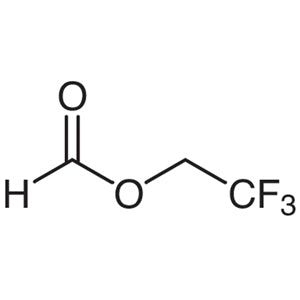
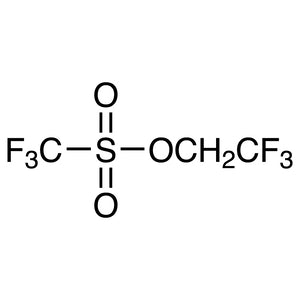
2,2,2-Trifluoroethanol is a versatile chemical compound widely used in laboratory settings for its unique properties and broad applicability. As a fluorinated building block, it plays a crucial role in organic synthesis and chemical reactions that require a polar solvent with high electronegativity. Its ability to dissolve a wide range of organic and inorganic compounds makes it an essential reagent in many experimental processes. This compound is particularly valuable in analytical and preparative chemistry due to its stability and compatibility with various reaction conditions.
The chemical properties of 2,2,2-Trifluoroethanol make it a preferred choice in laboratory environments. It exhibits high solubility and chemical stability, which ensures consistent performance in different reaction setups. Its high boiling point allows for controlled heating and cooling processes, making it suitable for applications that require precise temperature regulation. Additionally, its polar nature and electronegativity enable it to participate in fluorination reactions and substitution processes, enhancing its utility in synthetic chemistry.
In Indonesian laboratories, 2,2,2-Trifluoroethanol is commonly used in research related to organic synthesis, chemical analysis, and the development of new materials. It is a preferred solvent in both academic and industrial research settings due to its reliability and effectiveness. Its application is particularly prevalent in chemical laboratories that require a solvent with high polarity and electronegativity for complex reactions and analytical procedures.
TCI brochures (PDF)
- Fluorinated Alcohol with Unique Properties HFIP 2025-02-03 · p. 2
- Binuclear Rhodium Complexes Effective for Small and Medium-ring Formation 2025-06-05 · p. 2
- Fluorous Chemistry 2025-01-21 · p. 5
- Reagents for Biological Research 2025-03-11 · p. 23
- Fluorination Reagents, Fluorinated Building Blocks 2026-03-18 · p. 54
Related TCI products
- TCI D4128 359-13-7 2,2-Difluoroethanol
- TCI B2274 16184-89-7 1-(4-Bromophenyl)-2,2,2-trifluoroethanone
- TCI D2220 354-51-8 1,2-Dibromo-1-chloro-1,2,2-trifluoroethane
- TCI H0424 920-66-1 1,1,1,3,3,3-Hexafluoropropan-2-ol
- TCI T3991 370-69-4 Tris(2,2,2-trifluoroethyl) Phosphite
- TCI T3422 406-95-1 2,2,2-Trifluoroethyl Acetate
- Organic synthesis reactions benefit from 2,2,2-Trifluoroethanol due to its polarity and solubility properties, enabling efficient reaction conditions and product isolation.
- Chemical analysis processes utilize this compound as a solvent because of its ability to dissolve a wide range of compounds, enhancing the accuracy of analytical techniques.
- Fluorination reactions are supported by 2,2,2-Trifluoroethanol, as its electronegative nature facilitates the introduction of fluorine atoms into organic molecules.
- Solvent systems in chromatography and spectroscopy rely on this compound for its stability and compatibility with various detection methods.
- Material development research employs 2,2,2-Trifluoroethanol as a medium for synthesizing new compounds with desired physical and chemical properties.
From the TCI brochure
- Solvent in aziridine ring formation
| Brand | TCI |
|---|---|
| CAS number | 75-89-8 |
| Molecular formula | — |
| Purity | — |
| Category | Chemistry > Building Blocks > Fluorinated Building Blocks |
| Pack sizes | Available in various sizes as per standard laboratory supply |
| Physical form | Liquid |
| Storage | Store in a cool, dark place away from heat and direct sunlight |
2,2,2-Trifluoroethanol should be stored in a cool, dark location, away from heat and direct sunlight to maintain its chemical stability. It is recommended to use sealed containers made of materials compatible with fluorinated solvents, such as glass or high-density polyethylene. Due to its polar nature, it is important to handle the compound in a well-ventilated area to prevent inhalation of vapors. Avoid contact with incompatible substances, and ensure proper personal protective equipment is worn when handling. Regular monitoring of storage conditions is essential to ensure the compound remains safe and effective for laboratory use.
—
Produk Terkait
-
2,2-Difluoroethanol TCI D4128
Regular price From Rp 1.510.950,00Regular priceRp 1.056.300,00Sale price From Rp 1.510.950,00 -
1-(4-Bromophenyl)-2,2,2-trifluoroethanone TCI B2274
Regular price Rp 2.147.250,00Regular priceRp 1.517.250,00Sale price Rp 2.147.250,00 -
1,2-Dibromo-1-chloro-1,2,2-trifluoroethane TCI D2220
Regular price Rp 2.466.450,00Regular priceRp 1.724.100,00Sale price Rp 2.466.450,00 -
1,1,1,3,3,3-Hexafluoropropan-2-ol TCI H0424
Regular price From Rp 1.803.900,00Regular priceRp 1.261.050,00Sale price From Rp 1.803.900,00 -
Tris(2,2,2-trifluoroethyl)Phosphite TCI T3991
Regular price From Rp 1.538.250,00Regular priceRp 1.075.200,00Sale price From Rp 1.538.250,00 -
2,2,2-TrifluoroethylAcetate TCI T3422
Regular price From Rp 795.900,00Regular priceRp 556.500,00Sale price From Rp 795.900,00 -
2,2,2-TrifluoroethylFormate TCI T2586
Regular price From Rp 769.650,00Regular priceRp 537.600,00Sale price From Rp 769.650,00 -
2,2,2-TrifluoroethylTrifluoromethanesulfonate TCI T1604
Regular price From Rp 3.232.950,00Regular priceRp 2.260.650,00Sale price From Rp 3.232.950,00