2-Thiophenecarboxaldehyde (stabilized with HQ) is a chemical compound widely used in laboratory settings as a building block for the synthesis of heterocyclic compounds. Its molecular structure consists of a thiophene ring linked to an aldehyde group, making it a valuable intermediate in organic chemistry. This compound plays a crucial role in the development of complex molecular structures, particularly in research focused on pharmaceuticals, materials science, and organic synthesis. Due to its versatility, it is frequently employed in both academic and industrial laboratories to create new compounds with potential applications in various scientific fields.
The stability of 2-Thiophenecarboxaldehyde is enhanced through the use of hydroquinone (HQ) as a stabilizer, which significantly improves its shelf life and reduces the risk of degradation during storage and handling. This makes it a preferred choice for laboratories that require reliable and consistent chemical performance over extended periods. The stabilization process ensures that the compound maintains its chemical integrity, allowing for accurate and reproducible results in experimental procedures.
In Indonesian laboratories, 2-Thiophenecarboxaldehyde is commonly used in organic chemistry research, especially in the development of new compounds with potential medical or industrial applications. It is also utilized in educational settings to introduce students to the principles of organic reactions and synthetic chemistry. Its presence in both research and teaching environments highlights its importance as a fundamental reagent in chemical experimentation.
TCI brochures (PDF)
- Thiophenes 2026-06-29 · p. 8
Related TCI products
- Organic synthesis applications benefit from this compound's ability to form stable intermediates in the creation of heterocyclic structures, essential for drug development and material science.
- Pharmaceutical research utilizes this compound to design and synthesize new therapeutic agents, leveraging its reactivity in complex molecular frameworks.
- Material science applications rely on its role in constructing functional polymers and advanced materials with specific chemical properties.
- Educational institutions use it to demonstrate key reactions in organic chemistry, providing students with hands-on experience in synthetic methodologies.
- Industrial laboratories incorporate it into large-scale production processes for the development of specialty chemicals and fine chemicals.
| Brand | TCI |
|---|---|
| CAS number | 98-03-3 |
| Molecular formula | — |
| Purity | — |
| Category | Chemistry > Building Blocks > Heterocyclic Building Blocks |
| Pack sizes | Available in various quantities as per standard laboratory supply formats |
| Physical form | Solid or liquid, depending on packaging and storage conditions |
| Storage | Store in a cool, dry place away from light and moisture |
This compound should be stored in a cool, dry environment, away from direct sunlight and sources of heat. It is recommended to use sealed containers to prevent exposure to moisture and air, which may affect its stability. Proper ventilation should be maintained in the laboratory to minimize inhalation risks. Handling should be done with appropriate personal protective equipment, including gloves and safety goggles, to ensure safety during use. The compound should be kept in a secure location, away from incompatible materials such as strong oxidizing agents. Regular monitoring of storage conditions is advised to maintain the integrity and usability of the compound over time.
—
Produk Terkait
-
3-Thiophenecarboxaldehyde TCI T0864
Regular price From Rp 1.405.950,00Regular priceRp 998.550,00Sale price From Rp 1.405.950,00 -
2-Thiophenecarboxamide TCI T1252
Regular price Rp 1.458.450,00Regular priceRp 1.035.300,00Sale price Rp 1.458.450,00 -
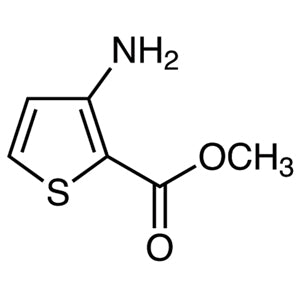
Methyl3-Amino-2-thiophenecarboxylate TCI A1039
Regular price From Rp 1.590.750,00Regular priceRp 1.127.700,00Sale price From Rp 1.590.750,00 -
2-ThiophenecarboxylicHydrazide TCI T1140
Regular price Rp 2.491.650,00Regular priceRp 1.757.700,00Sale price Rp 2.491.650,00 -
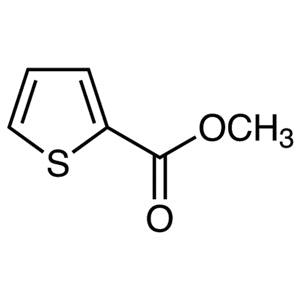
Methyl2-Thiophenecarboxylate TCI T1139
Regular price From Rp 900.900,00Regular priceRp 645.750,00Sale price From Rp 900.900,00 -
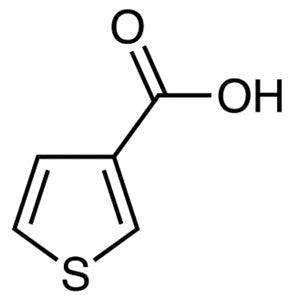
3-ThiophenecarboxylicAcid TCI T1084
Regular price From Rp 1.696.800,00Regular priceRp 1.202.250,00Sale price From Rp 1.696.800,00 -
Ethyl2-Thiophenecarboxylate TCI T0904
Regular price From Rp 1.087.800,00Regular priceRp 775.950,00Sale price From Rp 1.087.800,00 -
2-ThiophenecarboxylicAcid TCI T0218
Regular price From Rp 1.087.800,00Regular priceRp 775.950,00Sale price From Rp 1.087.800,00