


2-(4-Thiazolyl)benzimidazole is a chemical compound widely used in laboratory settings, particularly in catalysis and inorganic chemistry. It serves as a nitrogen-donor ligand, playing a crucial role in the formation of metal complexes. These complexes are essential for various catalytic reactions and organic synthesis processes. Its unique structure, combining a benzimidazole ring with a thiazole ring, provides it with reactivity and the ability to coordinate with different metals. This makes it a valuable tool for researchers aiming to develop new catalytic systems and improve reaction efficiency.
The compound’s complex chemical structure and its ability to form stable metal complexes make it a preferred choice in modern laboratory research. Its reactivity and coordination capabilities allow it to act as both a catalyst and a co-catalyst in various chemical reactions. The presence of nitrogen atoms in its structure enhances its ability to donate electrons, which is critical for forming stable coordination bonds with transition metals. These properties contribute to its widespread use in both academic and industrial research environments.
In Indonesian laboratories, 2-(4-Thiazolyl)benzimidazole is commonly used in scientific research across universities and research institutions. Its versatility and effectiveness in catalytic applications make it a sought-after material for researchers working in the fields of chemistry and materials science. The compound’s stability under specific conditions further supports its use in a variety of experimental setups, ensuring reliable results in chemical studies.
TCI brochures (PDF)
- Agrochemical Ingredients for Research and Experimental Use 2026-01-08 · p. 5
- Plant Research Reagents 2026-02-24 · p. 11
- Ligands 2025-12-01 · p. 11
- Reagents for Biological Research 2025-03-11 · p. 56
Related TCI products
- TCI H1736 2963-66-8 2-(2-Hydroxyphenyl)-1H-benzimidazole
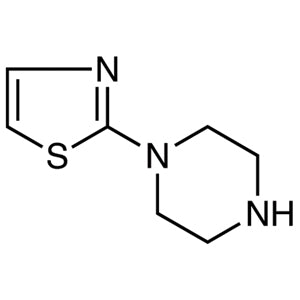
- TCI T3273 42270-37-1 1-(2-Thiazolyl)piperazine
- TCI B3602 80756-85-0 S-(2-Benzothiazolyl) (Z)-2-(2-Amino-4-thiazolyl)-2-(methoxyimino)thioacetate
- TCI A2940 40045-50-9 2-Amino-5-[(5-nitro-2-thiazolyl)thio]-1,3,4-thiadiazole
- TCI A2478 65872-41-5 (Z)-2-(2-Amino-4-thiazolyl)-2-(methoxyimino)acetic Acid
- TCI A0955 53266-94-7 Ethyl (2-Amino-4-thiazolyl)acetate
- Catalytic Reaction Development: This compound is ideal for designing and optimizing catalytic systems due to its ability to form stable metal complexes and enhance reaction efficiency.
- Organic Synthesis Research: Its reactivity and coordination properties make it a valuable reagent in the synthesis of complex organic molecules.
- Metal Complex Formation Studies: The compound is widely used in experiments aimed at understanding the behavior of metal-ligand interactions in various chemical environments.
- Materials Science Investigations: It plays a key role in the development of new materials by facilitating the formation of functional metal-based compounds.
- Environmental Chemistry Applications: Its use in catalytic processes helps reduce energy consumption and improve the sustainability of chemical reactions.
| Brand | TCI |
|---|---|
| CAS number | 148-79-8 |
| Molecular formula | — |
| Purity | — |
| Category | Chemistry > Catalysis and Inorganic Chemistry > Nitrogen-Donor Ligands [Catalysis] |
| Pack sizes | Available in various quantities as per standard laboratory supply |
| Physical form | Solid powder |
| Storage | Store in a cool, dry place away from direct sunlight and moisture |
This compound should be stored in a cool, dry environment to maintain its chemical stability and prevent degradation. It is recommended to use airtight containers to minimize exposure to moisture and air, which can affect its reactivity. Proper labeling of storage containers is essential for safety and traceability. Due to its chemical nature, it should be handled with care, using appropriate personal protective equipment such as gloves and safety goggles. Avoid direct contact with skin and inhalation of vapors. Ensure that storage areas are well-ventilated and free from incompatible materials to maintain a safe laboratory environment.
—
Product Categories
Produk Terkait
-
2-(2-Hydroxyphenyl)-1H-benzimidazole TCI H1736
Regular price From Rp 2.571.450,00Regular price -
1-(2-Thiazolyl)piperazine TCI T3273
Regular price Rp 1.326.150,00Regular price -
S-(2-Benzothiazolyl)(Z)-2-(2-Amino-4-thiazolyl)-2-(methoxyimino)thioacetate TCI B3602
Regular price Rp 610.050,00Regular price -
2-Amino-5-[(5-nitro-2-thiazolyl)thio]-1,3,4-thiadiazole TCI A2940
Regular price From Rp 3.472.350,00Regular price -
(Z)-2-(2-Amino-4-thiazolyl)-2-(methoxyimino)aceticAcid TCI A2478
Regular price From Rp 689.850,00Regular price -
Ethyl(2-Amino-4-thiazolyl)acetate TCI A0955
Regular price From Rp 848.400,00Regular price -
(2-Amino-4-thiazolyl)aceticAcid TCI A0954
Regular price From Rp 1.326.150,00Regular price -
4-(2-Methyl-4-thiazolyl)phenol[forBiochemicalResearch] TCI M2325
Regular price From Rp 1.220.100,00Regular price


![40045-50-9 2-Amino-5-[(5-nitro-2-thiazolyl)thio]-1,3,4-thiadiazole - AMI Scientific](http://amiscientific.com/cdn/shop/files/TCI2510A2940.jpg?v=1768203949&width=533)


![30686-73-8 4-(2-Methyl-4-thiazolyl)phenol [for Biochemical Research] - AMI Scientific](http://amiscientific.com/cdn/shop/files/TCI2510M2325.jpg?v=1767126460&width=533)