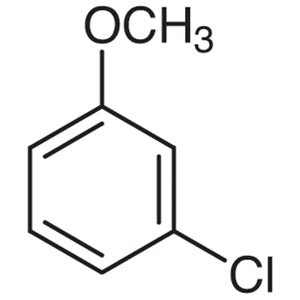
2,4,6-Trichloroanisole is a chemical compound widely used in laboratory settings for the synthesis of aromatic and heterocyclic compounds. It serves as a key building block in organic chemistry, enabling the creation of complex molecular structures through various reaction mechanisms. This compound is commonly found in chemical laboratories as a raw material for the production of advanced chemical substances. Its role as a precursor in synthetic pathways makes it essential for researchers aiming to develop new materials, pharmaceuticals, and environmental chemicals.
The chemical properties of 2,4,6-Trichloroanisole make it a preferred choice in synthetic chemistry. Its stable molecular structure and high reactivity allow it to participate effectively in substitution and electrophilic reactions. The presence of three chlorine atoms on the aromatic ring enhances its reactivity and provides versatility in synthetic applications. These characteristics make it suitable for use in controlled experimental environments where precision and reliability are critical.
In Indonesian laboratories, 2,4,6-Trichloroanisole is frequently used in research projects related to drug development, industrial chemical production, and environmental studies. Its availability and cost-effectiveness make it a popular choice among researchers and students. It is commonly used in academic and industrial settings where the synthesis of complex organic compounds is required. The compound’s utility spans across multiple scientific disciplines, supporting both basic and applied research.
- Drug development research benefits from 2,4,6-Trichloroanisole as it serves as a versatile building block for synthesizing pharmaceutical compounds with complex structures.
- Industrial chemical synthesis relies on this compound due to its reactivity and stability, allowing for the production of high-value chemical products.
- Environmental studies utilize this compound in the analysis and synthesis of pollutants and degradation products in natural systems.
- Organic chemistry experiments often incorporate 2,4,6-Trichloroanisole to demonstrate substitution and electrophilic reaction mechanisms.
- Academic research in Indonesian universities frequently uses this compound for teaching and experimental purposes in synthetic chemistry courses.
| Brand | TCI |
|---|---|
| CAS number | 87-40-1 |
| Molecular formula | — |
| Purity | — |
| Category | Chemistry > Building Blocks > Non-Heterocyclic Building Blocks |
| Pack sizes | Available in standard laboratory quantities |
| Physical form | Solid |
| Storage | Store in a cool, dry place away from light and moisture |
2,4,6-Trichloroanisole should be stored in a cool, dry environment to maintain its chemical stability. It is recommended to keep the compound in airtight containers to prevent exposure to moisture and air. Due to its reactivity, it should be handled in a well-ventilated laboratory setting to minimize inhalation risks. Appropriate personal protective equipment, such as gloves and safety goggles, should be worn when handling this compound. It is important to avoid contact with skin and eyes, and to ensure that spillage is promptly cleaned up with suitable safety measures in place. Proper storage and handling practices help ensure the safety of laboratory personnel and the integrity of the compound.
—
Produk Terkait
-
2-Bromo-5-chloroanisole TCI B3646
Regular price From Rp 2.041.200,00Regular priceRp 1.426.950,00Sale price From Rp 2.041.200,00 -
2-Bromo-4-chloroanisole TCI B3111
Regular price From Rp 505.050,00Regular priceRp 352.800,00Sale price From Rp 505.050,00 -
5-Bromo-2-chloroanisole TCI B3001
Regular price From Rp 903.000,00Regular priceRp 631.050,00Sale price From Rp 903.000,00 -
2,5-Dichloroanisole TCI D2605
Regular price From Rp 1.035.300,00Regular priceRp 723.450,00Sale price From Rp 1.035.300,00 -
2,3-Dichloroanisole TCI D2306
Regular price From Rp 1.908.900,00Regular priceRp 1.334.550,00Sale price From Rp 1.908.900,00 -
2,6-Dichloroanisole TCI D1782
Regular price Rp 2.491.650,00Regular priceRp 1.741.950,00Sale price Rp 2.491.650,00 -
2,4-Dichloroanisole TCI D0326
Regular price Rp 3.738.000,00Regular priceRp 2.613.450,00Sale price Rp 3.738.000,00 -
3-Chloroanisole TCI C1148
Regular price Rp 505.050,00Regular priceRp 352.800,00Sale price Rp 505.050,00