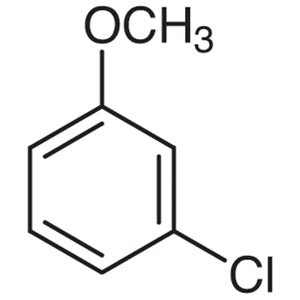
2-Bromo-4-chloroanisole is a chemical compound widely used as a foundational building block in organic synthesis. It plays a crucial role in laboratories where complex organic molecules are being developed. This compound is particularly valuable for its ability to participate in substitution and electrophilic reactions, making it a versatile reagent in synthetic pathways. Its presence in the category of non-heterocyclic building blocks highlights its importance in the development of new compounds with potential pharmaceutical or industrial applications.
The compound’s structural stability and the presence of both bromo and chloro groups contribute to its reactivity and selectivity in chemical reactions. These functional groups provide electron-withdrawing properties, which facilitate substitution reactions and enhance its utility in synthetic chemistry. The high purity and consistent quality of 2-Bromo-4-chloroanisole make it a reliable choice for research requiring precision and reproducibility. Its chemical properties ensure it remains a preferred material in various synthetic processes.
In Indonesian laboratories, 2-Bromo-4-chloroanisole is commonly used in academic and research settings. It is frequently employed in projects related to the synthesis of complex organic compounds, especially in higher education institutions and research organizations. Its role as a substrate or reagent in various synthetic processes underscores its significance in the advancement of chemical research in the region.
- Organic synthesis projects benefit from 2-Bromo-4-chloroanisole due to its reactivity and ability to undergo substitution reactions.
- Pharmaceutical research utilizes this compound for the development of new drug molecules with targeted biological activities.
- Industrial chemical processes incorporate it as a building block for the production of specialty chemicals and intermediates.
- Academic research in chemistry relies on its stability and predictable behavior in synthetic reactions.
- Analytical chemistry applications use it as a reference standard for testing and characterizing other compounds.
| Brand | TCI |
|---|---|
| CAS number | 60633-25-2 |
| Molecular formula | — |
| Purity | — |
| Category | Chemistry > Building Blocks > Non-Heterocyclic Building Blocks |
| Pack sizes | Available in various quantities as per standard laboratory supply |
| Physical form | Solid |
| Storage | Store in a cool, dry place away from light and moisture |
2-Bromo-4-chloroanisole should be stored in a cool, dry environment, away from direct sunlight and sources of heat. It is recommended to keep the compound in a sealed container to prevent moisture absorption. Suitable storage containers include glass or high-density polyethylene (HDPE) bottles with tight-fitting lids. In laboratory settings, it is important to handle the compound with appropriate personal protective equipment, such as gloves and safety goggles, to ensure safety. Avoid exposure to incompatible substances, and ensure proper ventilation when working with this material. Regular monitoring of storage conditions will help maintain its chemical integrity and ensure safe usage in research applications.
—
Produk Terkait
-
2-Bromo-5-chloroanisole TCI B3646
Regular price From Rp 2.041.200,00Regular priceRp 1.426.950,00Sale price From Rp 2.041.200,00 -
5-Bromo-2-chloroanisole TCI B3001
Regular price From Rp 903.000,00Regular priceRp 631.050,00Sale price From Rp 903.000,00 -
3-Chloroanisole TCI C1148
Regular price Rp 505.050,00Regular priceRp 352.800,00Sale price Rp 505.050,00 -
4-Chloroanisole TCI C0122
Regular price From Rp 1.167.600,00Regular priceRp 815.850,00Sale price From Rp 1.167.600,00 -
2-Chloroanisole TCI C0121
Regular price Rp 1.538.250,00Regular priceRp 1.075.200,00Sale price Rp 1.538.250,00 -
2,4,6-Trichloroanisole TCI T0867
Regular price From Rp 1.431.150,00Regular priceRp 1.000.650,00Sale price From Rp 1.431.150,00 -
2,5-Dichloroanisole TCI D2605
Regular price From Rp 1.035.300,00Regular priceRp 723.450,00Sale price From Rp 1.035.300,00 -
2,3-Dichloroanisole TCI D2306
Regular price From Rp 1.908.900,00Regular priceRp 1.334.550,00Sale price From Rp 1.908.900,00