TCI T1057 is Tris(dimethylamino)methane, an organic reagent from the aminal family, in which a single carbon atom carries three dimethylamino groups. TCI lists it in its catalog under Non-Heterocyclic Building Blocks, and it is supplied stabilized with KOH. In synthetic laboratories it is known as a one-carbon source, used to introduce an aminomethylene or formyl unit into compounds that carry acidic hydrogen atoms, for example compounds with an active methylene group.
The main appeal of this reagent is its high reactivity toward acidic carbon centers. Reactions can proceed under relatively mild conditions without needing an additional strong base. The products are enamines or aminomethylene derivatives, which can be processed further into aldehydes, or into heterocyclic rings by reaction with hydrazine, hydroxylamine, and amidines. The KOH stabilization shows that the reagent is fairly sensitive to its environment, so it should be handled with care and used with attention to its condition.
In Indonesian laboratories, a reagent like this is typically found in research groups working on organic synthesis and medicinal chemistry. It is also used in teaching laboratories that run advanced synthesis practicals. Chemists there use it to build intermediates that are later converted into more complex molecules. AMI Scientific supplies it for laboratories that need a dependable TCI building block for these tasks.
Related TCI products
- TCI B0483 101-61-1 Bis[4-(dimethylamino)phenyl]methane
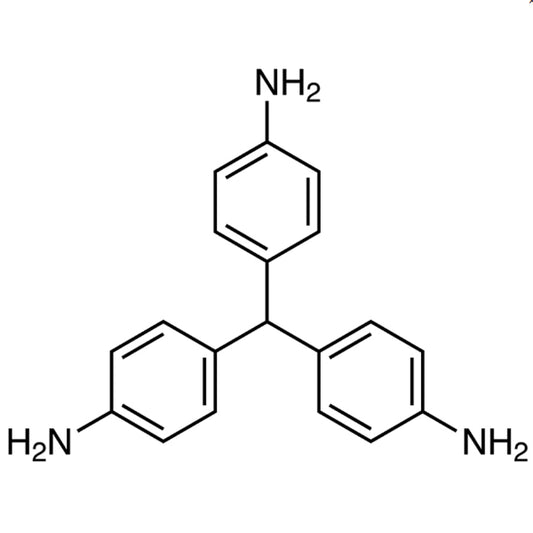
- TCI T3599 548-61-8 Tris(4-aminophenyl)methane
- TCI T2947 60532-63-0 Tetrakis(4-aminophenyl)methane
- TCI A0291 22525-43-5 4-Amino-4'-(N,N-dimethylamino)stilbene
- TCI T2898 33527-91-2 Tris[2-(dimethylamino)ethyl]amine
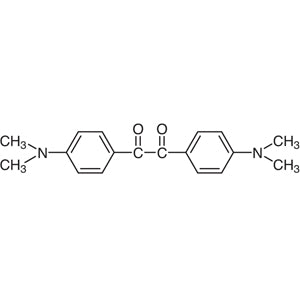
- TCI B1212 17078-27-2 4,4'-Bis(dimethylamino)benzil
- Aminomethylenation of active methylene compounds: the reagent reacts readily with acidic carbon centers, so it can introduce an aminomethylene group under relatively mild conditions without an extra strong base.
- Formyl group introduction: as a one-carbon source, it converts acidic C–H sites into enamine intermediates that can be processed further into aldehydes, which makes it useful for multi-step synthesis planning.
- Heterocycle construction: the aminomethylene products can be reacted with hydrazine, hydroxylamine, or amidines to form heterocyclic rings, so this building block suits research on ring-containing target molecules.
- Medicinal chemistry intermediates: research groups preparing candidate structures can use it as a non-heterocyclic building block to create reactive enamine intermediates that are then elaborated into more complex compounds.
- Teaching and method development: its distinctive aminal structure and predictable reactivity toward acidic carbon centers make it a good example for advanced organic synthesis practicals and for testing new reaction conditions.
| Brand | TCI (product code T1057) |
|---|---|
| CAS number | 5762-56-1 |
| Molecular formula | — |
| Purity | — |
| Category | Chemistry > Building Blocks > Non-Heterocyclic Building Blocks |
| Pack sizes | please refer to the product listing or ask AMI Scientific for the sizes currently offered |
| Physical form | — |
| Storage | supplied stabilized with KOH; follow the storage instructions on the supplier label and Safety Data Sheet |
- Product name: Tris(dimethylamino)methane (stabilized with KOH)
Because this reagent is supplied stabilized with KOH and is sensitive to its surroundings, keep it in its original tightly closed container and store it as directed on the manufacturer's label and Safety Data Sheet. Avoid repeated exposure to air and moisture, and reseal the container promptly after each use. Store it away from incompatible materials, heat sources, and direct sunlight. Handle it inside a fume hood and wear appropriate gloves, safety glasses, and a laboratory coat. Label any transferred portions clearly. Dispose of residues and contaminated materials according to your laboratory's chemical waste procedures and local regulations.
—
Produk Terkait
-
Bis[4-(dimethylamino)phenyl]methane TCI B0483
Regular price From Rp 795.900,00Regular priceRp 572.250,00Sale price From Rp 795.900,00 -
Tris(4-aminophenyl)methane TCI T3599
Regular price From Rp 3.710.700,00Regular priceRp 2.610.300,00Sale price From Rp 3.710.700,00 -
Tetrakis(4-aminophenyl)methane TCI T2947
Regular price From Rp 1.908.900,00Regular priceRp 1.350.300,00Sale price From Rp 1.908.900,00 -
4-Amino-4'-(N,N-dimethylamino)stilbene TCI A0291
Regular price From Rp 1.988.700,00Regular priceRp 1.405.950,00Sale price From Rp 1.988.700,00 -
Tris[2-(dimethylamino)ethyl]amine TCI T2898
Regular price From Rp 2.254.350,00Regular priceRp 1.576.050,00Sale price From Rp 2.254.350,00 -
4,4'-Bis(dimethylamino)benzil TCI B1212
Regular price From Rp 3.735.900,00Regular priceRp 2.628.150,00Sale price From Rp 3.735.900,00 -
1,8-Bis(dimethylamino)naphthalene[forDehydrohalogenation] TCI B1018
Regular price From Rp 980.700,00Regular priceRp 701.400,00Sale price From Rp 980.700,00 -
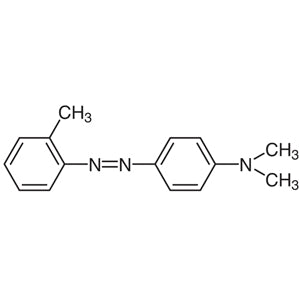
4-(Dimethylamino)-2'-methylazobenzene TCI M0789
Regular price Rp 2.518.950,00Regular priceRp 1.760.850,00Sale price Rp 2.518.950,00