TCI T1068, 2,4,5-Trimethylthiazole, is a five-membered heterocyclic compound whose thiazole ring contains one sulfur atom and one nitrogen atom, with three methyl groups attached at positions 2, 4, and 5. The TCI catalog lists it as a heterocyclic building block. Alkylated thiazole derivatives are well known in flavor and fragrance chemistry and also serve as ligands and starting materials in heterocyclic synthesis. This gives the material a dual role in research and analytical laboratories.
The thiazole ring is aromatic and relatively stable, and its nitrogen atom can act as a weakly basic center or as a coordination site for metals. The methyl groups give handles for further functionalization, for example through deprotonation at specific positions or through halogenation reactions. Because of its small structure and low molecular mass, the compound is easy to analyze by gas chromatography and mass spectrometry. That makes it a practical reference material for work on sulfur-containing aroma compounds.
In Indonesian laboratories, this material is relevant to heterocyclic chemistry research groups, flavor and fragrance laboratories, and food scientists who study aroma compounds. It can be used as a synthetic intermediate, as an analytical reference, or as a model substrate for exploring thiazole reactivity. Supplied under the TCI brand, it fits laboratories that need a consistent, catalog-listed building block for routine and exploratory work.
Related TCI products
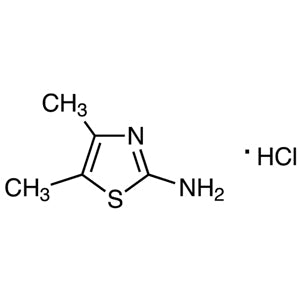
- TCI A0292 71574-33-9 2-Amino-4,5-dimethylthiazole Hydrochloride
- TCI A0336 6142-15-0 2-Amino-4-methylthiazole Hydrochloride
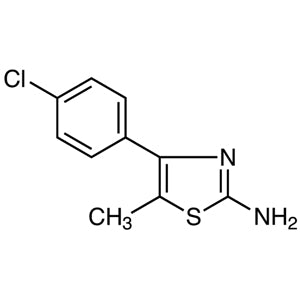
- TCI A3066 82632-77-7 2-Amino-4-(4-chlorophenyl)-5-methylthiazole
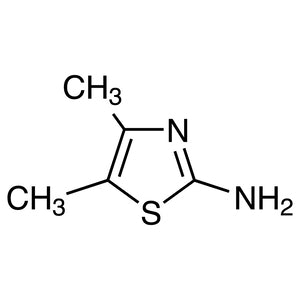
- TCI A2916 2289-75-0 4,5-Dimethylthiazol-2-amine
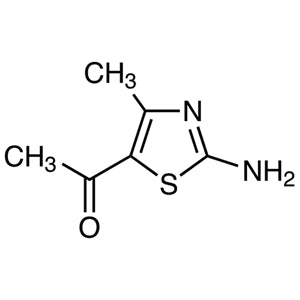
- TCI A2887 30748-47-1 5-Acetyl-2-amino-4-methylthiazole
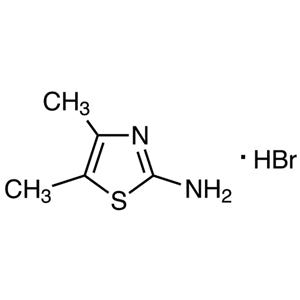
- TCI A2062 7170-76-5 2-Amino-4,5-dimethylthiazole Hydrobromide
- Heterocyclic synthesis: the thiazole core with three methyl substituents serves as a starting material for building more complex heterocyclic molecules in research laboratories.
- Flavor and fragrance research: alkylated thiazoles are known in this field, so the compound is suitable for studies of aroma-active structures and related reference work.
- Ligand and coordination chemistry: the ring nitrogen can coordinate to metal centers, which makes this compound a useful small ligand for exploratory complexation studies.
- Gas chromatography and mass spectrometry reference: its small, simple structure makes it easy to analyze, so it works well as a comparison standard for sulfur-containing aroma compounds.
- Functionalization studies: the methyl groups give sites for deprotonation or halogenation, so the compound suits methodological work on modifying thiazole derivatives step by step.
| Brand | TCI |
|---|---|
| CAS number | 13623-11-5 |
| Molecular formula | — |
| Purity | — |
| Category | Chemistry > Building Blocks > Heterocyclic Building Blocks |
| Pack sizes | please refer to the product listing or contact AMI Scientific for available sizes |
| Physical form | — |
| Storage | keep tightly closed in a cool, well-ventilated place, and follow the supplier's label and safety data sheet |
- Product code: T1068
Store 2,4,5-Trimethylthiazole in its original, tightly closed container in a cool, dry, well-ventilated area, away from heat, open flames, and strong oxidizing agents. Always follow the storage instructions on the TCI label and in the safety data sheet. Use it in a fume hood, because many sulfur-containing heterocycles have strong odors and may irritate the eyes, skin, and respiratory tract. Wear suitable gloves, safety glasses, and a laboratory coat. Avoid contact with skin and eyes, and do not inhale vapors. Reseal the container immediately after use and label any secondary containers clearly. Dispose of waste according to institutional and local regulations.
—
Produk Terkait
-
2-Amino-4,5-dimethylthiazoleHydrochloride TCI A0292
Regular price From Rp 557.550,00Regular priceRp 405.300,00Sale price From Rp 557.550,00 -
2-Amino-4-methylthiazoleHydrochloride TCI A0336
Regular price From Rp 1.378.650,00Regular priceRp 979.650,00Sale price From Rp 1.378.650,00 -
2-Amino-4-(4-chlorophenyl)-5-methylthiazole TCI A3066
Regular price From Rp 1.087.800,00Regular priceRp 775.950,00Sale price From Rp 1.087.800,00 -
4,5-Dimethylthiazol-2-amine TCI A2916
Regular price From Rp 1.272.600,00Regular priceRp 905.100,00Sale price From Rp 1.272.600,00 -
5-Acetyl-2-amino-4-methylthiazole TCI A2887
Regular price From Rp 822.150,00Regular priceRp 590.100,00Sale price From Rp 822.150,00 -
2-Amino-4,5-dimethylthiazoleHydrobromide TCI A2062
Regular price From Rp 1.326.150,00Regular priceRp 942.900,00Sale price From Rp 1.326.150,00 -
2-Amino-4-methylthiazole TCI A1303
Regular price Rp 1.881.600,00Regular priceRp 1.331.400,00Sale price Rp 1.881.600,00 -
2-Amino-5-methylthiazole TCI A1250
Regular price Rp 1.246.350,00Regular priceRp 887.250,00Sale price Rp 1.246.350,00