Related TCI catalogs (PDF)

-
8-HydroxyquinolineN-Oxide TCI H1272
Vendor:TCIRegular price From Rp 1.405.950,00Regular priceRp 998.550,00Sale price From Rp 1.405.950,00 -
8-Quinolinol TCI H0305
Vendor:TCIRegular price From Rp 928.200,00Regular priceRp 664.650,00Sale price From Rp 928.200,00 -
5-Bromo-8-hydroxyquinoline TCI B3324
Vendor:TCIRegular price Rp 3.922.800,00Regular priceRp 2.758.350,00Sale price Rp 3.922.800,00 -
5,7-Dibromo-8-hydroxyquinoline TCI D0208
Vendor:TCIRegular price Rp 3.524.850,00Regular priceRp 2.480.100,00Sale price Rp 3.524.850,00 -
5-Fluoro-8-quinolinol TCI F0038
Vendor:TCIRegular price From Rp 28.963.200,00Regular priceRp 20.269.200,00Sale price From Rp 28.963.200,00 -
2-Methyl-8-quinolinol TCI M0420
Vendor:TCIRegular price From Rp 742.350,00Regular priceRp 534.450,00Sale price From Rp 742.350,00 -
5-Amino-8-hydroxyquinolineDihydrochloride TCI A1005
Vendor:TCIRegular price From Rp 3.365.250,00Regular priceRp 2.368.800,00Sale price From Rp 3.365.250,00 -
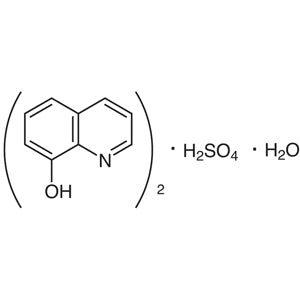
8-QuinolinolSulfateMonohydrate TCI Q0017
Vendor:TCIRegular price From Rp 1.113.000,00Regular priceRp 793.800,00Sale price From Rp 1.113.000,00 -
8-Hydroxyquinoline-2-carbaldehyde TCI H1713
Vendor:TCIRegular price From Rp 900.900,00Regular priceRp 645.750,00Sale price From Rp 900.900,00 -
2,8-Dihydroxyquinoline TCI D3819
Vendor:TCIRegular price From Rp 1.167.600,00Regular priceRp 831.600,00Sale price From Rp 1.167.600,00 -
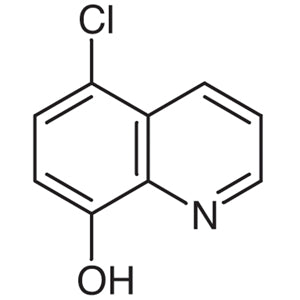
5-Chloro-8-hydroxyquinoline TCI C0645
Vendor:TCIRegular price From Rp 530.250,00Regular priceRp 386.400,00Sale price From Rp 530.250,00