5-Bromo-8-hydroxyquinoline is a chemical compound widely used in scientific research, particularly in the fields of organic chemistry and coordination chemistry. This material serves as a crucial ligand in the synthesis of functional metal complexes, playing a vital role in the development of advanced materials and pharmaceutical compounds. Its ability to coordinate with transition metals makes it an essential component in the study of metal-based catalysts and their applications in various industrial and academic settings. In laboratory environments, it is frequently employed to create complex structures with tailored properties, supporting innovation in multiple scientific disciplines.
The compound’s stability and controlled reactivity make it a preferred choice for researchers seeking precision in synthetic processes. The presence of both hydroxyl and bromo groups allows it to participate in substitution and redox reactions, enhancing its versatility in chemical transformations. These chemical features enable scientists to design and synthesize compounds with specific functionalities, making it an ideal material for applications in drug development, material science, and catalytic systems. Its predictable behavior under various reaction conditions ensures reliable results, which is critical for reproducibility in experimental work.
In Indonesian laboratories, 5-Bromo-8-hydroxyquinoline is commonly used in academic and research institutions. It is a key reagent in projects focused on drug development, new material synthesis, and catalytic processes. Its availability and reliability make it a standard component in many research programs, supporting both undergraduate and graduate-level studies. Its role in advancing scientific knowledge is significant, particularly in the context of Indonesia’s growing research infrastructure.
TCI brochures (PDF)
- Ligands 2025-12-01 · p. 17
Related TCI products
- TCI A1005 21302-43-2 5-Amino-8-hydroxyquinoline Dihydrochloride
- TCI H1713 14510-06-6 8-Hydroxyquinoline-2-carbaldehyde
- TCI H1272 1127-45-3 8-Hydroxyquinoline N-Oxide
- TCI D3819 15450-76-7 2,8-Dihydroxyquinoline
- TCI D0208 521-74-4 5,7-Dibromo-8-hydroxyquinoline
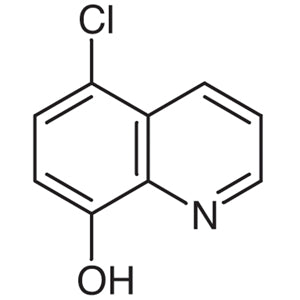
- TCI C0645 130-16-5 5-Chloro-8-hydroxyquinoline
- Used in the synthesis of metal-based catalysts due to its ability to form stable coordination complexes with transition metals.
- Applied in pharmaceutical research for the development of new drugs, as it can participate in redox and substitution reactions.
- Utilized in material science for the creation of functional materials with specific chemical properties.
- Employed in coordination chemistry studies to investigate the behavior of metal-ligand interactions under various conditions.
- Integrated into research projects focused on green chemistry, where controlled reactivity and stability are essential for sustainable processes.
| Brand | TCI |
|---|---|
| CAS number | 1198-14-7 |
| Molecular formula | — |
| Purity | — |
| Category | Materials Science > Material Building Blocks > Ligands for Functional Metal Complexes |
| Pack sizes | Available in various quantities as per standard laboratory supply formats |
| Physical form | Solid (exact form may vary based on supplier specifications) |
| Storage | Store in a cool, dry place away from direct light and moisture |
This material should be stored in a cool, dry environment, away from direct sunlight and sources of heat. It is recommended to use airtight containers to prevent exposure to moisture and air, which may affect its stability. Proper labeling of storage containers is essential to ensure safe handling and prevent accidental contamination. Due to its chemical nature, it should be handled with appropriate personal protective equipment, such as gloves and safety goggles, to minimize exposure. In laboratory settings, it is important to follow standard safety protocols when working with reactive chemicals, ensuring that all procedures are conducted in a well-ventilated area. Regular monitoring of storage conditions will help maintain the integrity and effectiveness of the compound during its use.
—
Produk Terkait
-
5-Amino-8-hydroxyquinolineDihydrochloride TCI A1005
Regular price From Rp 3.365.250,00Regular priceRp 2.368.800,00Sale price From Rp 3.365.250,00 -
8-Hydroxyquinoline-2-carbaldehyde TCI H1713
Regular price From Rp 900.900,00Regular priceRp 645.750,00Sale price From Rp 900.900,00 -
8-HydroxyquinolineN-Oxide TCI H1272
Regular price From Rp 1.405.950,00Regular priceRp 998.550,00Sale price From Rp 1.405.950,00 -
2,8-Dihydroxyquinoline TCI D3819
Regular price From Rp 1.167.600,00Regular priceRp 831.600,00Sale price From Rp 1.167.600,00 -
5,7-Dibromo-8-hydroxyquinoline TCI D0208
Regular price Rp 3.524.850,00Regular priceRp 2.480.100,00Sale price Rp 3.524.850,00 -
5-Chloro-8-hydroxyquinoline TCI C0645
Regular price From Rp 530.250,00Regular priceRp 386.400,00Sale price From Rp 530.250,00 -
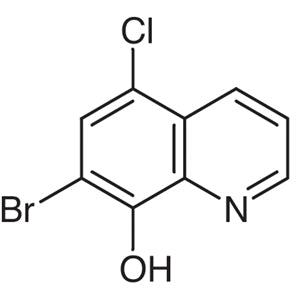
7-Bromo-5-chloro-8-hydroxyquinoline TCI B1190
Regular price From Rp 1.405.950,00Regular priceRp 998.550,00Sale price From Rp 1.405.950,00 -
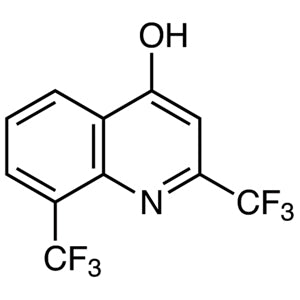
2,8-Bis(trifluoromethyl)-4-hydroxyquinoline TCI B3714
Regular price Rp 955.500,00Regular priceRp 683.550,00Sale price Rp 955.500,00