


5,7-Dibromo-8-hydroxyquinoline is a chemical compound widely used in laboratory settings for the synthesis of heterocyclic compounds. As a key building block in organic chemistry, it plays a crucial role in the development of complex molecules with biological activity. This compound is commonly found in chemical laboratories, particularly in research focused on organic compounds and pharmacological applications. Its unique structure, featuring a quinoline ring with bromine substitutions at positions 5 and 7, contributes to its reactivity and stability, making it a valuable tool for synthetic chemists.
The compound’s chemical stability and reactivity make it a preferred choice for various synthetic processes. It exhibits good solubility in organic solvents, which facilitates mixing and reaction procedures in the laboratory. These properties allow it to participate effectively in substitution and electrophilic reactions, enhancing its utility in the synthesis of bioactive compounds. Its versatility and reliability in chemical reactions make it an essential component in the production of heterocyclic structures with specific functional groups.
In Indonesian laboratories, 5,7-Dibromo-8-hydroxyquinoline is extensively used in organic chemistry, pharmaceutical research, and material science. It is a key reagent in the development of new drugs and advanced materials. Many research institutions and universities rely on this compound for experiments that require the synthesis of heterocyclic compounds with high reactivity. Its consistent performance and chemical properties make it a trusted choice for researchers in various scientific fields.
TCI brochures (PDF)
- Ligands 2025-12-01 · p. 17
Related TCI products
- Organic synthesis applications benefit from this compound due to its reactivity and stability, enabling the creation of complex heterocyclic structures.
- Pharmaceutical research utilizes it for the development of bioactive compounds, as its structure supports the synthesis of drug-like molecules.
- Material science experiments leverage its chemical properties to design new materials with specific functional characteristics.
- Analytical chemistry uses it as a standard for qualitative and quantitative analysis in chromatographic and spectroscopic techniques.
- Environmental studies incorporate it in the investigation of chemical behavior and degradation processes in different matrices.
| Brand | TCI |
|---|---|
| CAS number | 521-74-4 |
| Molecular formula | — |
| Purity | — |
| Category | Chemistry > Building Blocks > Heterocyclic Building Blocks |
| Pack sizes | Available in various quantities as per supplier specifications |
| Physical form | Solid |
| Storage | Store in a cool, dry place away from light and moisture |
This compound should be stored in a cool, dry environment, away from direct light and moisture to maintain its chemical integrity. It is recommended to use airtight containers made of glass or polyethylene to prevent contamination and degradation. Due to its bromine content, it should be handled with care, using appropriate personal protective equipment such as gloves and safety goggles. In laboratory settings, it should be kept in a well-ventilated area to minimize exposure. Regular inspection of storage conditions is essential to ensure the compound remains stable and suitable for use. Proper labeling and secure storage are necessary to prevent accidental exposure and ensure safe handling.
—
Produk Terkait
-
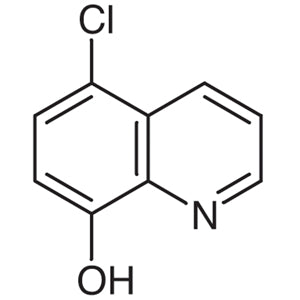
5-Chloro-8-hydroxyquinoline TCI C0645
Regular price From Rp 530.250,00Regular priceRp 386.400,00Sale price From Rp 530.250,00 -
5-Amino-8-hydroxyquinolineDihydrochloride TCI A1005
Regular price From Rp 3.365.250,00Regular priceRp 2.368.800,00Sale price From Rp 3.365.250,00 -
8-Hydroxyquinoline-2-carbaldehyde TCI H1713
Regular price From Rp 900.900,00Regular priceRp 645.750,00Sale price From Rp 900.900,00 -
8-HydroxyquinolineN-Oxide TCI H1272
Regular price From Rp 1.405.950,00Regular priceRp 998.550,00Sale price From Rp 1.405.950,00 -
2,8-Dihydroxyquinoline TCI D3819
Regular price From Rp 1.167.600,00Regular priceRp 831.600,00Sale price From Rp 1.167.600,00 -
5-Bromo-8-hydroxyquinoline TCI B3324
Regular price Rp 3.922.800,00Regular priceRp 2.758.350,00Sale price Rp 3.922.800,00 -
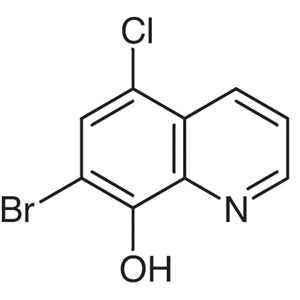
7-Bromo-5-chloro-8-hydroxyquinoline TCI B1190
Regular price From Rp 1.405.950,00Regular priceRp 998.550,00Sale price From Rp 1.405.950,00 -
3,11-Dibromo-7H-dibenzo[c,g]carbazole TCI D6528
Regular price From Rp 2.411.850,00Regular priceRp 1.702.050,00Sale price From Rp 2.411.850,00



![TCI D6528 1796549-32-0 3,11-Dibromo-7H-dibenzo[c,g]carbazole](http://amiscientific.com/cdn/shop/files/TCI2510D6528_9a9886a7-2087-4265-a301-47902c5f5737.jpg?v=1792640605&width=533)
![3,11-Dibromo-7H-dibenzo[c,g]carbazole (CAS 1796549-32-0) - TCI D6528 - AMI Scientific](http://amiscientific.com/cdn/shop/files/TCI2510D6528.jpg?v=1767110368&width=533)