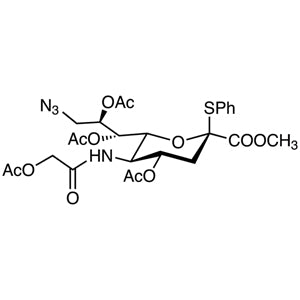
N-Acetylneuraminic Acid (Neuraminic Acid) is a chemical compound belonging to the group of sialic acids. It plays a significant role in chemical biology and glycoscience, particularly in the study of structure and function of glycans. In laboratory settings, this compound is widely used as a building block for the synthesis of complex molecules such as glycoproteins, glycolipids, and other biomolecules that are essential in physiological and pathological processes. Its presence in biological systems makes it a vital component for understanding cellular interactions and molecular recognition mechanisms.
The compound is known for its complex molecular structure and good solubility in organic solvents, which makes it highly suitable for applications requiring high reactivity and precision. These properties allow it to participate effectively in various chemical reactions, making it a preferred choice in biochemical and pharmacological research. Its stability and ability to bind to diverse substrates further enhance its utility in experimental settings. The compound’s versatility supports its use in a wide range of analytical and synthetic applications.
In Indonesian laboratories, N-Acetylneuraminic Acid is commonly used in research related to genetic diseases, viral infections, and drug development. It is also integral to studies in immunology and the role of glycans in cell interactions. The availability of this compound in various packaging options facilitates its use across different research scales and requirements. Its importance in both fundamental and applied research underscores its value in the scientific community.
TCI brochures (PDF)
- Immunology Research Reagents 2026-06-03 · p. 3
- Reagents for Glyco Chemistry & Biology 5th Edition · p. 68
Related TCI products
- TCI A0639 131-48-6 N-Acetylneuraminic Acid
- TCI N1166 110935-75-6 N-Acetylneuraminic Acid Pentamer alpha(2-8)
- TCI N1165 96425-83-1 N-Acetylneuraminic Acid Tetramer alpha(2-8)
- TCI N1164 76152-09-5 N-Acetylneuraminic Acid Trimer alpha(2-8)
- TCI N1163 95983-78-1 N-Acetylneuraminic Acid Dimer alpha(2-8)
- TCI M2696 1195053-25-8 Methyl (Phenyl 5-Acetoxyacetamido-4,7,8-tri-O-acetyl-9-azido-3,5,9-trideoxy-2-thio-D-glycero-beta-D-galacto-2-nonulopyranosid)onate
- Genetic Disease Research: N-Acetylneuraminic Acid is used to study the role of sialic acids in genetic disorders, aiding in the understanding of molecular mechanisms behind inherited conditions.
- Viral Infection Studies: This compound is essential for investigating how viruses interact with host cells, particularly in the context of receptor binding and entry mechanisms.
- Drug Development: It serves as a key component in the synthesis of therapeutic agents, especially those targeting glycoprotein-based diseases and inflammatory conditions.
- Immunological Investigations: The compound is used to explore the role of glycans in immune responses and the interaction between immune cells and pathogens.
- Glycobiology Research: N-Acetylneuraminic Acid is fundamental in studying the structure and function of glycans, contributing to the development of new diagnostic and therapeutic strategies.
| Brand | TCI |
|---|---|
| CAS number | 131-48-6 |
| Molecular formula | — |
| Purity | — |
| Category | Chemistry > Chemical Biology > Glycoscience |
| Pack sizes | Available in various sizes to suit different research needs |
| Physical form | Powder |
| Storage | Store in a cool, dry place away from light |
N-Acetylneuraminic Acid should be stored in a cool, dry place, away from direct light to maintain its chemical integrity. It is recommended to use airtight containers to prevent moisture absorption and contamination. Due to its potential reactivity, it should be handled with care, using appropriate personal protective equipment such as gloves and safety goggles. In laboratory settings, it is advisable to store it in a designated chemical storage area to ensure safety and compliance with standard operating procedures. Proper labeling of containers is essential to prevent misidentification and ensure safe handling during experiments. Regular monitoring of storage conditions helps maintain the compound’s stability and effectiveness for research applications.
—
Produk Terkait
-
N-AcetylneuraminicAcid TCI A0639
Regular price From Rp 1.033.200,00Regular priceRp 738.150,00Sale price From Rp 1.033.200,00 -
N-AcetylneuraminicAcidPentameralpha(2-8) TCI N1166
Regular price Rp 12.587.400,00Regular priceRp 8.817.900,00Sale price Rp 12.587.400,00 -
N-AcetylneuraminicAcidTetrameralpha(2-8) TCI N1165
Regular price Rp 9.459.450,00Regular priceRp 6.630.750,00Sale price Rp 9.459.450,00 -
N-AcetylneuraminicAcidTrimeralpha(2-8) TCI N1164
Regular price Rp 8.003.100,00Regular priceRp 5.612.250,00Sale price Rp 8.003.100,00 -
N-AcetylneuraminicAcidDimeralpha(2-8) TCI N1163
Regular price Rp 6.333.600,00Regular priceRp 4.444.650,00Sale price Rp 6.333.600,00 -
Methyl(Phenyl5-Acetoxyacetamido-4,7,8-tri-O-acetyl-9-azido-3,5,9-trideoxy-2-thio-D-glycero-beta-D-galacto-2-nonulopyranosid)onate TCI M2696
Regular price Rp 10.890.600,00Regular priceRp 7.631.400,00Sale price Rp 10.890.600,00 -
Methyl(Phenyl5-Acetamido-4,7,8-tri-O-acetyl-9-azido-3,5,9-trideoxy-2-thio-D-glycero-beta-D-galacto-2-nonulopyranosid)onate TCI M2695
Regular price Rp 24.088.050,00Regular priceRp 16.859.850,00Sale price Rp 24.088.050,00 -
Methyl5-Acetamido-7,8,9-tri-O-acetyl-5-N,4-O-carbonyl-3,5-dideoxy-2-S-phenyl-2-thio-D-glycero-beta-D-galacto-2-nonulopyranosylonate TCI M2319
Regular price From Rp 6.413.400,00Regular priceRp 4.500.300,00Sale price From Rp 6.413.400,00