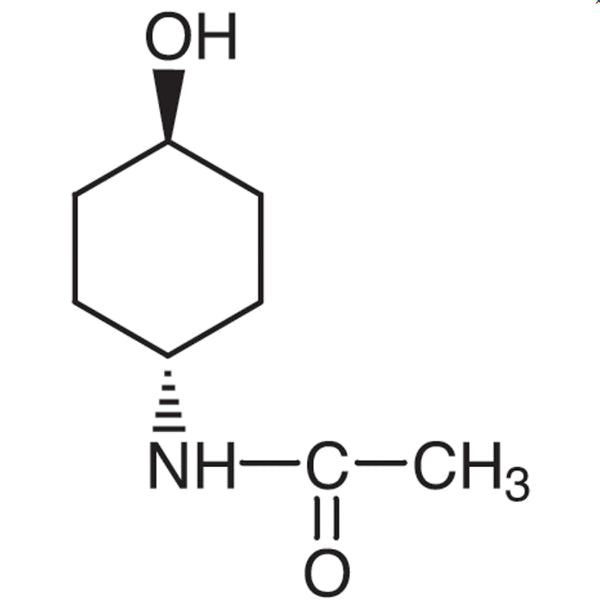
Trans-4-Acetamidocyclohexanol is a chemical compound widely used in laboratory settings as a fundamental building block in organic synthesis. It serves as a versatile intermediate in the creation of more complex molecules, including pharmaceuticals, industrial chemicals, and specialized organic compounds. Its role in chemical reactions is crucial due to its ability to participate in various types of reactions such as substitution, coupling, and reduction. This compound is particularly valuable for researchers looking to develop new compounds with specific functional groups or structural features.
The compound’s unique molecular structure, featuring a cyclohexanol backbone with an amide group at the fourth carbon position, contributes to its stability and controlled reactivity. These properties make it a preferred choice for chemists seeking reliable and predictable outcomes in their synthetic processes. Its solubility in organic solvents further enhances its utility, allowing for efficient mixing and reaction conditions. This combination of structural integrity and chemical versatility makes it a staple in organic chemistry laboratories.
In Indonesian laboratories, trans-4-Acetamidocyclohexanol is commonly used by researchers and students in higher education institutions and research organizations. It is particularly relevant for studies in organic chemistry and pharmaceutical development. Its availability and reliability make it an essential material for both academic and industrial research applications in the region.
Related TCI products
- TCI A1617 23363-88-4 4-Acetamidocyclohexanol (cis- and trans- mixture)
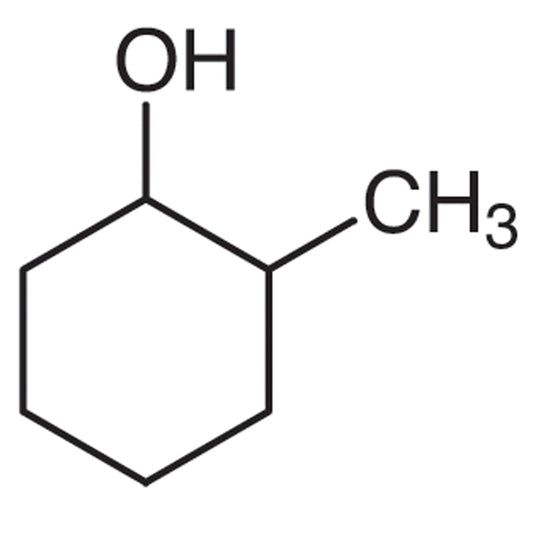
- TCI M0194 583-59-5 2-Methylcyclohexanol (cis- and trans- mixture)
- TCI P1174 2362-61-0 trans-2-Phenyl-1-cyclohexanol
- TCI M0354 7731-29-5 trans-4-Methylcyclohexanol
- TCI M0353 7731-28-4 cis-4-Methylcyclohexanol
- TCI M0352 7443-52-9 trans-2-Methylcyclohexanol
- Organic synthesis for the development of pharmaceutical compounds due to its structural versatility and reactivity.
- Pharmaceutical research as a building block for the synthesis of complex molecules with specific functional groups.
- Industrial chemical production where controlled reactivity and stability are essential for large-scale reactions.
- Academic research in organic chemistry laboratories for teaching and experimental purposes.
- Drug discovery projects where the compound can be modified to create new therapeutic agents.
| Brand | TCI |
|---|---|
| CAS number | 27489-60-7 |
| Molecular formula | — |
| Purity | — |
| Category | Chemistry > Building Blocks > Non-Heterocyclic Building Blocks |
| Pack sizes | Available in various quantities as per supplier specifications |
| Physical form | Liquid or crystalline, depending on the specific product variant |
| Storage | Store in a cool, dry place away from direct sunlight and moisture |
Trans-4-Acetamidocyclohexanol should be stored in a cool, dry environment to maintain its chemical integrity. It is recommended to keep the compound in a sealed container to prevent exposure to moisture and air, which could affect its stability. Suitable storage containers include glass or high-density polyethylene vessels that are resistant to chemical reactions. In laboratory settings, it is important to handle the compound with appropriate personal protective equipment, such as gloves and safety goggles, to ensure safety during use and storage. Proper labeling of containers is also essential to avoid confusion and ensure safe handling. The compound should be kept away from incompatible substances to prevent any potential chemical interactions.
—
Produk Terkait
-
4-Acetamidocyclohexanol(cis-andtrans-mixture) TCI A1617
Regular price Rp 1.590.750,00Regular priceRp 1.127.700,00Sale price Rp 1.590.750,00 -
2-Methylcyclohexanol(cis-andtrans-mixture) TCI M0194
Regular price Rp 505.050,00Regular priceRp 352.800,00Sale price Rp 505.050,00 -
trans-2-Phenyl-1-cyclohexanol TCI P1174
Regular price Rp 2.411.850,00Regular priceRp 1.686.300,00Sale price Rp 2.411.850,00 -
trans-4-Methylcyclohexanol TCI M0354
Regular price Rp 2.411.850,00Regular priceRp 1.702.050,00Sale price Rp 2.411.850,00 -
cis-4-Methylcyclohexanol TCI M0353
Regular price Rp 980.700,00Regular priceRp 701.400,00Sale price Rp 980.700,00 -
trans-2-Methylcyclohexanol TCI M0352
Regular price Rp 4.108.650,00Regular priceRp 2.872.800,00Sale price Rp 4.108.650,00 -
cis-2-Methylcyclohexanol TCI M0351
Regular price Rp 3.285.450,00Regular priceRp 2.313.150,00Sale price Rp 3.285.450,00 -
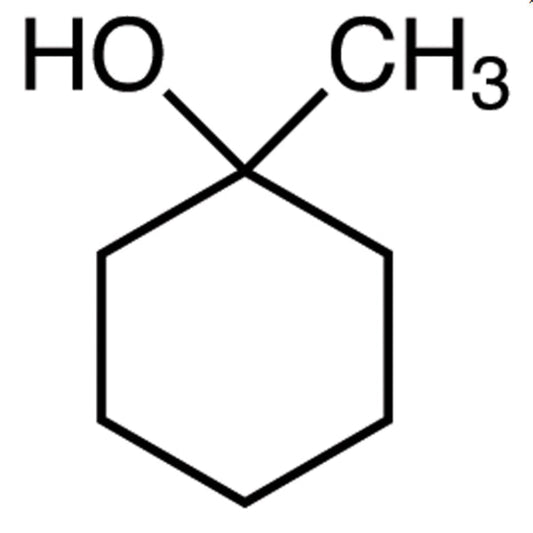
1-Methylcyclohexanol TCI M0328
Regular price Rp 2.862.300,00Regular priceRp 2.017.050,00Sale price Rp 2.862.300,00