Trans-2-Phenyl-1-cyclohexanol is a chemical compound widely used as a building block in the synthesis of complex organic molecules. This compound plays a crucial role in laboratory settings where the formation of new bonds between phenyl and cyclohexyl groups is required. It is an essential component in the development of new organic compounds, offering versatility and reliability in various synthetic pathways. Its presence in chemical reactions allows for the creation of a wide range of derivatives, making it a valuable tool for chemists working on advanced molecular structures.
The compound is known for its stable molecular structure and favorable chemical properties, which enable it to participate in a variety of reactions under different conditions. Its reactivity is enhanced by the presence of both the phenyl and cyclohexyl groups, which provide multiple functional sites for substitution, oxidation, or reduction. These characteristics make it a preferred choice for researchers aiming to explore complex chemical transformations. The compound’s ability to undergo diverse reactions contributes to its importance in both academic and industrial research environments.
In Indonesian laboratories, Trans-2-Phenyl-1-cyclohexanol is commonly used in organic chemistry research, particularly in higher education institutions and research centers. Its stability and broad applicability make it a staple in laboratories focused on the synthesis of complex compounds. The compound is frequently utilized in projects that require the development of new chemical structures or the study of reaction mechanisms. Its availability and reliability ensure that it remains a key reagent in the chemical supply chain of Indonesian research facilities.
- Organic synthesis applications benefit from its role as a versatile building block for creating complex molecular structures.
- It is ideal for substitution reactions due to its reactive phenyl and cyclohexyl groups, enabling the formation of diverse derivatives.
- Oxidation and reduction reactions often utilize this compound as a starting material for generating new functional groups.
- It supports the development of pharmaceutical compounds by facilitating the synthesis of key intermediates in drug design.
- Its stability and reactivity make it suitable for use in both academic and industrial research settings requiring precise chemical transformations.
| Brand | TCI |
|---|---|
| CAS number | 2362-61-0 |
| Molecular formula | — |
| Purity | — |
| Category | Chemistry > Building Blocks > Non-Heterocyclic Building Blocks |
| Pack sizes | Available in various quantities to meet different laboratory needs |
| Physical form | Liquid |
| Storage | Store in a cool, dark place away from direct sunlight and moisture |
Trans-2-Phenyl-1-cyclohexanol should be stored in a cool, dark environment to maintain its stability and prevent degradation. It is recommended to keep the compound in tightly sealed containers to avoid exposure to air and moisture, which can affect its chemical integrity. Suitable storage containers include glass or high-density polyethylene bottles, which provide a barrier against contaminants. In laboratory settings, it is important to handle the compound with care, using appropriate personal protective equipment such as gloves and safety goggles. Proper ventilation should be ensured when working with this material to minimize inhalation risks. Regular monitoring of storage conditions ensures the compound remains in optimal condition for use in chemical synthesis processes.
—
Produk Terkait
-
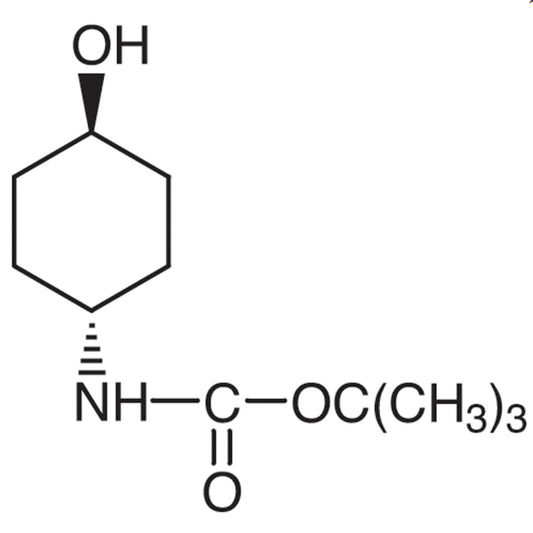
trans-4-(tert-Butoxycarbonylamino)cyclohexanol TCI B3564
Regular price From Rp 1.829.100,00Regular price -
trans-4-(trans-4-Pentylcyclohexyl)cyclohexanol TCI P2690
Regular price From Rp 3.155.250,00Regular price -
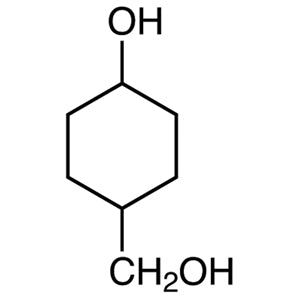
trans-4-(Hydroxymethyl)cyclohexanol TCI H1258
Regular price From Rp 7.129.500,00Regular price -
4-(Hydroxymethyl)cyclohexanol(cis-andtrans-mixture) TCI H1257
Regular price From Rp 6.758.850,00Regular price -
4-(2-Hydroxyethyl)cyclohexanol(cis-andtrans-mixture) TCI H1253
Regular price From Rp 2.995.650,00Regular price -
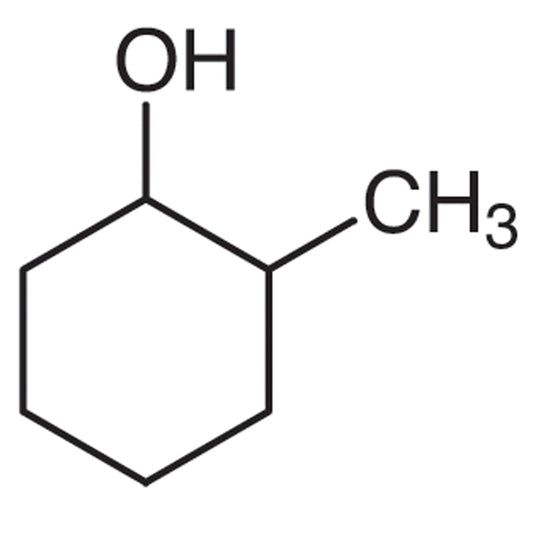
2-Methylcyclohexanol(cis-andtrans-mixture) TCI M0194
Regular price From Rp 505.050,00Regular price -
cis-3,3,5-Trimethylcyclohexanol(containsca.20%trans-isomer) TCI T2693
Regular price From Rp 584.850,00Regular price -
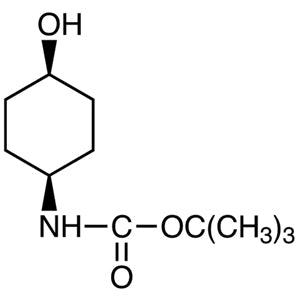
cis-4-(tert-Butoxycarbonylamino)cyclohexanol TCI B5367
Regular price Rp 2.147.250,00Regular price