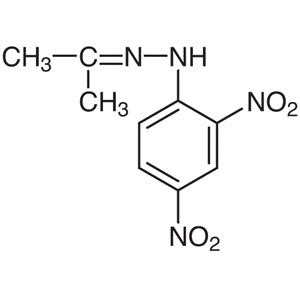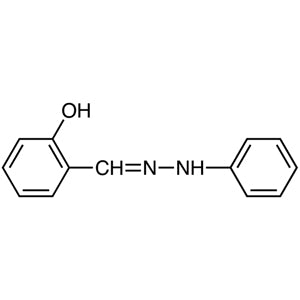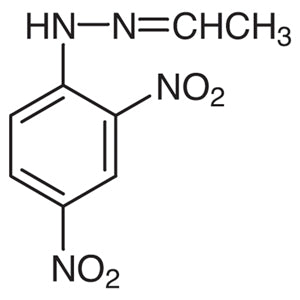
TCI A1271 1019-57-4 Acetaldehyde 2,4-Dinitrophenylhydrazone is a chemical compound widely used in laboratory settings for its versatility in organic synthesis. This compound belongs to the class of hydrazones, which are known for their ability to participate in various chemical reactions. Its unique structure, featuring a hydrazone group (-NHNH-C=O), makes it a valuable reagent for forming carbon-carbon and carbon-nitrogen bonds. In research and development, it plays a critical role in the creation of complex organic molecules and the exploration of new chemical properties.
One of the key advantages of this compound is its stability under controlled conditions, which allows for consistent performance in laboratory experiments. Its reactivity and ability to undergo substitution and bond-forming reactions make it a preferred choice for chemists seeking to synthesize a wide range of compounds. Additionally, its chemical structure provides a reliable platform for further modifications, enabling the development of more complex molecules with tailored properties.
In Indonesian laboratories, this compound is frequently utilized by chemists in academic and research institutions. It supports a variety of synthetic processes and is essential for studies involving organic chemistry, drug development, and material science. Its role in these contexts underscores its importance as a fundamental building block in chemical research.
Related TCI products
- TCI A0201 58052-80-5 Acetaldehyde Ammonia Trimer
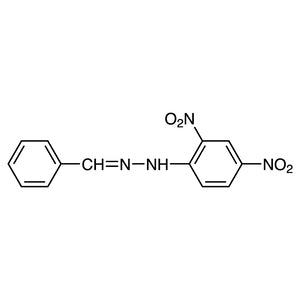
- TCI B1593 1157-84-2 Benzaldehyde 2,4-Dinitrophenylhydrazone
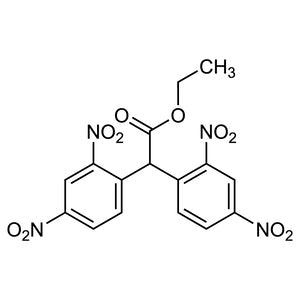
- TCI B0817 5833-18-1 Ethyl Bis(2,4-dinitrophenyl)acetate
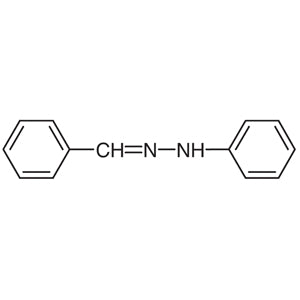
- TCI B0014 588-64-7 Benzaldehyde Phenylhydrazone
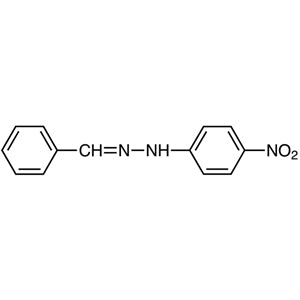
- TCI B0009 3078-09-9 Benzaldehyde 4-Nitrophenylhydrazone
- TCI A1273 1567-89-1 Acetone 2,4-Dinitrophenylhydrazone
- Organic synthesis is a primary application where this compound is used to form carbon-carbon and carbon-nitrogen bonds, enabling the creation of complex molecular structures.
- Drug development benefits from its reactivity, as it can be used to synthesize intermediates for pharmaceutical compounds and bioactive molecules.
- Analytical chemistry relies on its stability and reactivity for use in chromatographic and spectroscopic analyses to identify and quantify chemical compounds.
- Material science research employs this compound to develop new polymers and functional materials with specific chemical properties.
- Educational institutions use it as a teaching tool to demonstrate hydrazone formation and its role in organic reaction mechanisms.
| Brand | TCI |
|---|---|
| CAS number | 1019-57-4 |
| Molecular formula | — |
| Purity | — |
| Category | Chemistry > Building Blocks > Non-Heterocyclic Building Blocks |
| Pack sizes | — |
| Physical form | — |
| Storage | Store in a cool, dry place away from light and incompatible substances |
This compound should be stored in a cool, dry location, away from direct sunlight and sources of heat. It is recommended to use airtight containers to prevent exposure to moisture and air, which may affect its stability. Due to its reactivity, it should be handled with care, using appropriate personal protective equipment such as gloves and safety goggles. It is important to ensure that it is kept separate from strong oxidizers and incompatible chemicals to avoid any potential hazardous reactions. In a laboratory setting, proper ventilation and adherence to standard safety protocols are essential to maintain a safe working environment.
—
Produk Terkait
-
AcetaldehydeAmmoniaTrimer TCI A0201
Regular price Rp 822.150,00Regular priceRp 590.100,00Sale price Rp 822.150,00 -
Benzaldehyde2,4-Dinitrophenylhydrazone TCI B1593
Regular price Rp 1.140.300,00Regular priceRp 812.700,00Sale price Rp 1.140.300,00 -
EthylBis(2,4-dinitrophenyl)acetate TCI B0817
Regular price Rp 1.510.950,00Regular priceRp 1.072.050,00Sale price Rp 1.510.950,00 -
BenzaldehydePhenylhydrazone TCI B0014
Regular price Rp 3.603.600,00Regular priceRp 2.535.750,00Sale price Rp 3.603.600,00 -
Benzaldehyde4-Nitrophenylhydrazone TCI B0009
Regular price Rp 5.062.050,00Regular priceRp 3.555.300,00Sale price Rp 5.062.050,00 -
Acetone2,4-Dinitrophenylhydrazone TCI A1273
Regular price Rp 1.140.300,00Regular priceRp 812.700,00Sale price Rp 1.140.300,00 -
2-HydroxybenzaldehydePhenylhydrazone TCI H1478
Regular price Rp 1.988.700,00Regular priceRp 1.405.950,00Sale price Rp 1.988.700,00 -
EthylMethylKetone2,4-Dinitrophenylhydrazone TCI E0439
Regular price Rp 1.220.100,00Regular priceRp 868.350,00Sale price Rp 1.220.100,00