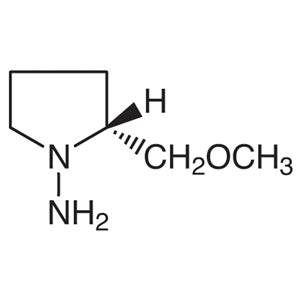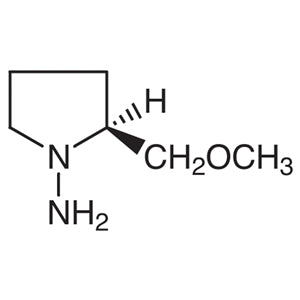
(S)-(-)-1-Amino-2-(methoxymethyl)pyrrolidine is a chiral compound widely used in asymmetric synthesis to construct molecules with specific optical properties. This compound is essential in the field of organic chemistry, particularly in the development of chiral building blocks. Its unique structure, featuring both an amino group and a methoxymethyl group, makes it highly versatile for various synthetic reactions. In the laboratory, it serves as a key intermediate in the synthesis of bioactive compounds, including pharmaceuticals and industrial chemicals. Due to its chiral nature, it enables precise control over molecular structure, which is critical in the design of enantiomerically pure products.
The compound's reactivity stems from its functional groups, which allow it to participate in nucleophilic and substitution reactions. Its ability to form stable intermediates in complex synthetic pathways makes it a preferred choice for chemists working on asymmetric synthesis. The presence of both an amino and methoxymethyl group enhances its compatibility with a wide range of reagents and catalysts. This versatility ensures that it remains a valuable tool in both academic and industrial research settings.
In Indonesian laboratories, this compound is commonly used in organic and pharmaceutical research. It is a key component in the development of new therapeutic agents and industrial chemicals. Many research institutions and universities in Indonesia rely on this compound for the synthesis of bioactive molecules. Its availability in a chiral form allows for the production of compounds with specific biological activities, making it a critical material in the advancement of chemical and pharmaceutical sciences.
TCI brochures (PDF)
- Asymmetric Synthesis 2026-03-18 · p. 8
- Chiral Building Blocks 2025-04-14 · p. 3
Related TCI products
- TCI A1337 72748-99-3 (R)-(+)-1-Amino-2-(methoxymethyl)pyrrolidine
- TCI M1170 121817-71-8 (R)-(+)-2-(Methoxymethyl)-1-pyrrolidinecarboxaldehyde
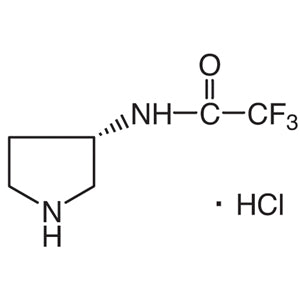
- TCI T1369 141043-16-5 (3R)-(+)-3-(Trifluoroacetamido)pyrrolidine Hydrochloride
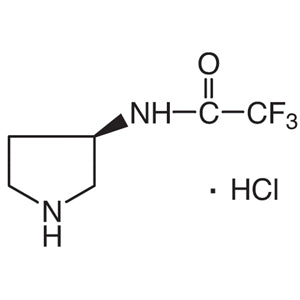
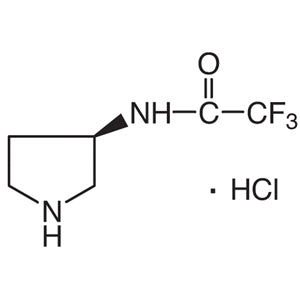
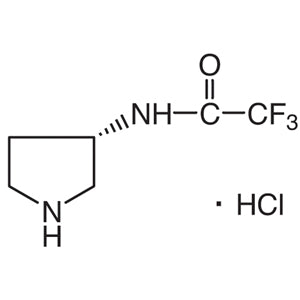
- TCI T1366 132883-43-3 (3S)-(-)-3-(Trifluoroacetamido)pyrrolidine Hydrochloride
- TCI B3662 61478-26-0 (2S,4R)-1-(tert-Butoxycarbonyl)-4-hydroxy-2-(hydroxymethyl)pyrrolidine
- TCI B1932 131878-23-4 (3R)-(+)-1-Benzyl-3-(tert-butoxycarbonylamino)pyrrolidine
- Asymmetric Synthesis: This compound is ideal for asymmetric synthesis due to its chiral structure, enabling the creation of enantiomerically pure compounds with specific optical properties.
- Pharmaceutical Research: It is frequently used in the development of bioactive compounds, supporting the synthesis of drugs with targeted therapeutic effects.
- Organic Chemistry Studies: Its reactivity and functional groups make it a valuable tool for exploring new synthetic pathways and reaction mechanisms.
- Industrial Chemical Synthesis: The compound's versatility allows it to be used in the production of various industrial chemicals, including intermediates for specialty products.
- Chiral Building Block Applications: It serves as a foundational element in the construction of complex molecules, offering a reliable starting point for chiral synthesis.
| Brand | TCI |
|---|---|
| CAS number | 59983-39-0 |
| Molecular formula | — |
| Purity | — |
| Category | Chemistry > Asymmetric Synthesis > Chiral Building Blocks |
| Pack sizes | Available in various quantities as per supplier specifications |
| Physical form | Solid or liquid, depending on the specific product variant |
| Storage | Store in a cool, dry place away from light and moisture |
This compound should be stored in a cool, dry environment, away from direct sunlight and moisture. It is recommended to use airtight containers to prevent exposure to air and humidity. Due to its chemical nature, it should be handled with care, using appropriate personal protective equipment such as gloves and safety goggles. It is important to ensure that the storage area is well-ventilated to minimize any potential risks associated with its reactivity. Proper labeling of containers is essential for safe handling and to prevent accidental exposure. Always follow standard laboratory safety protocols when working with this compound to ensure a safe and controlled environment.
—
Produk Terkait
-
(R)-(+)-1-Amino-2-(methoxymethyl)pyrrolidine TCI A1337
Regular price Rp 8.082.900,00Regular price -
(R)-(+)-2-(Methoxymethyl)-1-pyrrolidinecarboxaldehyde TCI M1170
Regular price Rp 1.510.950,00Regular priceRp 1.072.050,00Sale price Rp 1.510.950,00 -
(3R)-(+)-3-(Trifluoroacetamido)pyrrolidineHydrochloride TCI T1369
Regular price Rp 2.439.150,00Regular priceRp 1.720.950,00Sale price Rp 2.439.150,00 -
(3S)-(-)-3-(Trifluoroacetamido)pyrrolidineHydrochloride TCI T1366
Regular price Rp 1.351.350,00Regular priceRp 960.750,00Sale price Rp 1.351.350,00 -
(2S,4R)-1-(tert-Butoxycarbonyl)-4-hydroxy-2-(hydroxymethyl)pyrrolidine TCI B3662
Regular price From Rp 1.273.650,00Regular price -
(3R)-(+)-1-Benzyl-3-(tert-butoxycarbonylamino)pyrrolidine TCI B1932
Regular price Rp 2.068.500,00Regular price -
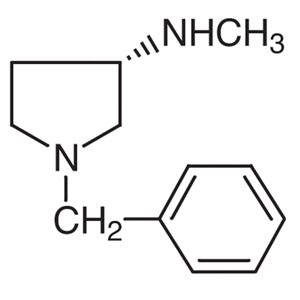
(3S)-(+)-1-Benzyl-3-(methylamino)pyrrolidine TCI B1583
Regular price From Rp 955.500,00Regular price -
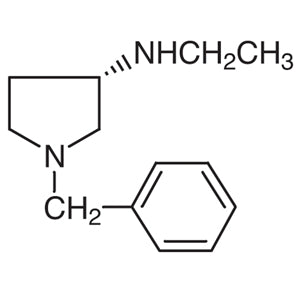
(3S)-(+)-1-Benzyl-3-(ethylamino)pyrrolidine TCI B1581
Regular price From Rp 2.199.750,00Regular price