


(R)-(+)-2-(Methoxymethyl)-1-pyrrolidinecarboxaldehyde is the N-formyl derivative of a chiral pyrrolidine bearing a methoxymethyl group. Adding the formyl group to the nitrogen atom converts the free amine into a protected amide, so this compound functions as a chiral building block whose nitrogen is already capped and no longer nucleophilic. In asymmetric synthesis laboratories, a protected form of this kind matters because it allows transformations to be carried out on other parts of the molecule without interference from side reactions of the amine, while preserving the integrity of the stereogenic centre throughout a sequence of steps.
The characteristic that makes it a preferred choice is its better chemical stability compared with the parent free amine. The formyl group lowers the basicity of the nitrogen, so the compound is more resistant to air oxidation and to absorption of carbon dioxide. At the same time, the formyl amide belongs to the class of protecting groups that are relatively easy to remove again by hydrolysis under controlled conditions, so the chiral pyrrolidine can be recovered when required. The amide bond, with its hindered rotation, also produces a rigid conformation, which is in fact an advantage in directing stereochemistry.
In Indonesian laboratories, the (R) configuration matters because the material is used where a defined single enantiomer is the whole point of the purchase. It is typically handled in university and institutional research groups working on asymmetric synthesis, and in method development work where a protected chiral pyrrolidine is carried through a multi-step route. Quantities are usually modest, consistent with research-scale rather than production-scale use.
TCI brochures (PDF)
- Asymmetric Synthesis 2026-03-18 · p. 8
- Chiral Building Blocks 2025-04-14 · p. 3
Related TCI products
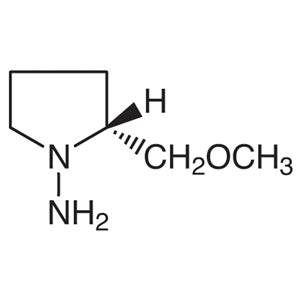
- TCI A1337 72748-99-3 (R)-(+)-1-Amino-2-(methoxymethyl)pyrrolidine
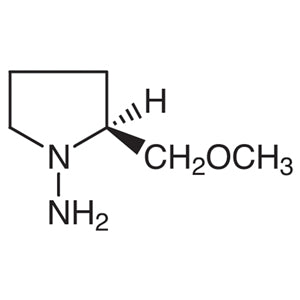
- TCI A1335 59983-39-0 (S)-(-)-1-Amino-2-(methoxymethyl)pyrrolidine
- TCI B3299 157528-56-8 (R)-1-Benzyl-3-pyrrolidinecarbonitrile
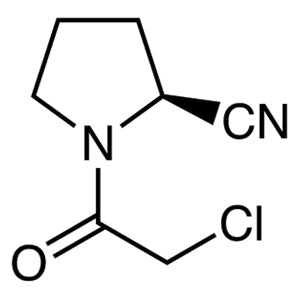
- TCI C3202 207557-35-5 (S)-1-(Chloroacetyl)-2-pyrrolidinecarbonitrile
- TCI T2059 3089-11-0 2,4,6-Tris[bis(methoxymethyl)amino]-1,3,5-triazine
- TCI B3880 59378-75-5 1-(tert-Butoxycarbonyl)-3-pyrrolidinecarboxylic Acid
- Asymmetric synthesis route development: the compound supplies a defined single-enantiomer pyrrolidine framework whose stereogenic centre survives multi-step sequences, giving reproducible stereochemical outcomes in route scouting.
- Chiral building block incorporation: the methoxymethyl-substituted pyrrolidine core can be carried into larger target molecules while the capped nitrogen prevents unwanted nucleophilic participation during intermediate steps.
- Protected-amine chemistry: because the nitrogen is already present as a formyl amide, chemists can run transformations elsewhere on the molecule without a separate protection step at the start of the sequence.
- Stereochemical direction studies: the hindered rotation of the amide bond produces a rigid conformation that is useful when investigating how a conformationally constrained scaffold directs the stereochemistry of a reaction.
- Deprotection and amine recovery work: the formyl group can be removed again by hydrolysis under controlled conditions, allowing the free chiral pyrrolidine to be regenerated when a route requires it.
| Brand | TCI |
|---|---|
| CAS number | 121817-71-8 |
| Molecular formula | — |
| Purity | — |
| Category | Chemistry > Asymmetric Synthesis > Chiral Building Blocks |
| Pack sizes | research-scale laboratory packs; please confirm the available pack size when ordering |
| Physical form | — |
| Storage | keep in a cool, dry place in a tightly closed container, away from moisture |
- Catalogue reference: M1170
Store the container tightly closed in a cool, dry and well-ventilated area, away from moisture and from sources of heat or ignition. Keep the material in its original supplier container, or in a chemically compatible sealed glass container that is clearly labelled with the compound name and CAS number. Handle in a fume hood using standard laboratory personal protective equipment, including safety glasses, gloves and a laboratory coat. Because the formyl amide is susceptible to hydrolysis, minimise exposure to atmospheric moisture by closing the container promptly after use. Consult the manufacturer's safety data sheet before first use, and dispose of residues through the laboratory's established chemical waste procedures.
—
Produk Terkait
-
(R)-(+)-1-Amino-2-(methoxymethyl)pyrrolidine TCI A1337
Regular price Rp 8.082.900,00Regular price -
(S)-(-)-1-Amino-2-(methoxymethyl)pyrrolidine TCI A1335
Regular price From Rp 4.982.250,00Regular price -
(R)-1-Benzyl-3-pyrrolidinecarbonitrile TCI B3299
Regular price From Rp 5.512.500,00Regular price -
(S)-1-(Chloroacetyl)-2-pyrrolidinecarbonitrile TCI C3202
Regular price From Rp 2.597.700,00Regular price -
2,4,6-Tris[bis(methoxymethyl)amino]-1,3,5-triazine TCI T2059
Regular price From Rp 2.650.200,00Regular price -
1-(tert-Butoxycarbonyl)-3-pyrrolidinecarboxylicAcid TCI B3880
Regular price Rp 1.670.550,00Regular price -
(2S,4S)-1-(tert-Butoxycarbonyl)-4-fluoro-2-pyrrolidinecarboxylicAcid TCI B3178
Regular price From Rp 477.750,00Regular price -
(2S,4R)-1-(tert-Butoxycarbonyl)-4-fluoro-2-pyrrolidinecarboxylicAcid TCI B3177
Regular price From Rp 557.550,00Regular price

![3089-11-0 2,4,6-Tris[bis(methoxymethyl)amino]-1,3,5-triazine - AMI Scientific](http://amiscientific.com/cdn/shop/files/TCI2510T2059.jpg?v=1767142587&width=533)


