N-Acetyl-2-(4-nitrophenyl)ethylamine is a chemical compound widely used as a building block in the synthesis of complex organic molecules. This versatile reagent plays a crucial role in organic chemistry laboratories, where it serves as a foundational component for the creation of various functional groups and molecular structures. Its unique molecular structure enables it to participate in a range of chemical reactions, including substitution, reduction, and coupling reactions, making it an essential tool for synthetic chemists. The compound is particularly valuable in research settings that require precise control over reaction conditions and outcomes.
The compound’s chemical properties make it a preferred choice for applications requiring high reactivity and specificity. Its molecular framework allows for multiple functional group modifications, which is highly beneficial in drug discovery and development. The compound exhibits stability under controlled conditions, although it is sensitive to moisture and air exposure, necessitating careful handling and storage. These characteristics make it ideal for use in environments where reproducibility and accuracy are paramount. Its reactivity and structural versatility are key factors in its widespread use across various research fields.
In Indonesian laboratories, N-Acetyl-2-(4-nitrophenyl)ethylamine is commonly used in organic chemistry and pharmacological research. It is a key reagent in the development of new compounds and the study of molecular interactions. Many research institutions and universities in Indonesia rely on this compound for experiments that require precise chemical structures and predictable reactivity. Its application is particularly relevant in the field of medicinal chemistry and synthetic organic chemistry.
Related TCI products
- Organic Synthesis: This compound is ideal for constructing complex molecules due to its reactivity and structural versatility, enabling the synthesis of a wide range of derivatives.
- Pharmacological Research: It is frequently used in drug development to create compounds with specific biological activities and molecular targets.
- Functional Group Modification: Its ability to undergo various chemical transformations makes it suitable for modifying existing molecules to enhance their properties.
- Coupling Reactions: The compound’s structure facilitates efficient coupling reactions, making it valuable in the synthesis of bioactive molecules.
- Structural Elucidation Studies: It is used in research aimed at understanding molecular behavior and reactivity under different conditions.
| Brand | TCI |
|---|---|
| CAS number | 6270-07-1 |
| Molecular formula | — |
| Purity | — |
| Category | Chemistry > Building Blocks > Non-Heterocyclic Building Blocks |
| Pack sizes | Available in various quantities as per supplier specifications |
| Physical form | Solid or liquid, depending on the specific product variant |
| Storage | Store in a cool, dry place away from moisture and air exposure |
This compound should be stored in a cool, dry environment to maintain its chemical stability. It is recommended to use airtight containers to prevent exposure to moisture and air, which can degrade its properties. Due to its sensitivity, it should be handled in a well-ventilated area, preferably with appropriate personal protective equipment. Avoid direct contact with skin and eyes, and ensure proper disposal of any unused material. Regular monitoring of storage conditions is essential to ensure the compound remains suitable for use in laboratory applications.
—
Produk Terkait
-
4-NitrophenylAcetate TCI A0040
Regular price From Rp 3.896.550,00Regular priceRp 2.724.750,00Sale price From Rp 3.896.550,00 -
4-NitrophenylButyrate TCI N1316
Regular price From Rp 1.988.700,00Regular priceRp 1.390.200,00Sale price From Rp 1.988.700,00 -
(E)-4-(4-Nitrophenyl)but-3-en-2-one TCI N1263
Regular price From Rp 2.041.200,00Regular priceRp 1.442.700,00Sale price From Rp 2.041.200,00 -
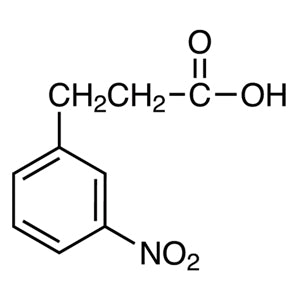
3-(3-Nitrophenyl)propionicAcid TCI N0960
Regular price From Rp 2.359.350,00Regular priceRp 1.665.300,00Sale price From Rp 2.359.350,00 -
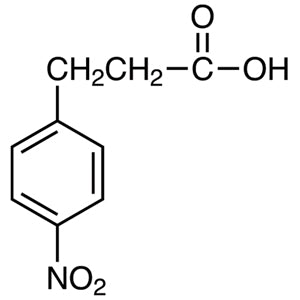
3-(4-Nitrophenyl)propionicAcid TCI N0944
Regular price Rp 1.510.950,00Regular priceRp 1.072.050,00Sale price Rp 1.510.950,00 -
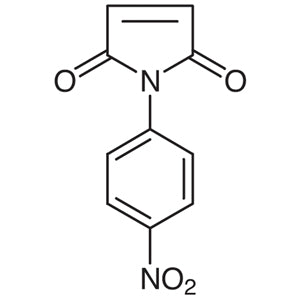
N-(4-Nitrophenyl)maleimide TCI N0638
Regular price Rp 4.081.350,00Regular priceRp 2.869.650,00Sale price Rp 4.081.350,00 -
4-NitrophenylLaurate TCI L0100
Regular price From Rp 822.150,00Regular priceRp 590.100,00Sale price From Rp 822.150,00 -
4-NitrophenylHexanoate TCI H0484
Regular price From Rp 2.914.800,00Regular priceRp 2.053.800,00Sale price From Rp 2.914.800,00