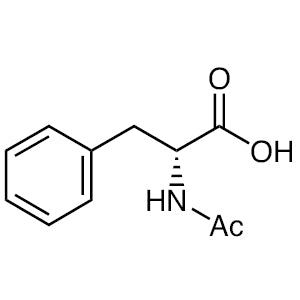
N-Acetyl-L-phenylalanine is a chemical compound widely used in laboratory experiments across chemical and biochemical fields. It serves as a crucial component in peptide synthesis, playing a significant role in the development of pharmaceuticals and organic chemicals. This compound is essential for research involving protein structure and metabolism, particularly within the domain of chemical biology. Its stability and controlled reactivity make it a popular choice among researchers for various experimental applications.
The compound’s molecular structure features an acetylated amine group and a phenylalanine moiety, which are key to its chemical behavior. It is non-polar and dissolves well in organic solvents such as ethyl acetate and acetone, making it ideal for synthesis reactions and laboratory testing. These properties ensure its versatility in different experimental setups. Additionally, its low toxicity at normal dosages enhances its safety profile, allowing for broader use in research environments.
In Indonesian laboratories, N-Acetyl-L-phenylalanine is commonly utilized in chemical biology, pharmaceutical, and biotechnology research. It is an integral part of experiments aimed at understanding molecular interactions, drug development, and biochemical processes. Its availability and reliability make it a standard material in academic and industrial research settings.
TCI brochures (PDF)
- Amino Acids and Peptide Synthesis Reagents 2025-08-14 · p. 11
Related TCI products
- TCI A0105 10172-89-1 N-Acetyl-D-phenylalanine
- TCI A2864 2901-75-9 N-Acetyl-DL-phenylalanine
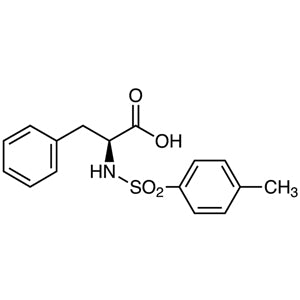
- TCI T1443 13505-32-3 N-(p-Toluenesulfonyl)-L-phenylalanine
- TCI B5350 68856-96-2 N-(tert-Butoxycarbonyl)-4-methoxy-D-phenylalanine
- TCI B5011 85466-66-6 N-(tert-Butoxycarbonyl)-N-methyl-D-phenylalanine
- TCI B4877 131724-45-3 N-(tert-Butoxycarbonyl)-4-cyano-L-phenylalanine
- Peptide Synthesis: N-Acetyl-L-phenylalanine is a key building block in the synthesis of peptides, supporting the creation of complex molecular structures used in drug development.
- Protein Structure Analysis: Its role in mimicking amino acid residues makes it valuable for studying protein folding and conformational changes.
- Organic Chemistry Reactions: The compound’s solubility in organic solvents facilitates its use in various synthetic pathways and reaction mechanisms.
- Metabolic Research: It is used to investigate metabolic pathways and enzyme activity in biochemical systems.
- Drug Development: Its involvement in peptide-based therapeutics makes it relevant for pharmaceutical research and compound screening.
| Brand | TCI |
|---|---|
| CAS number | 2018-61-3 |
| Molecular formula | — |
| Purity | — |
| Category | Chemistry > Chemical Biology > Peptide Chemistry |
| Pack sizes | Available in various quantities as per supplier specifications |
| Physical form | Solid powder |
| Storage | Store in a cool, dry place away from moisture and direct sunlight |
N-Acetyl-L-phenylalanine should be stored in a cool, dry environment to maintain its chemical integrity. It is recommended to keep the compound in a sealed container to prevent exposure to moisture and air. Due to its non-polar nature, it is advisable to use glass or plastic containers that are resistant to organic solvents. Avoid storing it near heat sources or in areas with high humidity. General laboratory precautions include wearing appropriate personal protective equipment when handling the compound to ensure safety during experiments. Proper labeling of containers is essential for safe handling and to prevent accidental misuse.
—
Product Categories
Produk Terkait
-
N-Acetyl-D-phenylalanine TCI A0105
Regular price From Rp 1.140.300,00Regular priceRp 812.700,00Sale price From Rp 1.140.300,00 -
N-Acetyl-DL-phenylalanine TCI A2864
Regular price From Rp 637.350,00Regular priceRp 460.950,00Sale price From Rp 637.350,00 -
N-(p-Toluenesulfonyl)-L-phenylalanine TCI T1443
Regular price From Rp 900.900,00Regular priceRp 645.750,00Sale price From Rp 900.900,00 -
N-(tert-Butoxycarbonyl)-4-methoxy-D-phenylalanine TCI B5350
Regular price From Rp 1.723.050,00Regular priceRp 1.220.100,00Sale price From Rp 1.723.050,00 -
N-(tert-Butoxycarbonyl)-N-methyl-D-phenylalanine TCI B5011
Regular price From Rp 1.643.250,00Regular priceRp 1.164.450,00Sale price From Rp 1.643.250,00 -
N-(tert-Butoxycarbonyl)-4-cyano-L-phenylalanine TCI B4877
Regular price From Rp 2.518.950,00Regular priceRp 1.776.600,00Sale price From Rp 2.518.950,00 -
N-(tert-Butoxycarbonyl)-4-trifluoromethyl-L-phenylalanine TCI B4369
Regular price Rp 6.306.300,00Regular priceRp 4.425.750,00Sale price Rp 6.306.300,00 -
N-(tert-Butoxycarbonyl)-L-homophenylalanine TCI B4356
Regular price Rp 717.150,00Regular priceRp 516.600,00Sale price Rp 717.150,00