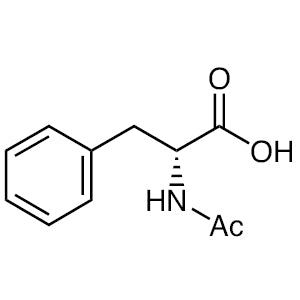
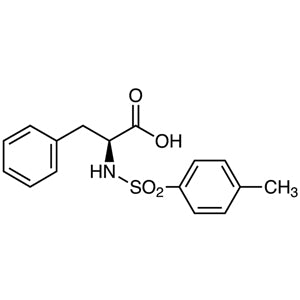
N-Acetyl-DL-phenylalanine is a chemical compound widely used in chemical and biochemical experiments. It serves as a crucial component in peptide synthesis, particularly in research focused on protein structure and function. This compound is often utilized in laboratory settings to enhance chemical reactions that require modified amino acids. Its role in the laboratory is essential for the development of pharmaceuticals and other bioactive compounds.
N-Acetyl-DL-phenylalanine is valued for its chemical stability and reactivity under specific conditions. It has a complex molecular structure but can be produced in a pure form suitable for laboratory experiments. Its high purity ensures accurate and reliable experimental results. Additionally, it dissolves well in organic solvents, making it convenient for processing and application in various experimental protocols.
In Indonesian laboratories, N-Acetyl-DL-phenylalanine is extensively used in chemical and biochemical research, especially in higher education institutions and research organizations. Its versatility and reliability make it a preferred choice for scientists working on peptide chemistry and related fields. It supports a wide range of experimental applications, contributing to the advancement of scientific knowledge in Indonesia.
TCI brochures (PDF)
- Amino Acids and Peptide Synthesis Reagents 2025-08-14 · p. 11
Related TCI products
- TCI A0105 10172-89-1 N-Acetyl-D-phenylalanine
- TCI A1541 2018-61-3 N-Acetyl-L-phenylalanine
- TCI T1443 13505-32-3 N-(p-Toluenesulfonyl)-L-phenylalanine
- TCI B5350 68856-96-2 N-(tert-Butoxycarbonyl)-4-methoxy-D-phenylalanine
- TCI B5011 85466-66-6 N-(tert-Butoxycarbonyl)-N-methyl-D-phenylalanine
- TCI B4369 114873-07-3 N-(tert-Butoxycarbonyl)-4-trifluoromethyl-L-phenylalanine
- Peptide Synthesis: N-Acetyl-DL-phenylalanine is commonly used in the synthesis of peptides due to its structural compatibility with amino acid sequences and its ability to participate in peptide bond formation.
- Protein Structure Studies: It plays a key role in research related to protein structure and function, aiding in the analysis of amino acid interactions and conformational changes.
- Biochemical Reactions: The compound is ideal for biochemical experiments where modified amino acids are required to study enzyme activity and metabolic pathways.
- Pharmaceutical Development: It is a valuable reagent in the development of new drugs and bioactive compounds, supporting the design of therapeutic agents.
- Organic Chemistry Research: Its solubility and reactivity make it suitable for various organic reactions, contributing to the synthesis of complex molecules.
| Brand | TCI |
|---|---|
| CAS number | 2901-75-9 |
| Molecular formula | — |
| Purity | — |
| Category | Chemistry > Chemical Biology > Peptide Chemistry |
| Pack sizes | Available in various quantities as per supplier specifications |
| Physical form | Solid powder |
| Storage | Store in a cool, dry place away from light and moisture |
N-Acetyl-DL-phenylalanine should be stored in a cool, dry environment, away from direct light and moisture to maintain its stability and purity. It is recommended to use airtight containers to prevent exposure to humidity and contaminants. In laboratory settings, it should be handled with appropriate personal protective equipment, such as gloves and safety goggles, to ensure safe handling. The compound is generally non-hazardous but should be stored separately from incompatible substances. Regular monitoring of storage conditions is advised to ensure the integrity of the material during long-term use. Proper labeling of containers is essential for safe access and use in the laboratory environment.
—
Product Categories
Produk Terkait
-
N-Acetyl-D-phenylalanine TCI A0105
Regular price From Rp 1.140.300,00Regular priceRp 812.700,00Sale price From Rp 1.140.300,00 -
N-Acetyl-L-phenylalanine TCI A1541
Regular price From Rp 980.700,00Regular priceRp 701.400,00Sale price From Rp 980.700,00 -
N-(p-Toluenesulfonyl)-L-phenylalanine TCI T1443
Regular price From Rp 900.900,00Regular priceRp 645.750,00Sale price From Rp 900.900,00 -
N-(tert-Butoxycarbonyl)-4-methoxy-D-phenylalanine TCI B5350
Regular price From Rp 1.723.050,00Regular priceRp 1.220.100,00Sale price From Rp 1.723.050,00 -
N-(tert-Butoxycarbonyl)-N-methyl-D-phenylalanine TCI B5011
Regular price From Rp 1.643.250,00Regular priceRp 1.164.450,00Sale price From Rp 1.643.250,00 -
N-(tert-Butoxycarbonyl)-4-trifluoromethyl-L-phenylalanine TCI B4369
Regular price Rp 6.306.300,00Regular priceRp 4.425.750,00Sale price Rp 6.306.300,00 -
N-(tert-Butoxycarbonyl)-L-homophenylalanine TCI B4356
Regular price Rp 717.150,00Regular priceRp 516.600,00Sale price Rp 717.150,00