2-(2-Aminoethyl)thiophene is a chemical compound widely used as a building block in the synthesis of heterocyclic compounds. Its unique structure combines a thiophene ring with an aminoethyl group, making it a versatile intermediate in organic chemistry. This compound plays a crucial role in laboratory settings where the development of complex molecules is required. Due to its chemical stability and reactivity, it is frequently employed in research to create compounds with specific biological activities.
The compound's reactivity and structural versatility make it a preferred choice for chemists. It can participate in various chemical reactions, including substitution, reduction, and cross-coupling, which allows for the synthesis of a wide range of derivatives. Its ability to undergo multiple chemical modifications also makes it adaptable to different research needs. These properties ensure that it remains a valuable tool in synthetic chemistry.
In Indonesian laboratories, 2-(2-Aminoethyl)thiophene is commonly used in organic chemistry and pharmacological research. Local researchers often utilize it to develop new compounds with potential therapeutic applications. Its presence in scientific studies highlights its importance in advancing chemical and pharmaceutical research in the region.
TCI brochures (PDF)
- Thiophenes 2026-06-29 · p. 8
Related TCI products
- TCI A0304 140-31-8 N-(2-Aminoethyl)piperazine
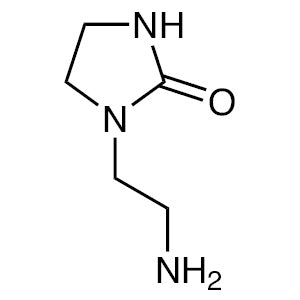
- TCI A3472 6281-42-1 1-(2-Aminoethyl)imidazolidin-2-one
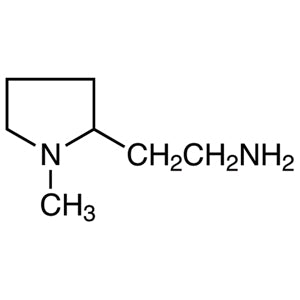
- TCI A2382 51387-90-7 2-(2-Aminoethyl)-1-methylpyrrolidine
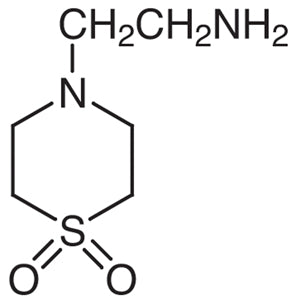
- TCI A1803 89937-52-0 4-(2-Aminoethyl)thiomorpholine 1,1-Dioxide
- TCI A0884 7154-73-6 1-(2-Aminoethyl)pyrrolidine
- TCI A0883 2038-03-1 4-(2-Aminoethyl)morpholine
- Organic synthesis applications benefit from this compound's ability to participate in various reaction types, enabling the creation of complex molecular structures.
- Pharmacological research utilizes it to develop compounds with specific biological activities, supporting drug discovery efforts.
- Heterocyclic compound synthesis relies on its unique structure, making it a key intermediate in the production of diverse chemical derivatives.
- Chemical modification studies take advantage of its reactivity and structural flexibility, allowing for tailored molecular designs.
- Research into bioactive molecules benefits from its potential to form compounds with therapeutic applications in medicinal chemistry.
| Brand | TCI |
|---|---|
| CAS number | 30433-91-1 |
| Molecular formula | — |
| Purity | — |
| Category | Chemistry > Building Blocks > Heterocyclic Building Blocks |
| Pack sizes | Available in standard laboratory quantities |
| Physical form | Solid or liquid, depending on the specific product variant |
| Storage | Store in a cool, dry place away from direct sunlight |
This compound should be stored in a cool, dry environment, away from direct sunlight and sources of heat. It is recommended to use airtight containers to prevent moisture absorption and contamination. Due to its chemical reactivity, it should be handled with appropriate personal protective equipment, including gloves and safety goggles. Proper ventilation is essential when working with this material to minimize exposure. It should be kept away from incompatible substances such as strong oxidizers. Regular inspection of storage conditions ensures the compound remains stable and suitable for use in laboratory applications.
—
Produk Terkait
-
N-(2-Aminoethyl)piperazine TCI A0304
Regular price From Rp 557.550,00Regular priceRp 405.300,00Sale price From Rp 557.550,00 -
1-(2-Aminoethyl)imidazolidin-2-one TCI A3472
Regular price From Rp 1.618.050,00Regular priceRp 1.146.600,00Sale price From Rp 1.618.050,00 -
2-(2-Aminoethyl)-1-methylpyrrolidine TCI A2382
Regular price Rp 822.150,00Regular priceRp 590.100,00Sale price Rp 822.150,00 -
4-(2-Aminoethyl)thiomorpholine1,1-Dioxide TCI A1803
Regular price From Rp 2.650.200,00Regular priceRp 1.869.000,00Sale price From Rp 2.650.200,00 -
1-(2-Aminoethyl)pyrrolidine TCI A0884
Regular price From Rp 1.749.300,00Regular priceRp 1.239.000,00Sale price From Rp 1.749.300,00 -
4-(2-Aminoethyl)morpholine TCI A0883
Regular price From Rp 1.140.300,00Regular priceRp 812.700,00Sale price From Rp 1.140.300,00 -
1-(2-Dimethylaminoethyl)-5-mercaptotetrazole TCI D2032
Regular price Rp 1.298.850,00Regular priceRp 924.000,00Sale price Rp 1.298.850,00 -
1-(2-Dimethylaminoethyl)-4-methylpiperazine TCI D1766
Regular price From Rp 928.200,00Regular priceRp 664.650,00Sale price From Rp 928.200,00