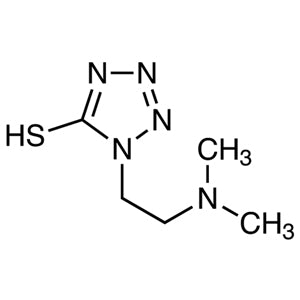
1-(2-Dimethylaminoethyl)-5-mercaptotetrazole is a chemical compound widely used in laboratory settings for the synthesis of heterocyclic compounds. It serves as a key building block in organic chemistry, playing a vital role in the development of complex molecular structures. This compound is particularly valuable in the creation of tetrazole-containing molecules, which are essential in pharmaceutical and industrial applications. Its versatility makes it a preferred choice for researchers aiming to explore new synthetic pathways and functional group modifications.
The compound's high reactivity and ability to form stable bonds with various functional groups make it a preferred choice in synthetic chemistry. Its unique structure allows for participation in substitution, coupling, and structural modification reactions. These properties enable chemists to design and synthesize a wide range of compounds with tailored functionalities. The presence of both an amino group and a thiol group further enhances its reactivity, making it suitable for diverse chemical transformations.
In Indonesian laboratories, this compound is commonly used in organic chemistry and pharmaceutical research. It is a staple in academic and industrial research settings, where it is employed to develop new compounds with potential applications in medicine and chemical industries. Its role in advancing research in these fields is well recognized, contributing to the growth of scientific innovation in the region.
TCI brochures (PDF)
Related TCI products
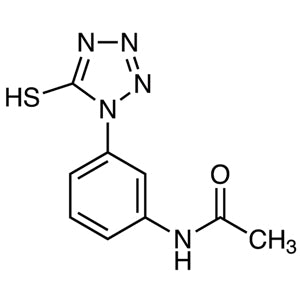
- TCI A1352 14070-48-5 1-(3-Acetamidophenyl)-5-mercaptotetrazole
- TCI D1766 104-19-8 1-(2-Dimethylaminoethyl)-4-methylpiperazine
- TCI A0304 140-31-8 N-(2-Aminoethyl)piperazine
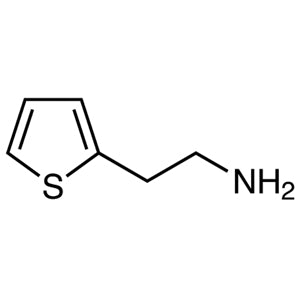
- TCI A1637 30433-91-1 2-(2-Aminoethyl)thiophene
- TCI A0884 7154-73-6 1-(2-Aminoethyl)pyrrolidine
- TCI A0883 2038-03-1 4-(2-Aminoethyl)morpholine
- Organic synthesis is a primary application where this compound is used to build complex molecular structures, especially in the synthesis of heterocyclic compounds.
- Pharmaceutical research benefits from its reactivity, enabling the development of new drug candidates with specific functional groups.
- Industrial chemical production utilizes this compound for the creation of specialized chemicals with unique properties.
- Structural modification experiments rely on its ability to participate in various chemical reactions, allowing for the design of new molecular architectures.
- Functional group transformations are enhanced by its capacity to form stable bonds with diverse functional groups, expanding synthetic possibilities.
| Brand | TCI |
|---|---|
| CAS number | 61607-68-9 |
| Molecular formula | — |
| Purity | — |
| Category | Chemistry > Building Blocks > Heterocyclic Building Blocks |
| Pack sizes | Available in various quantities as per standard laboratory supply |
| Physical form | Solid (exact form may vary depending on supplier) |
| Storage | Store in a cool, dry place away from direct sunlight |
This compound should be stored in a cool, dry environment to maintain its chemical stability. It is recommended to use airtight containers to prevent exposure to moisture and air, which could affect its reactivity. Due to its high reactivity, it should be handled with care in a well-ventilated laboratory setting. Protective gloves and eyewear should be worn when handling to ensure safety. It is important to keep it away from incompatible substances to avoid any potential chemical reactions. Proper labeling and storage conditions are essential to ensure its effectiveness and safety in laboratory use.
—
Produk Terkait
-
1-(3-Acetamidophenyl)-5-mercaptotetrazole TCI A1352
Regular price Rp 2.227.050,00Regular price -
1-(2-Dimethylaminoethyl)-4-methylpiperazine TCI D1766
Regular price From Rp 875.700,00Regular price -
N-(2-Aminoethyl)piperazine TCI A0304
Regular price From Rp 505.050,00Regular price -
2-(2-Aminoethyl)thiophene TCI A1637
Regular price From Rp 743.400,00Regular price -
1-(2-Aminoethyl)pyrrolidine TCI A0884
Regular price From Rp 1.696.800,00Regular price -
4-(2-Aminoethyl)morpholine TCI A0883
Regular price From Rp 1.087.800,00Regular price -
tert-Butyl4-(2-Aminoethyl)piperazine-1-carboxylate TCI B6740
Regular price From Rp 2.757.300,00Regular price -
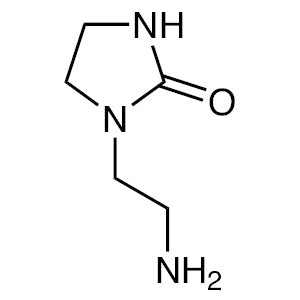
1-(2-Aminoethyl)imidazolidin-2-one TCI A3472
Regular price From Rp 1.565.550,00Regular price