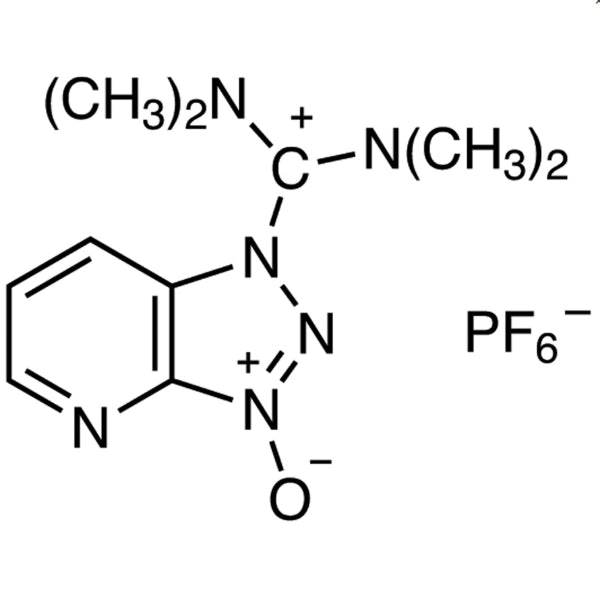
Hydroxyethylamine (HATU), with the CAS number 148893-10-1, is a chemical compound widely used in laboratory settings, particularly in chemical biology and peptide chemistry. As a versatile reagent, HATU plays a crucial role in organic synthesis by facilitating the formation of amide bonds through its ability to activate carboxylic acid groups. Its reactivity makes it an essential tool for researchers working on complex molecular structures, including drug development and bioactive compound synthesis. In Indonesian laboratories, HATU is a common choice for scientists aiming to achieve precise chemical transformations in controlled environments.
HATU is valued for its chemical stability under specific conditions and its high reactivity towards various functional groups. These properties make it an ideal reagent for promoting efficient and selective reactions, especially in peptide synthesis where accuracy is paramount. Its ability to act as both a reagent and a catalyst enhances its utility across multiple experimental protocols. The compound’s effectiveness in accelerating reaction rates without compromising product purity further solidifies its position as a preferred choice in modern chemical research.
In Indonesian laboratories, HATU is extensively used in academic and industrial research settings. It is commonly found in chemical and biochemical laboratories, where it supports the synthesis of organic compounds and peptides. Researchers in both educational institutions and research centers rely on HATU to advance their studies in molecular chemistry and drug discovery. Its widespread use underscores its importance in the scientific community in Indonesia.
Advantages (TCI brochure)
- High reactivity
- Suppressed epimerization
TCI brochures (PDF)
- Condensing Agents 2025-11-18 · p. 2
- Amino Acids and Peptide Synthesis Reagents 2025-08-14 · p. 39
- Reagents for Biological Research 2025-03-11 · p. 59
Related TCI products
- TCI T2929 265651-18-1 N,N,N',N'-Tetramethyl-O-(N-succinimidyl)uronium Hexafluorophosphate
- TCI T2224 105832-38-0 N,N,N',N'-Tetramethyl-O-(N-succinimidyl)uronium Tetrafluoroborate
- TCI B4805 105379-24-6 O-(Benzotriazol-1-yl)-N,N,N',N'-bis(tetramethylene)uronium Hexafluorophosphate
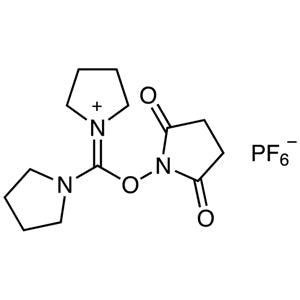
- TCI B3817 207683-26-9 N,N,N',N'-Bis(tetramethylene)-O-(N-succinimidyl)uronium Hexafluorophosphate
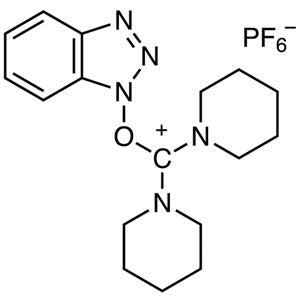
- TCI B3816 206752-41-2 O-(Benzotriazol-1-yl)-N,N,N',N'-bis(pentamethylene)uronium Hexafluorophosphate
- TCI B2680 132705-51-2 Bromotripyrrolidinophosphonium Hexafluorophosphate
- Peptide Synthesis: HATU is widely used in solid-phase peptide synthesis due to its ability to activate carboxylic acid groups, enabling efficient coupling reactions.
- Organic Compound Synthesis: Its reactivity makes it suitable for the synthesis of various organic compounds, including pharmaceutical intermediates and bioactive molecules.
- Biochemical Research: HATU supports the development of bioactive compounds and is used in studies related to enzyme kinetics and molecular interactions.
- Drug Development: Its role in amide bond formation is critical in the synthesis of drug molecules, making it a key reagent in pharmaceutical research.
- Analytical Chemistry: HATU is used in the preparation of standards and reagents for analytical techniques such as HPLC and mass spectrometry.
From the TCI brochure
- Amide coupling, shown with an Fmoc-protected amino acid
| Brand | TCI |
|---|---|
| CAS number | 148893-10-1 |
| Molecular formula | — |
| Purity | — |
| Category | Chemistry > Chemical Biology > Peptide Chemistry |
| Pack sizes | Available in various sizes as per supplier specifications |
| Physical form | Typically supplied as a solid or liquid, depending on packaging |
| Storage | Should be stored in a cool, dry place away from moisture and incompatible substances |
Data from the TCI brochure
| Yield | Y. 99% (collidine (T0716), CH2Cl2:DMF = 2:1) |
|---|
Source: TCI brochure R5113 (2025-11-18)
HATU should be stored in a cool, dry environment to maintain its chemical stability and prevent degradation. It is recommended to keep it in airtight containers to minimize exposure to moisture and air, which can affect its reactivity. Due to its high reactivity, HATU should be handled with care, using appropriate personal protective equipment such as gloves and safety goggles. It is important to store it away from incompatible materials like strong oxidizers or acids to avoid unwanted chemical reactions. In laboratory settings, HATU should be kept in a well-ventilated area and accessed only when necessary to ensure safety and maintain its effectiveness.
—
Product Categories
Produk Terkait
-
N,N,N',N'-Tetramethyl-O-(N-succinimidyl)uroniumHexafluorophosphate TCI T2929
Regular price From Rp 1.246.350,00Regular priceRp 887.250,00Sale price From Rp 1.246.350,00 -
N,N,N',N'-Tetramethyl-O-(N-succinimidyl)uroniumTetrafluoroborate TCI T2224
Regular price From Rp 848.400,00Regular priceRp 609.000,00Sale price From Rp 848.400,00 -
O-(Benzotriazol-1-yl)-N,N,N',N'-bis(tetramethylene)uroniumHexafluorophosphate TCI B4805
Regular price From Rp 1.220.100,00Regular priceRp 868.350,00Sale price From Rp 1.220.100,00 -
N,N,N',N'-Bis(tetramethylene)-O-(N-succinimidyl)uroniumHexafluorophosphate TCI B3817
Regular price From Rp 1.351.350,00Regular priceRp 960.750,00Sale price From Rp 1.351.350,00 -
O-(Benzotriazol-1-yl)-N,N,N',N'-bis(pentamethylene)uroniumHexafluorophosphate TCI B3816
Regular price From Rp 875.700,00Regular priceRp 627.900,00Sale price From Rp 875.700,00 -
BromotripyrrolidinophosphoniumHexafluorophosphate TCI B2680
Regular price From Rp 1.510.950,00Regular priceRp 1.072.050,00Sale price From Rp 1.510.950,00 -
1H-Benzotriazol-1-yloxytripyrrolidinophosphoniumHexafluorophosphate[CouplingReagentforPeptide] TCI B1774
Regular price From Rp 1.033.200,00Regular priceRp 738.150,00Sale price From Rp 1.033.200,00 -
TBTU[CouplingReagentforPeptide] TCI B1658
Regular price From Rp 1.563.450,00Regular priceRp 1.108.800,00Sale price From Rp 1.563.450,00