2-Amino-3-formylchromone is a chemical compound widely used as a building block in the synthesis of complex molecules. It plays a crucial role in organic chemistry laboratories, where it serves as a versatile intermediate for creating a variety of chemical structures. Its unique molecular framework allows it to participate in multiple reaction types, making it an essential tool for researchers aiming to develop new compounds with specific functional properties. This compound is particularly valuable in the study of heterocyclic and aromatic systems, where its reactivity and structural adaptability are highly beneficial.
The compound's high reactivity and complex structure make it a preferred choice for chemical synthesis. It is capable of undergoing substitution, condensation, and redox reactions, which are fundamental in the creation of bioactive molecules. Its ability to form stable intermediates in various reaction pathways enhances its utility in both academic and industrial research settings. The chemical's versatility allows it to be tailored for specific applications, from pharmaceutical development to material science, making it a go-to reagent for many chemists.
In Indonesian laboratories, 2-Amino-3-formylchromone is commonly used in research related to organic chemistry and pharmacology. It is a key component in the development of new drugs and bioactive compounds, supporting scientific advancements in both academic and applied research. Its availability and reliability make it a standard reagent in many Indonesian research institutions, contributing to the growth of scientific innovation in the region.
Related TCI products
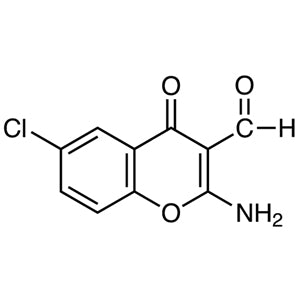
- TCI A2743 68301-77-9 2-Amino-6-chloro-3-formylchromone
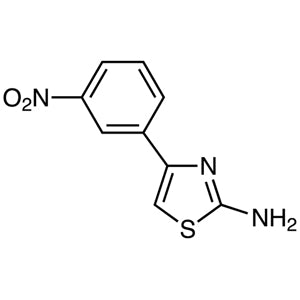
- TCI A3086 57493-24-0 2-Amino-4-(3-nitrophenyl)thiazole
- TCI A3039 103646-82-8 5-Amino-1-(p-tolyl)pyrazole-4-carbonitrile
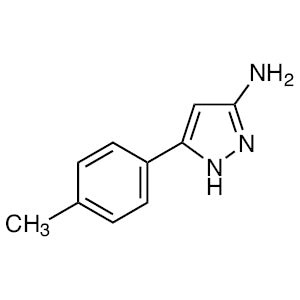
- TCI A2954 78597-54-3 5-Amino-3-(4-methylphenyl)pyrazole
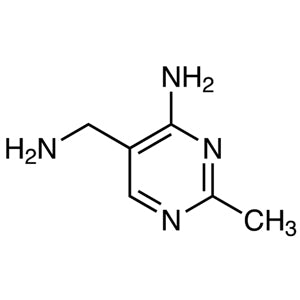
- TCI A2633 95-02-3 4-Amino-5-aminomethyl-2-methylpyrimidine
- TCI A2559 117098-94-9 5-Amino-2-(hydroxymethyl)phenylboronic Acid Cyclic Monoester
- Organic synthesis of heterocyclic compounds due to its versatile reactivity and structural adaptability.
- Development of bioactive molecules for pharmaceutical research as it supports the formation of complex structures.
- Investigation of redox reactions in chemical processes because of its ability to participate in electron transfer mechanisms.
- Creation of aromatic derivatives through condensation reactions, which are essential in synthetic chemistry.
- Exploration of substitution reactions in the design of new functional materials and chemical intermediates.
| Brand | TCI |
|---|---|
| CAS number | 61424-76-8 |
| Molecular formula | — |
| Purity | — |
| Category | Chemistry > Building Blocks > Non-Heterocyclic Building Blocks |
| Pack sizes | Available in various quantities as per standard chemical supply practices |
| Physical form | Solid or crystalline, depending on the specific product variant |
| Storage | Store in a cool, dry place away from light and moisture |
This compound should be stored in a cool, dry environment to maintain its chemical integrity. It is advisable to use airtight containers to prevent exposure to moisture and air, which can lead to degradation. Since it is a reactive chemical, it should be handled with care, using appropriate personal protective equipment such as gloves and safety goggles. Storage should be in a well-ventilated area to minimize the risk of inhalation of vapors. Avoid direct contact with skin or eyes, and ensure that the storage area is secure to prevent accidental spills or exposure. Proper labeling of containers is essential to ensure safe handling and usage in laboratory settings.
—
Produk Terkait
-
2-Amino-6-chloro-3-formylchromone TCI A2743
Regular price From Rp 1.378.650,00Regular priceRp 979.650,00Sale price From Rp 1.378.650,00 -
2-Amino-4-(3-nitrophenyl)thiazole TCI A3086
Regular price From Rp 717.150,00Regular priceRp 516.600,00Sale price From Rp 717.150,00 -
5-Amino-1-(p-tolyl)pyrazole-4-carbonitrile TCI A3039
Regular price Rp 3.365.250,00Regular priceRp 2.368.800,00Sale price Rp 3.365.250,00 -
5-Amino-3-(4-methylphenyl)pyrazole TCI A2954
Regular price From Rp 2.677.500,00Regular priceRp 1.887.900,00Sale price From Rp 2.677.500,00 -
4-Amino-5-aminomethyl-2-methylpyrimidine TCI A2633
Regular price Rp 4.796.400,00Regular priceRp 3.369.450,00Sale price Rp 4.796.400,00 -
5-Amino-2-(hydroxymethyl)phenylboronicAcidCyclicMonoester TCI A2559
Regular price Rp 15.845.550,00Regular priceRp 11.096.400,00Sale price Rp 15.845.550,00 -
Ethyl2-Amino-4-hydroxypyrimidine-5-carboxylate TCI E1247
Regular price From Rp 1.087.800,00Regular priceRp 775.950,00Sale price From Rp 1.087.800,00 -
6-Bromo-3-formylchromone TCI B2183
Regular price From Rp 637.350,00Regular priceRp 460.950,00Sale price From Rp 637.350,00