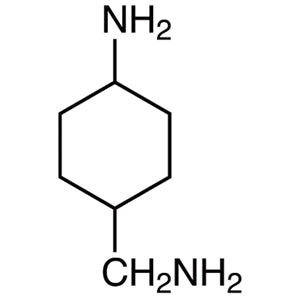
4-(2-Aminoethyl)cyclohexylamine (cis- and trans- mixture) is a versatile chemical compound widely used in synthetic chemistry applications. It serves as a key building block in the synthesis of complex molecules that require both amine and cyclic structures. This compound is particularly valuable in the development of pharmaceuticals, organic chemicals, and bioactive compounds due to its reactivity and structural versatility. In laboratory settings, it plays a crucial role in various reactions such as coupling, substitution, and other processes that demand the presence of an amine group. Its ability to interact with a wide range of functional groups makes it an essential tool for chemists working on diverse synthetic pathways.
The compound’s unique properties, including its reactive amine group and cyclic framework, make it a preferred choice for synthetic chemists. Its stereochemistry, being a mixture of cis and trans isomers, adds to its utility by enabling the synthesis of compounds with different chemical and biological properties. This variability allows researchers to explore multiple reaction outcomes and optimize synthetic strategies. The compound’s chemical stability and compatibility with various reagents further enhance its applicability in both academic and industrial research environments.
In Indonesian laboratories, this compound is commonly used in scientific research, drug development, and organic chemistry studies. Researchers and scientists across educational and research institutions frequently utilize it for synthesizing complex molecules and investigating the effects of stereochemistry on chemical and biological activity. Its presence in laboratory workflows highlights its importance in advancing chemical knowledge and innovation in the region.
Related TCI products
- TCI B4014 37942-69-1 4-Butylcyclohexylamine (cis- and trans- mixture)
- TCI B4004 25834-93-9 4-sec-Butylcyclohexylamine (cis- and trans- mixture)
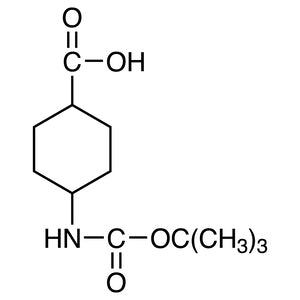
- TCI B3248 130309-46-5 4-(tert-Butoxycarbonylamino)cyclohexanecarboxylic Acid (cis- and trans- mixture)
- TCI B1084 5400-88-4 4-tert-Butylcyclohexylamine (cis- and trans- mixture)
- TCI A3258 13338-82-4 4-(Aminomethyl)cyclohexanamine (cis- and trans- mixture)
- TCI T0601 15901-42-5 3,3,5-Trimethylcyclohexylamine (cis- and trans- mixture)
- Synthetic Organic Chemistry: This compound is ideal for constructing complex molecular frameworks due to its cyclic structure and reactive amine group, enabling the synthesis of diverse organic compounds.
- Pharmaceutical Research: It is used in the development of new drugs, as its amine functionality can be modified to produce bioactive molecules with therapeutic potential.
- Bioorganic Chemistry Studies: The compound’s stereochemical variability allows researchers to explore the impact of isomerism on biological activity and molecular interactions.
- Industrial Chemical Synthesis: Its reactivity and structural versatility make it a valuable component in the production of specialty chemicals and intermediates.
- Academic Teaching and Research: It is frequently used in laboratory courses and research projects to demonstrate synthetic strategies and the role of stereochemistry in chemical reactions.
| Brand | TCI |
|---|---|
| CAS number | 202256-86-8 |
| Molecular formula | — |
| Purity | — |
| Category | Chemistry > Building Blocks > Non-Heterocyclic Building Blocks |
| Pack sizes | Available in various quantities as per supplier specifications |
| Physical form | Liquid or solid, depending on the specific formulation |
| Storage | Store in a cool, dry place away from direct sunlight and incompatible materials |
This compound should be stored in a cool, dry environment, away from direct sunlight and sources of heat. It is recommended to use airtight containers made of materials compatible with its chemical properties, such as glass or high-density polyethylene. Due to its reactive nature, it should be handled in a well-ventilated area, preferably under a fume hood, to minimize exposure. Avoid contact with strong oxidizing agents or acids, as these can lead to undesirable reactions. Always follow standard laboratory safety protocols when working with this compound to ensure safe handling and storage.
—
Produk Terkait
-
4-Butylcyclohexylamine(cis-andtrans-mixture) TCI B4014
Regular price From Rp 3.445.050,00Regular priceRp 2.424.450,00Sale price From Rp 3.445.050,00 -
4-sec-Butylcyclohexylamine(cis-andtrans-mixture) TCI B4004
Regular price Rp 3.285.450,00Regular priceRp 2.313.150,00Sale price Rp 3.285.450,00 -
4-(tert-Butoxycarbonylamino)cyclohexanecarboxylicAcid(cis-andtrans-mixture) TCI B3248
Regular price From Rp 2.677.500,00Regular priceRp 1.887.900,00Sale price From Rp 2.677.500,00 -
4-tert-Butylcyclohexylamine(cis-andtrans-mixture) TCI B1084
Regular price From Rp 1.246.350,00Regular priceRp 887.250,00Sale price From Rp 1.246.350,00 -
4-(Aminomethyl)cyclohexanamine(cis-andtrans-mixture) TCI A3258
Regular price From Rp 2.969.400,00Regular priceRp 2.091.600,00Sale price From Rp 2.969.400,00 -
3,3,5-Trimethylcyclohexylamine(cis-andtrans-mixture) TCI T0601
Regular price Rp 2.173.500,00Regular priceRp 1.535.100,00Sale price Rp 2.173.500,00 -
3-Methylcyclohexylamine(cis-andtrans-mixture) TCI M2105
Regular price From Rp 7.182.000,00Regular priceRp 5.037.900,00Sale price From Rp 7.182.000,00 -
4-Methylcyclohexylamine(cis-andtrans-mixture) TCI M1117
Regular price From Rp 1.140.300,00Regular priceRp 812.700,00Sale price From Rp 1.140.300,00