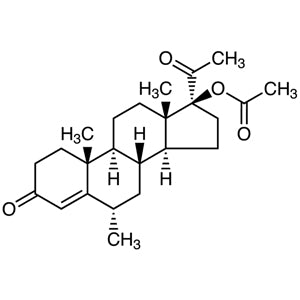
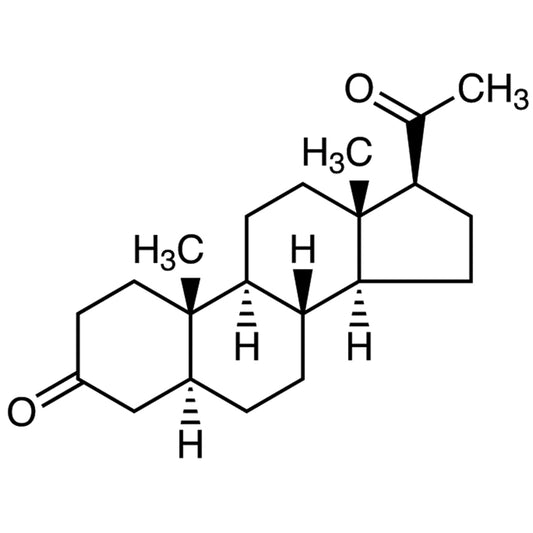
Alphaxalone, with CAS number 23930-19-0, is a chemical compound widely used in pharmacological and biochemical research. It is a key reagent in experimental settings, particularly in studies focused on neurological effects and behavioral responses. As an alpha-2 adrenergic agonist, Alphaxalone plays a significant role in understanding central nervous system functions and physiological responses to pharmaceutical agents. Its utility extends to various scientific investigations, making it an essential component in modern laboratory research.
Alphaxalone is favored for its chemical stability under specific conditions and its solubility in organic solvents such as ethyl acetate and acetone. These properties make it highly compatible with a range of experimental procedures, including biochemical assays and drug mechanism studies. Additionally, it is formulated without significant amounts of toxic or hazardous chemicals, enhancing its safety profile in controlled laboratory environments. This combination of stability, solubility, and safety contributes to its popularity among researchers.
In Indonesian laboratories, Alphaxalone is commonly used by pharmacologists and biochemists conducting research on neuropharmacology and drug development. Its role in testing the mechanisms of action of pharmaceutical compounds is critical for advancing therapeutic strategies. Due to its reliability and consistent performance, it remains a preferred choice for scientific investigations in the region.
TCI brochures (PDF)
- Pharmaceutical Ingredients for Research and Experimental Use 2026-03-09 · p. 25
- Neuropharmacological studies benefit from Alphaxalone's role as an alpha-2 adrenergic agonist, enabling research on central nervous system interactions.
- Behavioral research utilizes Alphaxalone to investigate its effects on neurological responses and physiological behavior in experimental models.
- Drug development programs incorporate Alphaxalone to test the efficacy and mechanism of action of pharmaceutical compounds in controlled environments.
- Biochemical assays use Alphaxalone for its solubility and stability, facilitating accurate and reproducible experimental results.
- Toxicological studies rely on Alphaxalone to assess the safety and long-term effects of pharmaceutical agents in controlled laboratory settings.
| Brand | TCI |
|---|---|
| CAS number | 23930-19-0 |
| Molecular formula | — |
| Purity | — |
| Category | Pharmaceutical Research Reagents |
| Pack sizes | Available in standard laboratory quantities |
| Physical form | Solid or liquid, depending on formulation |
| Storage | Store in a cool, dry place away from direct sunlight |
Alphaxalone should be stored in a cool, dry environment to maintain its chemical stability. It is recommended to keep it in a tightly sealed container to prevent exposure to moisture and air. Due to its solubility in organic solvents, it is important to handle it in a well-ventilated area to avoid inhalation of vapors. While it does not contain significant hazardous components, standard laboratory safety protocols should still be followed. Proper labeling and storage away from incompatible substances are essential to ensure safe handling and long-term usability.
—
Product Categories
- Biochemicals and ReagentsPharmaceutical Research Reagents (for Experimental Use)Neurotransmitter Agent Ingredients (for Research and Experimental Use)
- Biochemicals and ReagentsSteroidsPregnanes (Progestogen) [Steroids]
- Cell BiologyCell Signaling and NeuroscienceCytokines, Growth Factors and Hormones
- Pharmaceutical Development and Drug Discovery ResearchPharmaceutical Research Reagents (for Experimental Use)Neurotransmitter Agent Ingredients (for Research and Experimental Use)
Produk Terkait
-
RocuroniumBromide TCI R0099
Regular price Rp 3.498.600,00Regular priceRp 2.462.250,00Sale price Rp 3.498.600,00 -
MedroxyprogesteroneAcetate TCI M1964
Regular price Rp 1.113.000,00Regular priceRp 793.800,00Sale price Rp 1.113.000,00 -
MegestrolAcetate TCI M1949
Regular price From Rp 1.618.050,00Regular priceRp 1.146.600,00Sale price From Rp 1.618.050,00 -
CyproteroneAcetate TCI C2942
Regular price From Rp 2.571.450,00Regular priceRp 1.813.350,00Sale price From Rp 2.571.450,00 -
5beta-Pregnan-3alpha-ol-20-one TCI P3084
Regular price From Rp 2.464.350,00Regular priceRp 1.738.800,00Sale price From Rp 2.464.350,00 -
Pregna-4,6-diene-3,20-dione TCI P2623
Regular price From Rp 2.942.100,00Regular priceRp 2.072.700,00Sale price From Rp 2.942.100,00 -
5alpha-Pregnane-3,20-dione TCI P2423
Regular price From Rp 2.597.700,00Regular priceRp 1.832.250,00Sale price From Rp 2.597.700,00 -
Pregnenolone TCI P0786
Regular price From Rp 1.167.600,00Regular priceRp 831.600,00Sale price From Rp 1.167.600,00