Benzethonium Chloride (BC) is a chemical compound widely used in various laboratory applications, particularly in the fields of chemistry, pharmacy, and materials science. As a cationic compound, BC is known for its strong antiseptic and antimicrobial properties, making it a valuable reagent in laboratory settings. It is commonly used as an active ingredient in cleaning and preservation products due to its ability to inhibit microbial growth. In the laboratory, BC serves as a useful auxiliary material in the synthesis of organic compounds, antimicrobial activity testing, and the production of chemicals requiring antiseptic properties.
The stability of Benzethonium Chloride’s molecular structure and its good solubility in organic solvents such as ethyl acetate and ethanol make it highly versatile for use in chemical reactions and separation processes. These properties ensure that it remains effective under various experimental conditions. Additionally, BC is resistant to degradation under normal laboratory conditions, which enhances its usability and storage life. This stability and solubility make it a preferred choice for researchers seeking reliable and consistent results.
In Indonesian laboratories, Benzethonium Chloride is frequently used in chemical and pharmaceutical research. Its availability and compliance with international quality standards make it a popular choice among researchers. It is commonly found in studies related to antimicrobial activity, organic synthesis, and the development of chemical products requiring antiseptic properties. Its reliability and effectiveness contribute to its widespread use in both academic and industrial research settings.
TCI brochures (PDF)
- Quaternary Ammonium Salts 2025-11-10 · p. 4
- Polymer Additives 2026-04-16 · p. 12
Related TCI products
- TCI A0208 139-08-2 Benzyldimethyltetradecylammonium Chloride
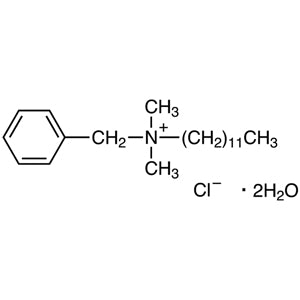
- TCI B2171 147228-80-6 Benzyldodecyldimethylammonium Chloride Dihydrate
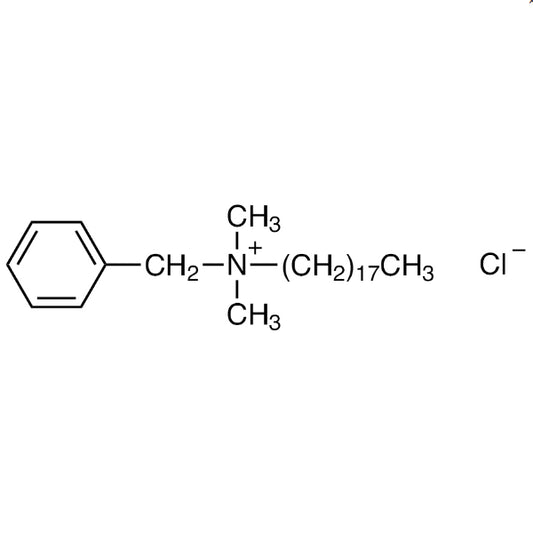
- TCI B1297 122-19-0 Benzyldimethylstearylammonium Chloride
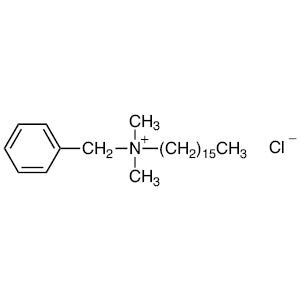
- TCI B0237 122-18-9 Benzylcetyldimethylammonium Chloride
- TCI T0926 4574-04-3 Trimethyltetradecylammonium Chloride
- TCI S0087 112-03-8 Trimethylstearylammonium Chloride
- Antimicrobial Activity Testing – Benzethonium Chloride is used to evaluate the effectiveness of antimicrobial agents due to its strong antiseptic properties.
- Organic Compound Synthesis – It serves as a useful reagent in the synthesis of organic compounds, particularly in reactions requiring a cationic component.
- Cleaning and Disinfection – Its antimicrobial properties make it ideal for use in laboratory cleaning solutions and disinfectant formulations.
- Preservation of Biological Samples – Benzethonium Chloride helps in preserving biological samples by inhibiting microbial growth.
- Chemical Stability Studies – Its stability under various conditions makes it suitable for experiments assessing chemical longevity and reactivity.
| Brand | TCI |
|---|---|
| CAS number | 121-54-0 |
| Molecular formula | — |
| Purity | — |
| Category | Materials Science > Polymer/Macromolecule Reagents > Polymer Additives |
| Pack sizes | Available in various quantities as per standard laboratory supply |
| Physical form | Solid powder |
| Storage | Store in a cool, dry place away from direct sunlight |
Benzethonium Chloride should be stored in a cool, dry place, away from direct sunlight and moisture. It is recommended to use airtight containers to prevent contamination and maintain its stability. As a solid powder, it should be handled with care to avoid inhalation or skin contact. In laboratory settings, it is important to ensure proper ventilation when working with this compound. While it is generally stable under normal conditions, it should be kept away from incompatible substances such as strong acids or bases. Proper storage and handling practices help maintain its effectiveness and safety in laboratory applications.
—
Product Categories
Produk Terkait
-
BenzyldimethyltetradecylammoniumChloride TCI A0208
Regular price From Rp 662.550,00Regular priceRp 478.800,00Sale price From Rp 662.550,00 -
BenzyldodecyldimethylammoniumChlorideDihydrate TCI B2171
Regular price Rp 1.881.600,00Regular priceRp 1.331.400,00Sale price Rp 1.881.600,00 -
BenzyldimethylstearylammoniumChloride TCI B1297
Regular price From Rp 955.500,00Regular priceRp 683.550,00Sale price From Rp 955.500,00 -
BenzylcetyldimethylammoniumChloride TCI B0237
Regular price From Rp 955.500,00Regular priceRp 683.550,00Sale price From Rp 955.500,00 -
TrimethyltetradecylammoniumChloride TCI T0926
Regular price From Rp 1.008.000,00Regular priceRp 720.300,00Sale price From Rp 1.008.000,00 -
TrimethylstearylammoniumChloride TCI S0087
Regular price From Rp 1.060.500,00Regular priceRp 757.050,00Sale price From Rp 1.060.500,00 -
n-OctyltrimethylammoniumChloride TCI O0178
Regular price From Rp 1.220.100,00Regular priceRp 868.350,00Sale price From Rp 1.220.100,00 -
HexadecyltrimethylammoniumChloride TCI H0082
Regular price From Rp 928.200,00Regular priceRp 664.650,00Sale price From Rp 928.200,00