N,N’-Bis(acetoacetyl)-o-toluidine is a chemical compound widely used in laboratory settings as a dye intermediate for research and experimental purposes. It plays a crucial role in the synthesis of complex compounds and serves as a key component in coloration processes. This compound is commonly utilized in chemical research to develop new materials with specific color properties or reactive characteristics. Its versatility makes it an essential reagent for scientists working on advanced chemical projects.
The compound’s unique chemical properties, including its stability and reactivity, make it a preferred choice for laboratory applications. It exhibits the ability to undergo substitution and condensation reactions, which are essential in organic synthesis. These properties allow researchers to control chemical reactions with precision, ensuring consistent results. The compound’s reliability in various reaction conditions further enhances its appeal in both academic and industrial research environments.
In Indonesian laboratories, N,N’-Bis(acetoacetyl)-o-toluidine is extensively used in chemical analysis and synthesis. It is particularly favored in research focused on organic chemistry, dye development, and material science. Its role in creating compounds with specific optical or chemical properties makes it a valuable resource for scientists aiming to innovate in these fields. The compound’s consistent performance in laboratory settings ensures its continued use across various research domains.
Related TCI products
- TCI A0726 16695-54-8 N-Acetoacetylmorpholine
- TCI T0299 95-53-4 o-Toluidine
- TCI A0328 88-44-8 p-Toluidine-2-sulfonic Acid
- TCI B1239 6578-06-9 5-Bromo-4-chloro-3-indolyl Phosphate p-Toluidine Salt [for Biochemical Research]
- TCI A1284 19248-13-6 N-(2-Aminoethyl)-N-ethyl-m-toluidine
- TCI A0329 133-78-8 m-Toluidine-4-sulfonic Acid
- Used in organic synthesis to create compounds with specific color and reactivity properties due to its ability to undergo substitution and condensation reactions.
- Applied in dye development for producing colorants with controlled characteristics, making it ideal for research in color chemistry.
- Employed in chemical analysis for its role in synthesizing compounds that can be used as indicators or reagents in analytical procedures.
- Utilized in material science research to develop new materials with specific optical or chemical properties through controlled chemical reactions.
- Serves as a key intermediate in experimental processes requiring precise control of reaction conditions and consistent chemical behavior.
| Brand | TCI |
|---|---|
| CAS number | 91-96-3 |
| Molecular formula | — |
| Purity | — |
| Category | Chemistry > Stains and Dyes (for Research and Experimental Use) > Dye Intermediates (for Research and Experimental Use) |
| Pack sizes | Available in standard laboratory quantities as per supplier specifications |
| Physical form | Solid, typically in crystalline or powder form |
| Storage | Store in a cool, dry place away from direct sunlight and moisture |
N,N’-Bis(acetoacetyl)-o-toluidine should be stored in a cool, dry environment to maintain its chemical stability. It is recommended to keep it in airtight containers to prevent exposure to moisture and air, which may affect its reactivity. The compound should be stored away from incompatible substances such as strong oxidizers or acids to avoid potential chemical interactions. Laboratory personnel should handle the compound with appropriate personal protective equipment, including gloves and safety goggles, to ensure safe handling. Regular monitoring of storage conditions is essential to maintain the integrity of the compound and ensure its effectiveness in experimental applications. Proper labeling of containers is also crucial to prevent accidental misuse or contamination.
—
Produk Terkait
-
N-Acetoacetylmorpholine TCI A0726
Regular price Rp 1.192.800,00Regular priceRp 849.450,00Sale price Rp 1.192.800,00 -
o-Toluidine TCI T0299
Regular price From Rp 505.050,00Regular priceRp 352.800,00Sale price From Rp 505.050,00 -
p-Toluidine-2-sulfonicAcid TCI A0328
Regular price From Rp 477.750,00Regular priceRp 333.900,00Sale price From Rp 477.750,00 -
5-Bromo-4-chloro-3-indolylPhosphatep-ToluidineSalt[forBiochemicalResearch] TCI B1239
Regular price From Rp 1.033.200,00Regular priceRp 738.150,00Sale price From Rp 1.033.200,00 -
N-(2-Aminoethyl)-N-ethyl-m-toluidine TCI A1284
Regular price Rp 4.001.550,00Regular priceRp 2.798.250,00Sale price Rp 4.001.550,00 -
m-Toluidine-4-sulfonicAcid TCI A0329
Regular price Rp 1.431.150,00Regular priceRp 1.000.650,00Sale price Rp 1.431.150,00 -
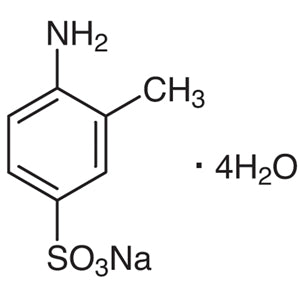
o-Toluidine-4-sulfonicAcidSodiumSaltTetrahydrate TCI T0304
Regular price From Rp 505.050,00Regular priceRp 352.800,00Sale price From Rp 505.050,00 -
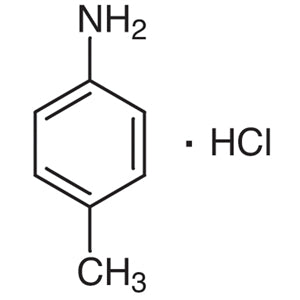
p-ToluidineHydrochloride TCI T0303
Regular price From Rp 477.750,00Regular priceRp 333.900,00Sale price From Rp 477.750,00