


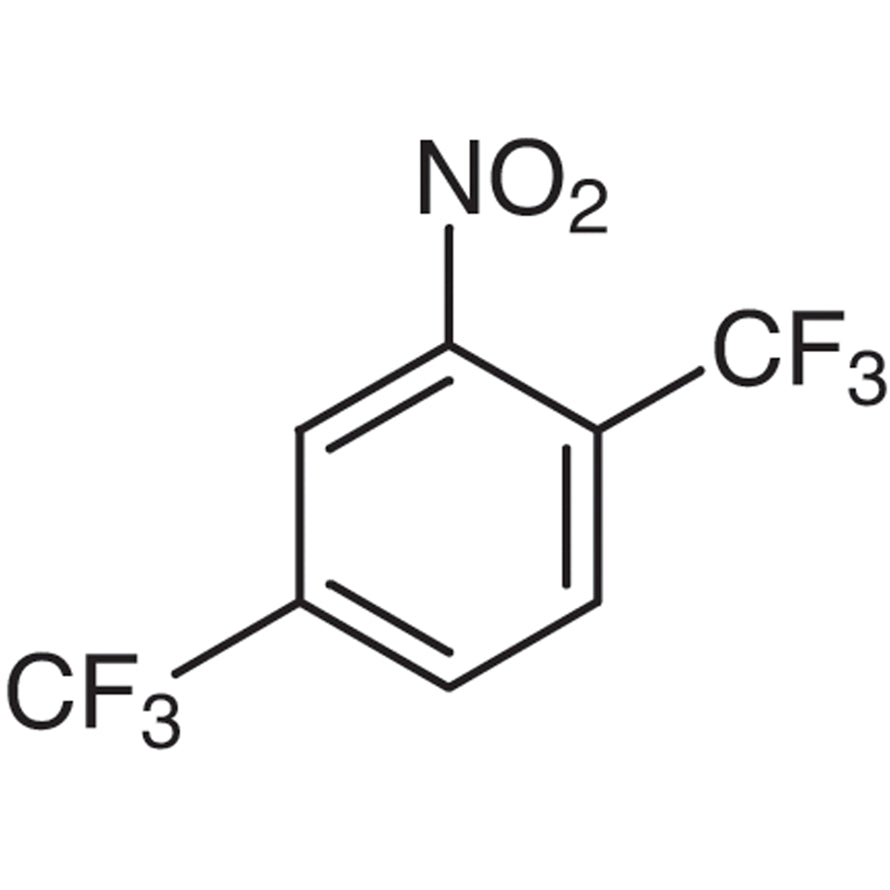
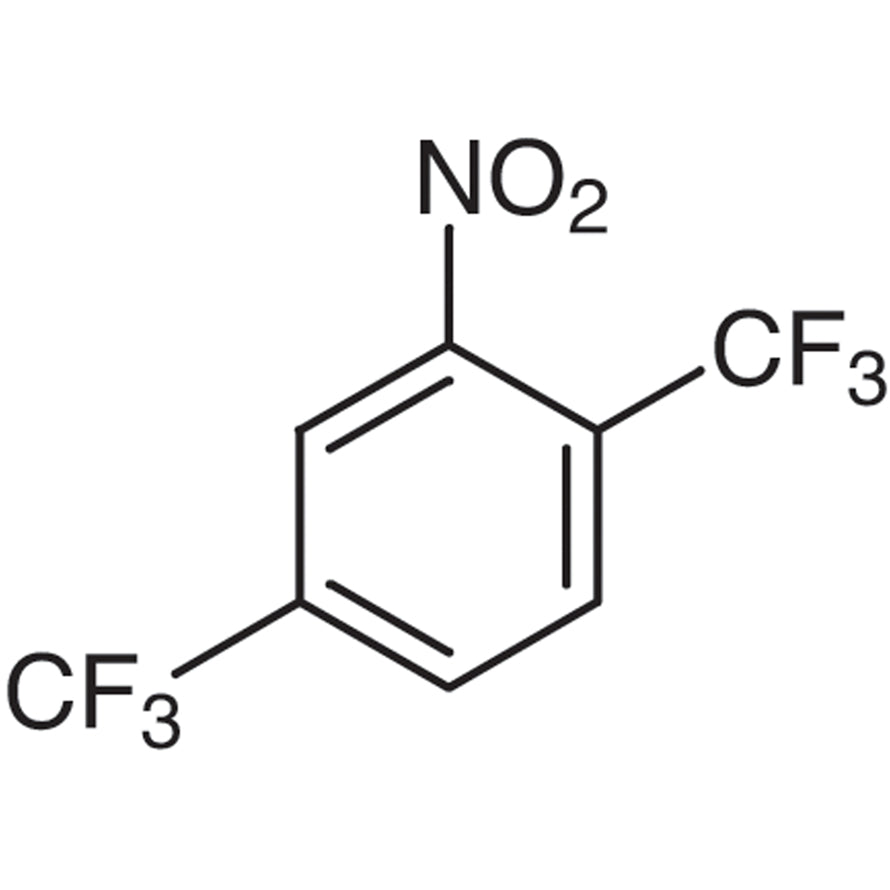
1-Nitro-2,5-bis(trifluoromethyl)benzene is a key chemical compound used as a building block in the synthesis of complex organic molecules. This compound features an aromatic ring substituted with nitro and trifluoromethyl groups, making it a versatile reagent in chemical reactions. Its unique structure allows it to participate in various synthetic pathways, supporting the development of new compounds in research settings. In the laboratory, it plays a crucial role in advancing chemical innovation, particularly in fields such as pharmaceuticals and materials science.
The compound's stability and controlled reactivity make it a preferred choice for researchers. The presence of fluorine atoms provides enhanced polarity and electronegativity, which influence its reactivity and solubility. These properties enable it to engage in substitution, reduction, and electrophilic reactions, making it suitable for a wide range of chemical transformations. Its predictable behavior under different reaction conditions ensures reliable results in synthetic processes.
In Indonesian laboratories, 1-Nitro-2,5-bis(trifluoromethyl)benzene is commonly used in organic chemistry, pharmaceutical research, and material development. It supports the synthesis of compounds with specific functional properties, aiding in the creation of new drugs and advanced materials. Its availability and chemical properties make it a valuable resource for academic and industrial research in Indonesia.
TCI brochures (PDF)
- Fluorination Reagents, Fluorinated Building Blocks 2026-03-18 · p. 41
Related TCI products
- TCI T2155 713-65-5 1-Nitro-4-(trifluoromethoxy)benzene
- TCI B1422 328-75-6 1-Nitro-3,5-bis(trifluoromethyl)benzene
- TCI N0884 2995-45-1 1-Nitro-3-(trifluoromethoxy)benzene
- TCI N1037 320-37-6 4-Nitro-2-(trifluoromethyl)benzoic Acid
- TCI N0720 320-94-5 2-Nitro-4-(trifluoromethyl)benzoic Acid
- TCI N0548 393-12-4 4'-Nitro-3'-(trifluoromethyl)acetanilide
- Organic synthesis applications benefit from its aromatic structure and reactivity, enabling the creation of complex molecules with tailored properties.
- Pharmaceutical research utilizes this compound to develop new drug candidates, leveraging its functional groups for targeted molecular modifications.
- Material science applications take advantage of its fluorinated structure to design materials with enhanced stability and specific chemical properties.
- Chemical modification studies rely on its predictable reactivity to explore new synthetic pathways and reaction mechanisms.
- Analytical chemistry uses it as a reference standard for testing and characterizing other fluorinated compounds in various chemical processes.
| Brand | TCI |
|---|---|
| CAS number | 320-88-7 |
| Molecular formula | — |
| Purity | — |
| Category | Chemistry > Building Blocks > Fluorinated Building Blocks |
| Pack sizes | Available in various quantities as per standard supplier offerings |
| Physical form | Solid or liquid, depending on the specific product variant |
| Storage | Store in a cool, dry place away from light and incompatible materials |
This compound should be stored in a cool, dry environment, away from direct sunlight and sources of heat. It is recommended to use airtight containers made of materials compatible with its chemical properties, such as glass or high-density polyethylene. Due to its fluorinated structure, it may exhibit specific reactivity, so it is important to handle it with appropriate personal protective equipment. Avoid contact with incompatible substances, such as strong oxidizers or reactive metals. In laboratory settings, ensure proper ventilation and follow standard chemical safety protocols to maintain a safe working environment.
—
Produk Terkait
-
1-Nitro-4-(trifluoromethoxy)benzene TCI T2155
Regular price From Rp 769.650,00Regular priceRp 537.600,00Sale price From Rp 769.650,00 -
1-Nitro-3,5-bis(trifluoromethyl)benzene TCI B1422
Regular price From Rp 823.200,00Regular priceRp 575.400,00Sale price From Rp 823.200,00 -
1-Nitro-3-(trifluoromethoxy)benzene TCI N0884
Regular price From Rp 1.326.150,00Regular priceRp 927.150,00Sale price From Rp 1.326.150,00 -
4-Nitro-2-(trifluoromethyl)benzoicAcid TCI N1037
Regular price Rp 875.700,00Regular priceRp 627.900,00Sale price Rp 875.700,00 -
2-Nitro-4-(trifluoromethyl)benzoicAcid TCI N0720
Regular price From Rp 1.087.800,00Regular priceRp 775.950,00Sale price From Rp 1.087.800,00 -
4'-Nitro-3'-(trifluoromethyl)acetanilide TCI N0548
Regular price From Rp 1.643.250,00Regular priceRp 1.164.450,00Sale price From Rp 1.643.250,00


