The TCI B3197 190601-12-8 (S,S'')-2,2''-Bis[(S)-4-isopropyloxazolin-2-yl]-1,1''-biferrocene is a complex chemical compound widely used in catalysis and inorganic chemistry. This compound functions as a nitrogen-donor ligand, playing a crucial role in facilitating chemical reactions by interacting with transition metals. Its unique structure combines ferrocene with oxazolin substituents, enabling it to act as an effective catalyst in various synthetic processes. In laboratory settings, it is particularly valuable for reactions requiring high reactivity or electronic activation, where its ability to modulate metal center properties is essential.
The compound's molecular structure provides it with a high degree of versatility in binding to transition metals such as iron. This makes it an ideal choice for applications where precise control over catalytic activity is required. Its stability under certain conditions, combined with its sensitivity to moisture and oxidation, necessitates careful handling. These properties make it a preferred ligand in advanced catalytic systems, especially in research involving organometallic chemistry and synthetic transformations.
In Indonesian laboratories, this compound is commonly used in catalytic research for applications such as organic synthesis, hydrolysis reactions, and industrial chemical processes. Its specific characteristics and high reactivity make it a valuable tool for researchers aiming to develop efficient and selective catalysts. Its application in both academic and industrial settings highlights its importance in modern chemical research.
TCI brochures (PDF)
- Chiral Ligands 2024-12-13 · p. 3
- Ligands 2025-12-01 · p. 4
Related TCI products
- TCI D3822 163169-10-6 (S)-1-(Diphenylphosphino)-2-[(S)-4-isopropyloxazolin-2-yl]ferrocene
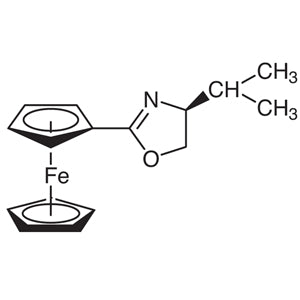
- TCI I0749 162157-03-1 (S)-(4-Isopropyloxazolin-2-yl)ferrocene
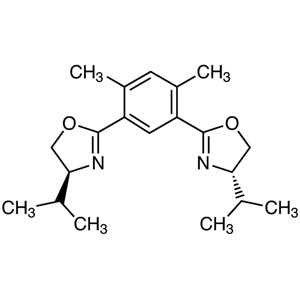
- TCI B4196 929896-22-0 (S,S)-4,6-Bis(4-isopropyl-2-oxazolin-2-yl)-m-xylene
- TCI B4104 117408-98-7 (S)-4-tert-Butyl-2-(2-pyridyl)oxazoline
- TCI B2220 174500-20-0 (S,S)-2,6-Bis(4-phenyl-2-oxazolin-2-yl)pyridine
- TCI B2219 128249-70-7 (R,R)-2,6-Bis(4-phenyl-2-oxazolin-2-yl)pyridine
- Organic synthesis reactions benefit from this ligand's ability to enhance metal reactivity and improve reaction efficiency.
- Hydrolysis processes often utilize this compound to facilitate the breakdown of complex molecules under controlled conditions.
- Catalytic processes in industrial chemistry rely on its capacity to modulate metal center properties for enhanced performance.
- Transition metal coordination studies take advantage of its structural compatibility with various metal ions.
- Advanced catalytic research in academic settings leverages its high reactivity and selectivity for novel chemical transformations.
| Brand | TCI |
|---|---|
| CAS number | 190601-12-8 |
| Molecular formula | — |
| Purity | — |
| Category | Chemistry > Catalysis and Inorganic Chemistry > Nitrogen-Donor Ligands [Catalysis] |
| Pack sizes | — |
| Physical form | — |
| Storage | Store in a dry, cool place away from moisture and oxidizing agents |
This compound should be stored in a dry, cool environment to prevent degradation due to moisture and oxidation. It is recommended to use airtight containers made of inert materials such as glass or polyethylene to minimize exposure to air and humidity. Laboratory personnel should handle the compound with care, using appropriate personal protective equipment to avoid direct contact. Due to its sensitivity, it is essential to maintain a controlled atmosphere during storage and handling. Proper labeling and storage conditions will help ensure the compound's stability and effectiveness in catalytic applications.
—
Produk Terkait
-
(S)-1-(Diphenylphosphino)-2-[(S)-4-isopropyloxazolin-2-yl]ferrocene TCI D3822
Regular price From Rp 3.843.000,00Regular priceRp 2.702.700,00Sale price From Rp 3.843.000,00 -
(S)-(4-Isopropyloxazolin-2-yl)ferrocene TCI I0749
Regular price Rp 3.048.150,00Regular priceRp 2.147.250,00Sale price Rp 3.048.150,00 -
(S,S)-4,6-Bis(4-isopropyl-2-oxazolin-2-yl)-m-xylene TCI B4196
Regular price Rp 4.133.850,00Regular priceRp 2.906.400,00Sale price Rp 4.133.850,00 -
(S)-4-tert-Butyl-2-(2-pyridyl)oxazoline TCI B4104
Regular price From Rp 4.293.450,00Regular priceRp 3.017.700,00Sale price From Rp 4.293.450,00 -
(S,S)-2,6-Bis(4-phenyl-2-oxazolin-2-yl)pyridine TCI B2220
Regular price From Rp 3.683.400,00Regular priceRp 2.591.400,00Sale price From Rp 3.683.400,00 -
(R,R)-2,6-Bis(4-phenyl-2-oxazolin-2-yl)pyridine TCI B2219
Regular price From Rp 1.881.600,00Regular priceRp 1.331.400,00Sale price From Rp 1.881.600,00 -
(S,S)-2,6-Bis(4-isopropyl-2-oxazolin-2-yl)pyridine TCI B2218
Regular price From Rp 2.252.250,00Regular priceRp 1.590.750,00Sale price From Rp 2.252.250,00 -
(R,R)-2,6-Bis(4-isopropyl-2-oxazolin-2-yl)pyridine TCI B2217
Regular price From Rp 2.147.250,00Regular priceRp 1.517.250,00Sale price From Rp 2.147.250,00