4-Bromo-1-butyne is a chemical compound widely used in organic reactions for the synthesis of complex molecules. It contains a bromo group and a triple bond, making it a valuable building block in both heterocyclic and non-heterocyclic synthesis. In laboratory settings, this compound serves as a key reagent for substitution, coupling, and reduction reactions. Its reactivity allows it to participate in nucleophilic and electrophilic reactions, offering versatility in chemical transformations. The triple bond provides structural stability while maintaining reactivity, making it a preferred choice for researchers seeking flexible and adaptable starting materials.
The compound's unique chemical properties, including its bromo functionality and triple bond, make it a preferred choice for synthetic chemists. These features enable it to undergo a variety of reaction pathways, including electrophilic substitution and coupling reactions. Its reactivity allows for efficient synthesis of more complex molecules, while its structural characteristics provide a foundation for further functionalization. The combination of reactivity and structural versatility makes it an essential tool in the chemical synthesis toolkit.
In Indonesian laboratories, 4-Bromo-1-butyne is commonly used in organic chemistry research, particularly in higher education institutions and research organizations. It plays a significant role in the development of new compounds with applications in pharmaceuticals and materials science. Its relevance extends to the synthesis of heterocyclic compounds, which are crucial in drug discovery and advanced material fabrication. The compound’s utility in these contexts underscores its importance in modern chemical research.
TCI brochures (PDF)
- Click Chemistry 2026-09-08 · p. 11
- Organic synthesis of heterocyclic compounds requiring bromo and triple bond functionalities.
- Coupling reactions where the triple bond serves as a reactive site for functional group introduction.
- Substitution reactions involving bromo groups for the preparation of diverse chemical derivatives.
- Reductive processes where the triple bond can be modified to produce more complex molecular structures.
- Development of new pharmaceutical compounds through synthetic pathways involving brominated alkynes.
| Brand | TCI |
|---|---|
| CAS number | 38771-21-0 |
| Molecular formula | — |
| Purity | — |
| Category | Chemistry > Building Blocks > Non-Heterocyclic Building Blocks |
| Pack sizes | — |
| Physical form | Liquid |
| Storage | Store in a cool, dry place away from light and incompatible materials |
4-Bromo-1-butyne should be stored in a cool, dry place away from direct light and incompatible substances. It is recommended to use sealed containers made of materials that are chemically inert, such as glass or stainless steel. Due to its reactivity, it should be handled in a well-ventilated area, ideally under a fume hood, to minimize exposure. Avoid contact with moisture and strong oxidizing agents. Always wear appropriate personal protective equipment, including gloves, goggles, and a lab coat, when handling this compound. Proper storage and handling precautions are essential to ensure safety and maintain the compound's chemical integrity in the laboratory.
—
Product Categories
Produk Terkait
-
1-Bromo-2-butyne TCI B2190
Regular price From Rp 1.035.300,00Regular priceRp 723.450,00Sale price From Rp 1.035.300,00 -
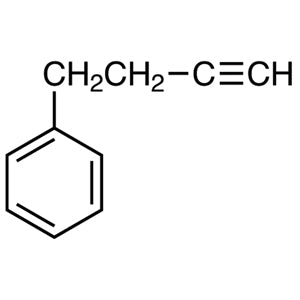
4-Phenyl-1-butyne TCI P0358
Regular price Rp 2.359.350,00Regular priceRp 1.649.550,00Sale price Rp 2.359.350,00 -
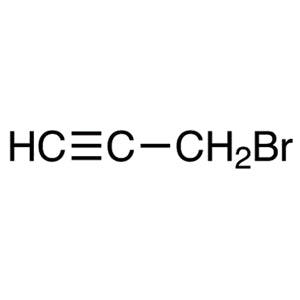
PropargylBromide(80%inToluene,ca92mol/L)(stabilizedwithMgO) TCI P1272
Regular price From Rp 848.400,00Regular priceRp 593.250,00Sale price From Rp 848.400,00 -
PropargylBromide(stabilizedwithMgO) TCI P0484
Regular price From Rp 1.035.300,00Regular priceRp 723.450,00Sale price From Rp 1.035.300,00