4-(tert-Butoxycarbonylamino)benzoic Acid is a chemical compound widely used in peptide chemistry and organic synthesis. It plays a crucial role in laboratory settings where the creation of complex molecules is required, particularly in biochemical and pharmacological research. This compound is essential for the formation of peptides through specific bonding reactions, making it a fundamental tool for scientists working in chemical biology. Its unique structure allows it to participate in targeted chemical reactions, contributing to the development of biologically active compounds.
The compound’s reactivity and specificity make it a preferred choice in laboratory applications. It is stable under certain conditions and available in various packaging formats, which facilitates its use in both small and large-scale experiments. Its ability to engage in peptide bonding reactions ensures that it remains a reliable component in the synthesis of bioactive substances. Additionally, its chemical properties support a wide range of experimental protocols, enhancing its versatility in research environments.
In Indonesian laboratories, 4-(tert-Butoxycarbonylamino)benzoic Acid is commonly used in chemical, pharmaceutical, and biotechnology research. It supports the development of new drugs and bioactive materials, contributing to advancements in health-related studies. Its availability and chemical properties make it a valuable resource for researchers aiming to explore complex molecular interactions and synthesize novel compounds.
Related TCI products
- TCI B4305 33233-67-9 4-[(tert-Butoxycarbonylamino)methyl]benzoic Acid
- TCI B3831 35264-09-6 1-(tert-Butoxycarbonylamino)cyclopentanecarboxylic Acid
- TCI B3539 222530-34-9 (1S,3R)-3-(tert-Butoxycarbonylamino)cyclohexanecarboxylic Acid
- TCI B3538 222530-39-4 (1R,3S)-3-(tert-Butoxycarbonylamino)cyclohexanecarboxylic Acid
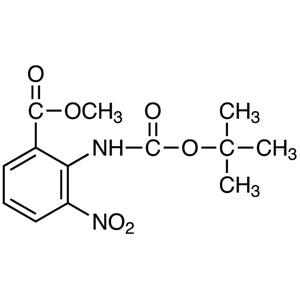
- TCI M2797 57113-90-3 Methyl 2-(tert-Butoxycarbonylamino)-3-nitrobenzoate
- TCI F0888 94744-50-0 2-[(9H-Fluoren-9-ylmethoxy)carbonylamino]isobutyric Acid
- Peptide Synthesis: This compound is ideal for peptide synthesis due to its ability to participate in specific bonding reactions, enabling the creation of complex peptide structures.
- Organic Chemistry Research: Its reactivity and chemical stability make it suitable for a wide range of organic synthesis experiments, supporting the development of new compounds.
- Biochemical Studies: It is frequently used in biochemical research to investigate molecular interactions and functional properties of biological systems.
- Pharmaceutical Development: The compound plays a key role in the synthesis of bioactive compounds, aiding in the development of new drug candidates.
- Biotecnological Applications: It supports biotechnological research by contributing to the synthesis of molecules with potential therapeutic or industrial applications.
| Brand | TCI |
|---|---|
| CAS number | 66493-39-8 |
| Molecular formula | — |
| Purity | — |
| Category | Chemistry > Chemical Biology > Peptide Chemistry |
| Pack sizes | Available in various quantities as per standard laboratory requirements |
| Physical form | Solid powder |
| Storage | Store in a cool, dry place away from direct sunlight |
This compound should be stored in a cool, dry place, away from direct sunlight and moisture. It is recommended to use airtight containers to prevent exposure to air and humidity, which may affect its stability. Due to its reactivity, it should be handled with care, using appropriate personal protective equipment such as gloves and safety goggles. It is important to ensure that the storage area is well-ventilated to minimize any potential risks associated with its chemical properties. Proper labeling and segregation from incompatible substances are also essential for safe laboratory practices.
—
Product Categories
Produk Terkait
-
4-[(tert-Butoxycarbonylamino)methyl]benzoicAcid TCI B4305
Regular price From Rp 1.272.600,00Regular priceRp 905.100,00Sale price From Rp 1.272.600,00 -
1-(tert-Butoxycarbonylamino)cyclopentanecarboxylicAcid TCI B3831
Regular price Rp 2.518.950,00Regular priceRp 1.776.600,00Sale price Rp 2.518.950,00 -
(1S,3R)-3-(tert-Butoxycarbonylamino)cyclohexanecarboxylicAcid TCI B3539
Regular price Rp 7.976.850,00Regular priceRp 5.593.350,00Sale price Rp 7.976.850,00 -
(1R,3S)-3-(tert-Butoxycarbonylamino)cyclohexanecarboxylicAcid TCI B3538
Regular price Rp 4.081.350,00Regular priceRp 2.869.650,00Sale price Rp 4.081.350,00 -
Methyl2-(tert-Butoxycarbonylamino)-3-nitrobenzoate TCI M2797
Regular price From Rp 2.544.150,00Regular priceRp 1.794.450,00Sale price From Rp 2.544.150,00 -
2-[(9H-Fluoren-9-ylmethoxy)carbonylamino]isobutyricAcid TCI F0888
Regular price Rp 1.749.300,00Regular priceRp 1.239.000,00Sale price Rp 1.749.300,00 -
4-[(2,4-Dimethoxyphenyl)[(9H-fluoren-9-ylmethoxy)carbonylamino]methyl]phenoxyaceticAcid TCI D2672
Regular price Rp 2.173.500,00Regular priceRp 1.535.100,00Sale price Rp 2.173.500,00