2-Benzoylpyrrole is a chemical compound widely used in organic reactions to construct complex heterocyclic structures. It plays a crucial role in the development of new compounds with intricate molecular frameworks, making it an essential building block in synthetic chemistry. This compound is commonly found in the synthesis of aromatic and heterocyclic compounds, serving as a key reagent in the production of pharmaceuticals, industrial chemicals, and advanced materials. Its versatility and reactivity make it a valuable asset in modern laboratory research.
The compound exhibits stable chemical properties under controlled conditions, yet it remains highly reactive to extreme temperatures, strong reagents, and moist environments. This reactivity allows it to participate in a wide range of chemical transformations, particularly in reactions requiring precise control over reaction conditions. Its molecular structure is well-defined and easily identifiable, which simplifies analytical procedures and monitoring in laboratory settings. These characteristics make it a preferred choice for chemists working on complex synthetic pathways.
In Indonesian laboratories, 2-Benzoylpyrrole is extensively used in organic chemistry research, especially in pharmaceutical and material science applications. Its availability, ease of use, and applicability in various synthesis processes make it a popular choice among researchers. It supports the development of new drugs and advanced materials, contributing significantly to scientific innovation in the region.
- Organic synthesis applications benefit from 2-Benzoylpyrrole due to its ability to form complex heterocyclic structures, enhancing the diversity of synthesized compounds.
- Pharmaceutical research utilizes this compound for the development of new drug molecules, leveraging its reactivity in synthetic pathways.
- Material science experiments employ 2-Benzoylpyrrole to create advanced polymers and functional materials through controlled chemical reactions.
- Analytical chemistry processes use its well-defined molecular structure for accurate identification and characterization in laboratory analysis.
- Industrial chemical production relies on this compound as a key reagent in the synthesis of aromatic and heterocyclic compounds for various applications.
| Brand | TCI |
|---|---|
| CAS number | 7697-46-3 |
| Molecular formula | — |
| Purity | — |
| Category | Chemistry > Building Blocks > Heterocyclic Building Blocks |
| Pack sizes | Available in various quantities as per supplier specifications |
| Physical form | Solid or liquid, depending on the specific formulation |
| Storage | Store in a cool, dry place away from moisture and strong reagents |
2-Benzoylpyrrole should be stored in a cool, dry environment to maintain its chemical stability. It is recommended to keep it in airtight containers to prevent exposure to moisture and air, which can affect its reactivity. Due to its sensitivity to extreme conditions, it should be handled with care, using appropriate personal protective equipment. Avoid storing near strong reagents or in areas with high humidity. Regular monitoring of storage conditions ensures the compound remains suitable for use in laboratory applications. Proper labeling and safe handling practices are essential to maintain safety and effectiveness in research settings.
—
Product Categories
Produk Terkait
-
1,2,5-Trimethylpyrrole TCI T1939
Regular price From Rp 1.246.350,00Regular priceRp 887.250,00Sale price From Rp 1.246.350,00 -
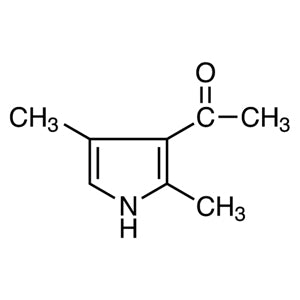
3-Acetyl-2,4-dimethylpyrrole TCI A2734
Regular price From Rp 1.776.600,00Regular priceRp 1.257.900,00Sale price From Rp 1.776.600,00 -
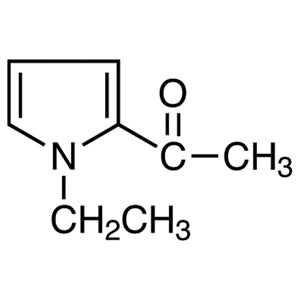
2-Acetyl-1-ethylpyrrole TCI A1977
Regular price From Rp 1.008.000,00Regular priceRp 720.300,00Sale price From Rp 1.008.000,00 -
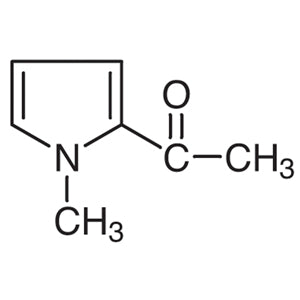
2-Acetyl-1-methylpyrrole TCI A1014
Regular price From Rp 1.167.600,00Regular priceRp 831.600,00Sale price From Rp 1.167.600,00 -
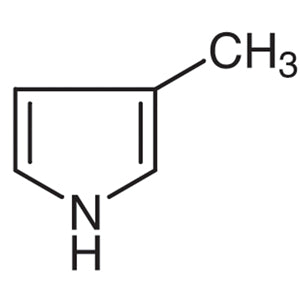
3-Methylpyrrole TCI M1144
Regular price From Rp 9.275.700,00Regular priceRp 6.501.600,00Sale price From Rp 9.275.700,00 -
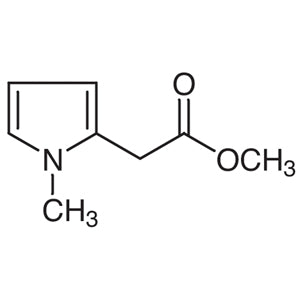
Methyl1-Methylpyrrole-2-acetate TCI M0846
Regular price From Rp 1.272.600,00Regular priceRp 905.100,00Sale price From Rp 1.272.600,00 -
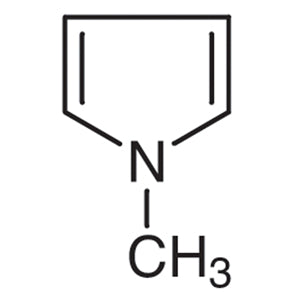
1-Methylpyrrole TCI M0414
Regular price From Rp 1.113.000,00Regular priceRp 793.800,00Sale price From Rp 1.113.000,00 -
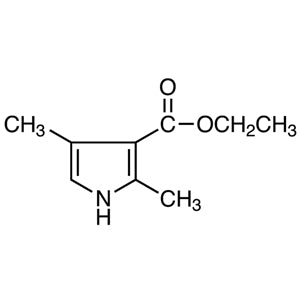
Ethyl2,4-Dimethylpyrrole-3-carboxylate TCI E1075
Regular price From Rp 1.008.000,00Regular priceRp 720.300,00Sale price From Rp 1.008.000,00