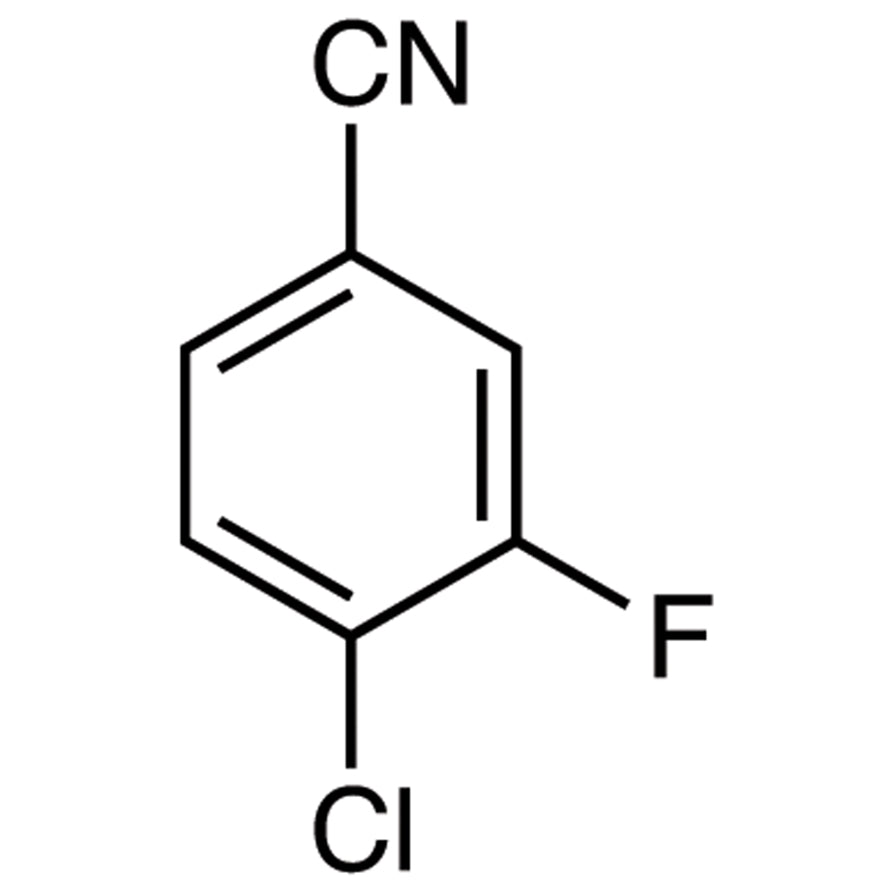
4-Chloro-3-fluorobenzonitrile is a chemical compound widely used as a building block in the synthesis of complex organic molecules. It contains a benzene ring substituted with both chlorine and fluorine atoms, along with a nitrile group, making it a versatile reagent in organic chemistry. This compound plays a crucial role in laboratories by enabling the creation of compounds with specific functional groups and desired chemical properties. Its presence in chemical synthesis allows researchers to tailor molecular structures for various applications, including pharmaceutical and industrial chemistry.
The compound is valued for its chemical stability and reactivity, which make it suitable for participation in a wide range of chemical reactions. Its polar nature and high reactivity allow it to interact effectively with various reagents, facilitating the formation of new chemical bonds. Additionally, the presence of both fluorine and chlorine substituents imparts unique electronic properties, making it ideal for the synthesis of bioactive compounds. These characteristics make it a preferred choice for chemists seeking to design molecules with specific biological or chemical functions.
In Indonesian laboratories, 4-Chloro-3-fluorobenzonitrile is commonly used in organic chemistry research, particularly in the development of pharmaceutical compounds and industrial chemicals. Its role in synthetic pathways is essential for creating compounds with specific therapeutic or functional properties. Researchers rely on its predictable chemical behavior to achieve consistent results in their experiments, making it a key component in the chemical toolkit of Indonesian laboratories.
- Organic synthesis applications benefit from this compound's ability to participate in diverse chemical reactions, enabling the creation of complex molecular structures.
- Pharmaceutical research utilizes its unique electronic properties to design compounds with targeted biological activities and improved pharmacological profiles.
- Industrial chemical development leverages its stability and reactivity for the production of specialized materials and intermediates.
- Fluorinated compound synthesis relies on its fluorine substituent to introduce unique electronic effects and enhance molecular functionality.
- Chemical reaction intermediates benefit from its nitrile group, which can be modified through various synthetic transformations to yield desired products.
| Brand | TCI |
|---|---|
| CAS number | 110888-15-8 |
| Molecular formula | — |
| Purity | — |
| Category | Chemistry > Building Blocks > Fluorinated Building Blocks |
| Pack sizes | Available in various quantities as per supplier specifications |
| Physical form | Liquid or crystalline, depending on formulation |
| Storage | Store in a cool, dry place away from light and incompatible substances |
This compound should be stored in a cool, dry environment, away from direct sunlight and sources of heat. It is recommended to use sealed, airtight containers to prevent exposure to moisture and air, which may affect its stability. Due to its reactivity, it should be kept separate from strong oxidizing agents and incompatible substances to avoid potential chemical interactions. In laboratory settings, proper personal protective equipment, such as gloves and goggles, should be worn when handling the compound to ensure safety. Regular monitoring of storage conditions is advised to maintain the integrity and effectiveness of the material.
—
Produk Terkait
-
3-Chloro-2-fluorobenzonitrile TCI C2562
Regular price Rp 2.439.150,00Regular price -
2-Chloro-4-fluorobenzonitrile TCI C2129
Regular price From Rp 1.035.300,00Regular price -
4-Chloro-2-fluorobenzonitrile TCI C2121
Regular price From Rp 2.121.000,00Regular price -
3-Chloro-4-fluorobenzonitrile TCI C2081
Regular price From Rp 823.200,00Regular price -
2-Chloro-5-fluorobenzonitrile TCI C2080
Regular price From Rp 769.650,00Regular price -
2-Chloro-6-fluorobenzonitrile TCI C1002
Regular price From Rp 823.200,00Regular price -
2-(Bromomethyl)-4-fluorobenzonitrile TCI B4988
Regular price From Rp 980.700,00Regular price -
3-Bromo-5-fluorobenzonitrile TCI B4600
Regular price From Rp 769.650,00Regular price