(3E)-4-(4-Chlorophenyl)-3-buten-2-one from TCI is an α,β-unsaturated ketone made up of a benzene ring carrying a chlorine substituent at the para position and a butenone chain whose double bond has the E configuration. It is also known as a chlorinated benzalacetone derivative. In the laboratory it serves as a versatile non-heterocyclic building block. Because it combines a conjugated enone system and an aryl halide group in one molecule, it is a practical starting point when chemists design a wide range of target compounds.
The conjugated enone system makes this compound a good Michael acceptor, so it reacts readily with nucleophiles such as amines, thiols, and carbanions. Its carbonyl group can be reduced or condensed, or it can be the starting point for building heterocyclic rings such as pyrazolines and pyrimidines. The chlorine atom on the aromatic ring has a distinct electronic influence on the molecule and also serves as a handle for cross-coupling reactions. Because the E configuration is already fixed, reaction outcomes are easier to predict and products are easier to analyse. Together, these features make it a dependable intermediate for multistep synthesis.
In Indonesia, this compound is especially relevant to medicinal chemistry researchers who synthesise chalcone analogues and heterocyclic compounds for biological activity screening. University organic chemistry laboratories, pharmaceutical research groups, and graduate students working on synthetic methodology can use it as a well-defined starting material for building compound libraries. Its reactivity profile also makes it useful for teaching and research projects that explore conjugate addition, carbonyl chemistry, and transformations of halogenated aromatic compounds.
Related TCI products
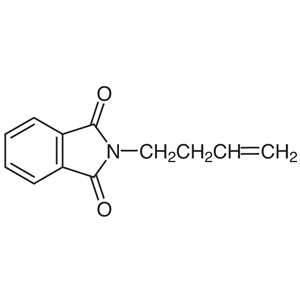
- TCI B1881 52898-32-5 N-(3-Buten-1-yl)phthalimide
- TCI B1613 7538-42-3 2-Buten-1-ylsuccinic Anhydride
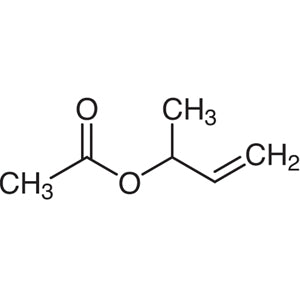
- TCI B0128 6737-11-7 3-Buten-2-yl Acetate
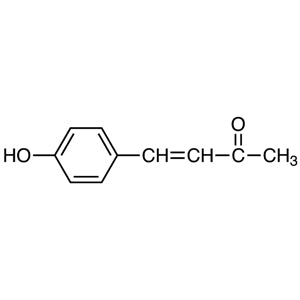
- TCI H1564 3160-35-8 4-(4-Hydroxyphenyl)-3-buten-2-one
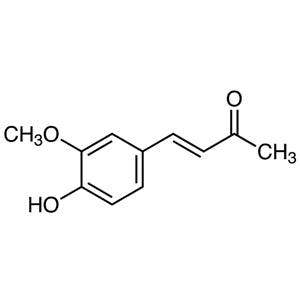
- TCI H0996 22214-42-2 (E)-4-(4-Hydroxy-3-methoxyphenyl)-3-buten-2-one
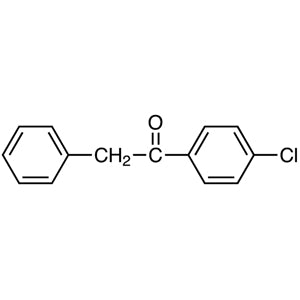
- TCI B4704 1889-71-0 Benzyl 4-Chlorophenyl Ketone
- Michael addition studies: the conjugated enone system acts as an efficient Michael acceptor, reacting readily with amines, thiols, and carbanions to form new carbon–heteroatom or carbon–carbon bonds.
- Heterocycle synthesis: the carbonyl group and the adjacent double bond provide a convenient entry point for building pyrazoline and pyrimidine rings, which are common scaffolds in medicinal chemistry research.
- Chalcone analogue preparation: as a chlorinated benzalacetone derivative, it is well suited to synthesising chalcone-type analogues for structure–activity studies and biological activity screening programmes.
- Cross-coupling chemistry: the para-chlorine atom on the aromatic ring serves as a reactive handle for cross-coupling reactions, allowing further structural diversification of the aryl portion.
- Carbonyl transformation research: the ketone group can be reduced or condensed under various conditions, and the fixed E configuration makes products easier to predict and analyse.
| Brand | TCI (product code C3759) |
|---|---|
| CAS number | 30626-03-0 |
| Molecular formula | — |
| Purity | refer to the TCI product specification and certificate of analysis |
| Category | Chemistry > Building Blocks > Non-Heterocyclic Building Blocks |
| Pack sizes | available in the pack sizes TCI supplies; please confirm the current options with AMI Scientific |
| Physical form | — |
| Storage | store as directed on the TCI label and safety data sheet |
Keep this compound in its original, tightly closed manufacturer container in a cool, dry, well-ventilated area, away from direct sunlight, heat sources, and incompatible materials such as strong oxidising agents. Always follow the storage temperature on the TCI label. Because it is a reactive α,β-unsaturated ketone and Michael acceptor, avoid contact with skin and eyes and do not breathe in dust or vapours. Wear suitable protective gloves, safety glasses, and a lab coat, and handle the material in a fume hood. Read the safety data sheet before use, and dispose of waste according to local regulations for halogenated organic chemicals.
—
Produk Terkait
-
N-(3-Buten-1-yl)phthalimide TCI B1881
Regular price Rp 7.949.550,00Regular priceRp 5.574.450,00Sale price Rp 7.949.550,00 -
2-Buten-1-ylsuccinicAnhydride TCI B1613
Regular price From Rp 2.491.650,00Regular priceRp 1.757.700,00Sale price From Rp 2.491.650,00 -
3-Buten-2-ylAcetate TCI B0128
Regular price From Rp 6.784.050,00Regular priceRp 4.743.900,00Sale price From Rp 6.784.050,00 -
4-(4-Hydroxyphenyl)-3-buten-2-one TCI H1564
Regular price Rp 1.988.700,00Regular priceRp 1.405.950,00Sale price Rp 1.988.700,00 -
(E)-4-(4-Hydroxy-3-methoxyphenyl)-3-buten-2-one TCI H0996
Regular price From Rp 1.351.350,00Regular priceRp 960.750,00Sale price From Rp 1.351.350,00 -
Benzyl4-ChlorophenylKetone TCI B4704
Regular price From Rp 900.900,00Regular priceRp 645.750,00Sale price From Rp 900.900,00 -
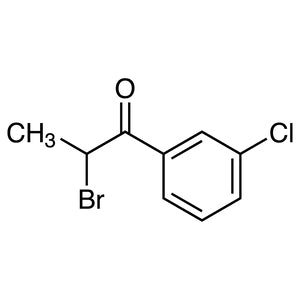
2-Bromo-1-(3-chlorophenyl)propan-1-one TCI B2932
Regular price From Rp 1.934.100,00Regular priceRp 1.368.150,00Sale price From Rp 1.934.100,00 -
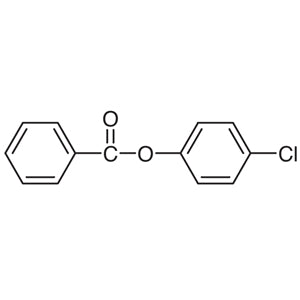
4-ChlorophenylBenzoate TCI B0063
Regular price Rp 2.227.050,00Regular priceRp 1.572.900,00Sale price Rp 2.227.050,00