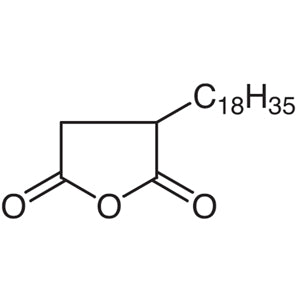
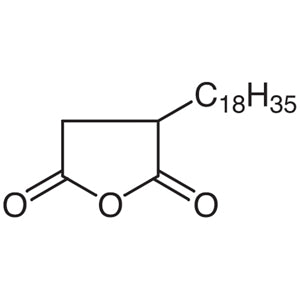
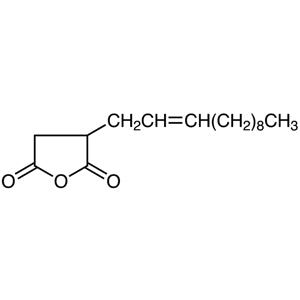
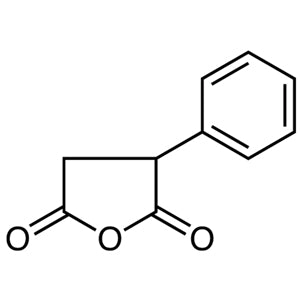
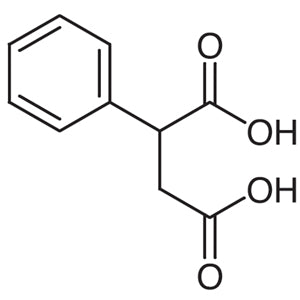
Decenylsuccinic Anhydride (DSA), with the CAS number 25447-83-0, is a chemical compound widely used as a building block in organic synthesis. It serves as a key reagent in laboratory settings, enabling the formation of esters and amides through its reactive anhydride functionality. Its versatility makes it essential for researchers working in various fields, including pharmaceuticals, materials science, and chemical engineering. DSA is particularly valued for its ability to participate in functional group reactions, such as those involving hydroxyl or amino groups. This makes it a valuable tool in the development of new compounds and materials.
The reactivity and structural complexity of DSA contribute to its effectiveness in chemical reactions. Its ability to undergo various reaction conditions, including the use of different catalysts and solvents, enhances its applicability in diverse synthetic pathways. The compound’s stability under controlled conditions further supports its use in laboratory environments, ensuring consistent results. Additionally, its chemical properties allow it to be used in a wide range of experimental setups, making it a reliable choice for both academic and industrial research.
In Indonesian laboratories, DSA is commonly used in chemical research and product development. It plays a crucial role in projects that require reactive reagents with high functional group compatibility. The availability of DSA in the local market facilitates access for researchers, supporting innovation and scientific advancement. Its presence in the supply chain ensures that laboratories can conduct experiments efficiently and effectively, contributing to the growth of scientific research in Indonesia.
Related TCI products
- TCI B1613 7538-42-3 2-Buten-1-ylsuccinic Anhydride
- TCI O0013 28777-98-2 Octadecenylsuccinic Anhydride (mixture of isomers)
- TCI I0237 58239-72-8 Isooctadecenylsuccinic Anhydride (mixture of branched chain isomers)
- TCI H0616 10500-34-2 2-Hexen-1-ylsuccinic Anhydride (cis- and trans- mixture)
- TCI H0073 32072-96-1 Hexadecenylsuccinic Anhydride
- TCI D0976 19780-11-1 2-Dodecen-1-ylsuccinic Anhydride (cis- and trans- mixture)
- Organic synthesis reactions benefit from DSA’s ability to form esters and amides, making it ideal for creating complex molecular structures.
- Pharmaceutical research utilizes DSA to develop new drug compounds by modifying functional groups through its reactive anhydride structure.
- Material science applications rely on DSA for synthesizing polymers and coatings that require specific chemical functionalities.
- Industrial chemical processes use DSA as a building block for producing specialty chemicals with tailored properties.
- Analytical chemistry experiments incorporate DSA to test reaction mechanisms and evaluate the effects of different reaction conditions.
| Brand | TCI |
|---|---|
| CAS number | 25447-83-0 |
| Molecular formula | — |
| Purity | — |
| Category | Chemistry > Building Blocks > Non-Heterocyclic Building Blocks |
| Pack sizes | Available in various quantities as per supplier specifications |
| Physical form | Solid, typically in powder form |
| Storage | Store in a cool, dry place away from moisture and direct sunlight |
Decenylsuccinic Anhydride should be stored in a cool, dry environment to maintain its chemical stability. It is recommended to keep the compound in a sealed container to prevent exposure to moisture and air. Due to its reactivity, it should be handled in a well-ventilated area, ideally with appropriate personal protective equipment. Avoid contact with incompatible substances such as strong bases or reducing agents. Proper labeling of storage containers is essential for safety and identification. Regular monitoring of storage conditions ensures the compound remains effective for laboratory use.
—
Produk Terkait
-
2-Buten-1-ylsuccinicAnhydride TCI B1613
Regular price From Rp 2.439.150,00Regular price -
OctadecenylsuccinicAnhydride(mixtureofisomers) TCI O0013
Regular price From Rp 1.087.800,00Regular price -
IsooctadecenylsuccinicAnhydride(mixtureofbranchedchainisomers) TCI I0237
Regular price From Rp 1.378.650,00Regular price -
2-Hexen-1-ylsuccinicAnhydride(cis-andtrans-mixture) TCI H0616
Regular price Rp 4.213.650,00Regular price -
HexadecenylsuccinicAnhydride TCI H0073
Regular price Rp 2.386.650,00Regular price -
2-Dodecen-1-ylsuccinicAnhydride(cis-andtrans-mixture) TCI D0976
Regular price From Rp 610.050,00Regular price -
PhenylsuccinicAnhydride TCI P2257
Regular price From Rp 3.605.700,00Regular price -
PhenylsuccinicAcid TCI P0155
Regular price From Rp 557.550,00Regular price