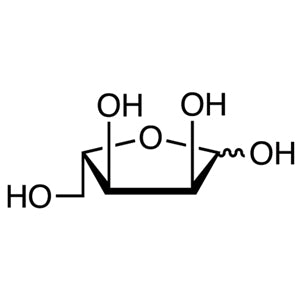
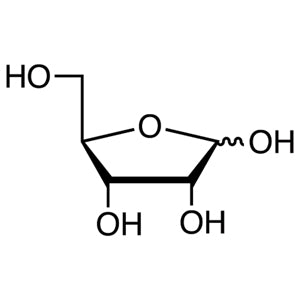
2-Deoxy-D-ribose from TCI is a pentose monosaccharide and the sugar component of the DNA backbone. D-ribose in RNA carries a hydroxyl group on the second carbon atom, and 2-deoxy-D-ribose does not. This small structural difference gives DNA its greater chemical stability. In the laboratory, 2-deoxy-D-ribose is used in glycoscience research, nucleic acid biochemistry, nucleoside synthesis and antioxidant activity testing. It is supplied in a 5g pack for research work, a practical size for exploratory synthesis and routine assay preparation.
Researchers choose this compound because it plays a basic role in DNA structure. That makes it an important starting material for synthesising nucleosides and nucleoside analogues, including derivatives studied as antiviral and anticancer candidates. 2-Deoxy-D-ribose is also known as the substrate in the deoxyribose assay, a common method for measuring how well a compound scavenges hydroxyl radicals. In this assay, radicals degrade the sugar into products that react with thiobarbituric acid and form a measurable colour. This lets researchers compare the scavenging capacity of different test samples using standard spectrophotometric equipment.
In Indonesia, many pharmacy, chemistry and biology faculties test the antioxidant activity of medicinal plant extracts, spices and local natural materials. The deoxyribose assay helps these groups describe hydroxyl radical scavenging alongside other antioxidant methods. University research groups and institutional laboratories also use 2-deoxy-D-ribose in nucleic acid biochemistry teaching, in synthetic organic projects that build nucleoside frameworks, and in glycoscience studies of carbohydrate structure and reactivity.
TCI brochures (PDF)
Related TCI products
- Deoxyribose assay for hydroxyl radical scavenging: radicals degrade the sugar into products that react with thiobarbituric acid and form a measurable colour, so the compound works well as the assay substrate.
- Nucleoside synthesis: as the sugar that makes up the DNA backbone, 2-deoxy-D-ribose is a basic starting material for building deoxynucleosides in synthetic organic and medicinal chemistry laboratories.
- Development of nucleoside analogues: researchers use it as a precursor for modified nucleosides and derivatives studied as antiviral and anticancer candidates in drug discovery programmes.
- Nucleic acid biochemistry research: because this sugar lacks the hydroxyl group found in D-ribose, it helps explain why DNA is more chemically stable than RNA in teaching and research.
- Glycoscience studies: as a well-defined pentose monosaccharide, it serves as a reference compound for investigating carbohydrate structure, reactivity and the behaviour of deoxy sugars.
| Brand | TCI (product code D0059) |
|---|---|
| CAS number | 533-67-5 |
| Molecular formula | — |
| Purity | — |
| Category | Chemistry > Chemical Biology > Glycoscience |
| Pack sizes | 5g |
| Physical form | — |
| Storage | Follow the conditions stated on the TCI label and Safety Data Sheet |
- Compound class: Pentose monosaccharide (deoxy sugar)
Store 2-deoxy-D-ribose in its original, tightly closed container under the conditions stated on the TCI product label and Safety Data Sheet. Sugars like this one can take up moisture from the air, so keep the container sealed when not in use and away from humidity, heat and direct sunlight. Wear a lab coat, gloves and safety glasses when handling it. Weigh the material in a clean, dry area and avoid creating or breathing in dust. Use clean, dry spatulas to prevent contamination, and do not return unused material to the original container. Label any solutions you prepare with the contents and date, and dispose of waste according to your institution's chemical waste procedures and local regulations.
—
Product Categories
Produk Terkait
-
L-Ribose TCI R0068
Regular price Rp 557.550,00Regular priceRp 405.300,00Sale price Rp 557.550,00 -
D-(-)-Ribose TCI R0025
Regular price From Rp 822.150,00Regular priceRp 590.100,00Sale price From Rp 822.150,00 -
1,2,3-Tri-O-acetyl-5-deoxy-beta-D-ribofuranose TCI T2607
Regular price From Rp 530.250,00Regular priceRp 386.400,00Sale price From Rp 530.250,00 -
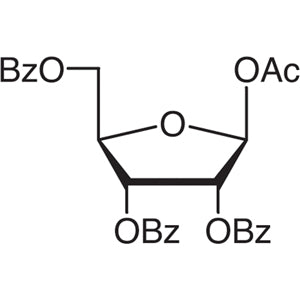
beta-D-Ribofuranose1-Acetate2,3,5-Tribenzoate TCI R0067
Regular price From Rp 1.167.600,00Regular priceRp 831.600,00Sale price From Rp 1.167.600,00 -
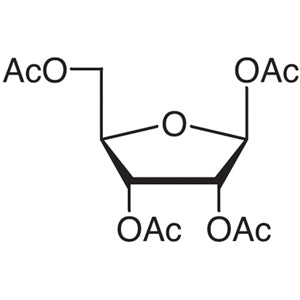
Tetra-O-acetyl-beta-D-ribofuranose TCI R0066
Regular price From Rp 582.750,00Regular priceRp 423.150,00Sale price From Rp 582.750,00 -
Methylbeta-D-Ribofuranoside TCI M1965
Regular price From Rp 2.279.550,00Regular priceRp 1.609.650,00Sale price From Rp 2.279.550,00 -
2-Deoxy-2-fluoro-1,3,5-tri-O-benzoyl-alpha-D-arabinofuranose TCI D4594
Regular price From Rp 1.458.450,00Regular priceRp 1.035.300,00Sale price From Rp 1.458.450,00