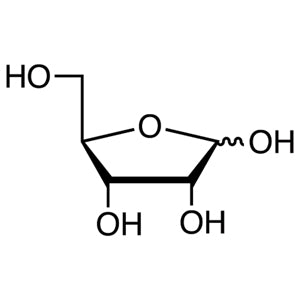
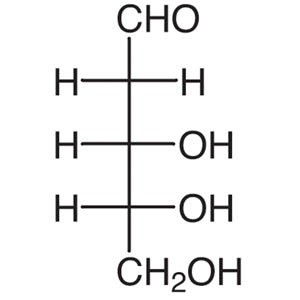
L-Ribose is a pentose sugar that plays a crucial role in various fields of chemistry and biology. As a fundamental component of RNA and DNA structures, it is widely used in biochemical research to study the synthesis and degradation of nucleic acids. Its presence in biological systems makes it an essential compound for understanding molecular processes in living organisms. In the laboratory, L-Ribose serves as a key reagent for the development of complex compounds or as a substrate in enzymatic reactions. Its molecular structure is simple yet highly specific, enabling controlled and precise chemical reactions.
L-Ribose is a preferred choice due to its stable chemical properties and high purity. It is colorless, odorless, and highly soluble in water, making it easy to handle and incorporate into various experimental setups. Its resistance to degradation ensures consistent results in long-term experiments. The material’s purity and cleanliness are essential for achieving accurate and reliable outcomes in scientific research. These characteristics make it a trusted material for both chemical and biochemical applications.
In Indonesian laboratories, L-Ribose is highly relevant for biochemical research, particularly in the study of carbohydrate metabolism. It is commonly used in metabolic disorder and genetic disease research, where understanding the role of sugars in biological systems is critical. Its availability and reliability make it a valuable resource for scientists and researchers in Indonesia working on advanced biochemical and molecular biology projects.
TCI brochures (PDF)
Related TCI products
- Biochemical Research: L-Ribose is used to study nucleic acid synthesis and degradation, supporting fundamental molecular biology investigations.
- Metabolic Studies: It plays a key role in carbohydrate metabolism research, aiding in the analysis of metabolic disorders and genetic diseases.
- Enzymatic Reactions: L-Ribose serves as a substrate for enzymatic processes, enabling the study of enzyme activity and catalytic mechanisms.
- Structural Chemistry: Its simple molecular structure makes it ideal for the synthesis of complex organic compounds in chemical research.
- Molecular Biology Experiments: It is essential in experiments involving DNA and RNA, supporting genetic and biotechnological studies.
| Brand | TCI |
|---|---|
| CAS number | 24259-59-4 |
| Molecular formula | — |
| Purity | — |
| Category | Chemistry > Chemical Biology > Glycoscience |
| Pack sizes | Available in various quantities as per supplier specifications |
| Physical form | White crystalline powder |
| Storage | Store in a cool, dry place away from light and moisture |
L-Ribose should be stored in a cool, dry environment to maintain its stability and prevent degradation. It is recommended to keep it in airtight containers to avoid moisture absorption, which can affect its purity. Since it is highly soluble in water, it should be stored away from sources of humidity. Proper labeling of containers is essential for safe handling and identification. In laboratory settings, it is important to follow standard safety protocols when working with chemical substances. Regular monitoring of storage conditions ensures the material remains suitable for use in experiments. The material is non-toxic and non-irritating, but standard laboratory precautions should still be observed when handling it.
—
Product Categories
Produk Terkait
-
D-(-)-Ribose TCI R0025
Regular price From Rp 822.150,00Regular priceRp 590.100,00Sale price From Rp 822.150,00 -
2-Deoxy-D-ribose TCI D0059
Regular price Rp 1.510.950,00Regular priceRp 1.072.050,00Sale price Rp 1.510.950,00 -
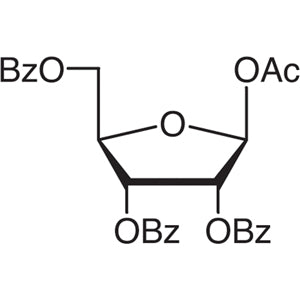
beta-D-Ribofuranose1-Acetate2,3,5-Tribenzoate TCI R0067
Regular price From Rp 1.167.600,00Regular priceRp 831.600,00Sale price From Rp 1.167.600,00 -
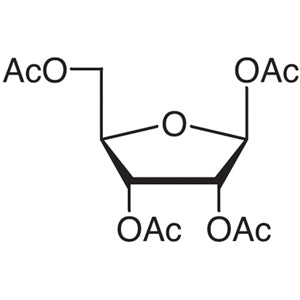
Tetra-O-acetyl-beta-D-ribofuranose TCI R0066
Regular price From Rp 582.750,00Regular priceRp 423.150,00Sale price From Rp 582.750,00 -
Methylbeta-D-Ribofuranoside TCI M1965
Regular price From Rp 2.279.550,00Regular priceRp 1.609.650,00Sale price From Rp 2.279.550,00 -
2,3-O-Isopropylidene-D-ribose TCI M3445
Regular price From Rp 2.464.350,00Regular priceRp 1.738.800,00Sale price From Rp 2.464.350,00 -
Ribitol TCI A0171
Regular price From Rp 689.850,00Regular priceRp 497.700,00Sale price From Rp 689.850,00 -
1,3,5-Tri-O-benzoyl-alpha-D-ribofuranose TCI T2641
Regular price From Rp 1.829.100,00Regular priceRp 1.294.650,00Sale price From Rp 1.829.100,00