2,5-Dichlorobenzenesulfonic Acid Dihydrate from TCI is an aromatic sulfonic acid with two chlorine atoms at the 2 and 5 positions of the benzene ring. It is supplied as a dihydrate, which means each molecule carries two molecules of water of crystallization. As a non-heterocyclic building block, it is used to prepare sulfonyl derivatives, sulfonate salts, and dye intermediates. Aromatic sulfonic acids are strong organic acids, so this compound can also serve as an acid catalyst or as a source of sulfonate anions in a range of experiments.
Researchers choose this compound because the sulfonic acid group gives it strong acidity along with good solubility in water and polar solvents. The chlorine atoms on the ring change its electronic properties and lipophilicity compared with unsubstituted benzenesulfonic acid. This helps when a researcher needs to adjust salt solubility, acid strength, or the physical properties of the final product. Because the dihydrate form is well defined, stoichiometric calculations are straightforward, provided the water content is included in the molecular weight used for weighing.
In Indonesian laboratories, this compound is relevant to research on dye and pigment synthesis, the development of pharmaceutical salts, and studies of acid-catalysed organic reactions. University chemistry departments, research institutes, and industrial R&D teams can use it as a reliable starting material for preparing sulfonyl derivatives and for comparing substituted aromatic sulfonic acids. Its TCI origin means research groups across the country can use a recognised source of fine chemicals for routine synthesis and method development.
Related TCI products
- TCI T2035 51527-73-2 2,4,6-Trichlorobenzenesulfonyl Chloride
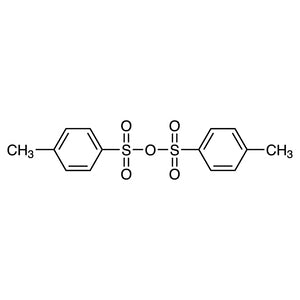
- TCI T1485 4124-41-8 p-Toluenesulfonic Anhydride
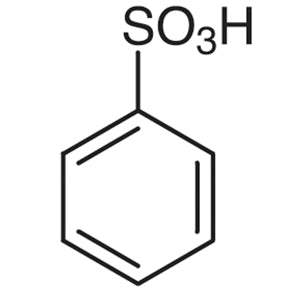
- TCI B3408 98-11-3 Benzenesulfonic Acid Anhydrous
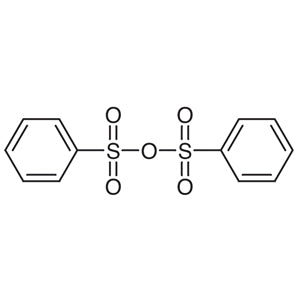
- TCI B1931 512-35-6 Benzenesulfonic Anhydride
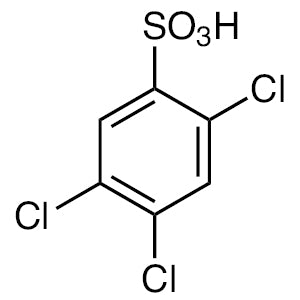
- TCI B0248 6378-25-2 2,4,5-Trichlorobenzenesulfonic Acid
- TCI B0247 15945-07-0 2,4,5-Trichlorobenzenesulfonyl Chloride
- Synthesis of sulfonyl derivatives: the sulfonic acid group can be converted into sulfonyl compounds, which makes this acid a practical non-heterocyclic starting material for building more complex molecules.
- Preparation of sulfonate salts: researchers can neutralise the strong acid with selected bases to obtain sulfonate salts and adjust their solubility through the dichlorinated aromatic ring.
- Dye and pigment intermediates: the dichlorinated benzenesulfonic acid structure suits the preparation of dye intermediates, where sulfonate groups and ring substitution affect solubility and other physical properties.
- Acid catalysis in organic reactions: as a strong aromatic sulfonic acid, the compound can act as an acid catalyst in experiments that need a soluble organic acid.
- Pharmaceutical salt development: the compound provides a sulfonate counter-anion with modified lipophilicity, which helps researchers who are screening salt forms to tune solubility and physical properties.
| Brand | TCI (product code D0334) |
|---|---|
| CAS number | 88-42-6 |
| Molecular formula | — |
| Purity | — |
| Category | Chemistry > Building Blocks > Non-Heterocyclic Building Blocks |
| Pack sizes | available in the TCI pack sizes listed on the product page |
| Physical form | dihydrate containing two molecules of water of crystallization |
| Storage | keep the container tightly closed in a cool, dry place and follow the TCI Safety Data Sheet |
Store 2,5-Dichlorobenzenesulfonic Acid Dihydrate in its original tightly sealed container in a cool, dry, well-ventilated area, away from bases, strong oxidisers, and moisture sources. The compound is a dihydrate, so its water content can change if it is stored poorly, which would affect stoichiometric accuracy. Use acid-resistant glass or compatible plastic containers. Aromatic sulfonic acids are strong acids, so wear chemical-resistant gloves, safety glasses, and a lab coat, and handle the material in a fume hood or ventilated workspace. Avoid creating dust and avoid skin contact. Always read the TCI Safety Data Sheet before use, and dispose of waste according to institutional and local regulations.
—
Produk Terkait
-
2,4,6-TrichlorobenzenesulfonylChloride TCI T2035
Regular price From Rp 2.016.000,00Regular priceRp 1.409.100,00Sale price From Rp 2.016.000,00 -
p-ToluenesulfonicAnhydride TCI T1485
Regular price From Rp 1.749.300,00Regular priceRp 1.223.250,00Sale price From Rp 1.749.300,00 -
BenzenesulfonicAcidAnhydrous TCI B3408
Regular price Rp 1.565.550,00Regular priceRp 1.094.100,00Sale price Rp 1.565.550,00 -
BenzenesulfonicAnhydride TCI B1931
Regular price From Rp 5.062.050,00Regular priceRp 3.539.550,00Sale price From Rp 5.062.050,00 -
2,4,5-TrichlorobenzenesulfonicAcid TCI B0248
Regular price From Rp 2.147.250,00Regular priceRp 1.501.500,00Sale price From Rp 2.147.250,00 -
2,4,5-TrichlorobenzenesulfonylChloride TCI B0247
Regular price From Rp 2.439.150,00Regular priceRp 1.705.200,00Sale price From Rp 2.439.150,00 -
BenzenesulfonicAcidMonohydrate TCI B0030
Regular price From Rp 743.400,00Regular priceRp 519.750,00Sale price From Rp 743.400,00 -
Potassium2,4,5-Trichlorobenzenesulfonate TCI T0628
Regular price Rp 2.359.350,00Regular priceRp 1.649.550,00Sale price Rp 2.359.350,00