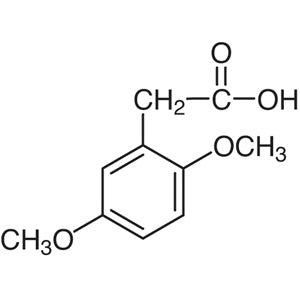
2,5-Dimethoxyphenylacetic Acid is a chemical compound widely used as a building block in organic chemistry laboratories. It serves as a foundational material for the synthesis of complex molecules, particularly in research involving phenolic structures with methoxy substituents. This compound plays a crucial role in the development of new chemical entities, supporting advancements in pharmaceutical and material science fields. Its versatility allows it to participate in various synthetic pathways, making it an essential tool for chemists working on molecular design and functional group modification.
The compound’s chemical stability and moderate reactivity make it a preferred choice for laboratory applications. It maintains its integrity across a range of reaction conditions, including both polar and non-polar solvents, which enhances its applicability in diverse synthetic strategies. Its non-heterocyclic nature simplifies reaction planning and reduces the risk of unwanted side reactions. These properties ensure that it remains a reliable and predictable reagent in both academic and industrial research settings.
In Indonesian laboratories, 2,5-Dimethoxyphenylacetic Acid is commonly used in the synthesis of bioactive compounds and functional materials. Its role in drug development and chemical innovation is significant, supporting research aimed at creating new therapeutic agents and advanced materials. The compound’s availability and compatibility with standard laboratory procedures make it a popular choice among researchers in the region.
Related TCI products
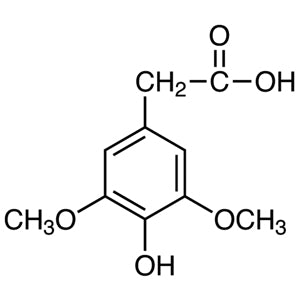
- TCI H1477 4385-56-2 4-Hydroxy-3,5-dimethoxyphenylacetic Acid
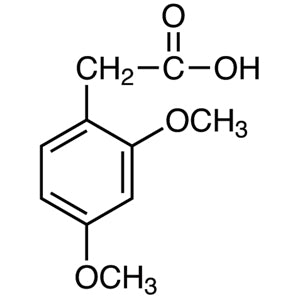
- TCI D4106 6496-89-5 2,4-Dimethoxyphenylacetic Acid
- TCI D2950 4670-10-4 3,5-Dimethoxyphenylacetic Acid
- TCI V0052 776-99-8 3,4-Dimethoxyphenylacetone
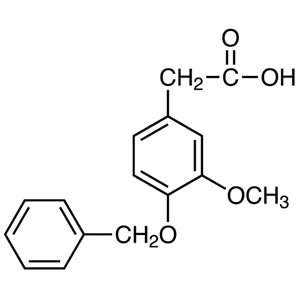
- TCI B4800 29973-91-9 4-Benzyloxy-3-methoxyphenylacetic Acid
- TCI B4742 4547-57-3 4-Butoxyphenylacetic Acid
- Organic synthesis of bioactive compounds due to its phenolic structure and methoxy substituents.
- Development of pharmaceuticals through functional group modification and molecular scaffolding.
- Creation of advanced materials by serving as a core structure for polymer and composite synthesis.
- Research in medicinal chemistry for the design of compounds with specific biological activities.
- Support in chemical education for teaching synthetic strategies and molecular manipulation techniques.
| Brand | TCI |
|---|---|
| CAS number | 1758-25-4 |
| Molecular formula | — |
| Purity | — |
| Category | Chemistry > Building Blocks > Non-Heterocyclic Building Blocks |
| Pack sizes | Available in standard laboratory quantities as per supplier specifications |
| Physical form | Solid, crystalline or amorphous depending on purity and storage conditions |
| Storage | Store in a cool, dry place away from direct sunlight and moisture |
This compound should be stored in a cool, dry environment to maintain its chemical stability. It is recommended to keep it in airtight containers to prevent moisture absorption and contamination. Due to its moderate reactivity, it should be handled with standard laboratory precautions, including the use of gloves and safety goggles. Avoid exposure to heat or direct light to prevent degradation. Proper labeling and storage in a designated chemical cabinet are essential for safe laboratory practices. Always ensure that the compound is stored separately from incompatible substances to maintain a safe working environment.
—
Produk Terkait
-
4-Hydroxy-3,5-dimethoxyphenylaceticAcid TCI H1477
Regular price From Rp 2.121.000,00Regular price -
2,4-DimethoxyphenylaceticAcid TCI D4106
Regular price Rp 1.936.200,00Regular price -
3,5-DimethoxyphenylaceticAcid TCI D2950
Regular price From Rp 1.035.300,00Regular price -
3,4-Dimethoxyphenylacetone TCI V0052
Regular price From Rp 1.193.850,00Regular price -
4-Benzyloxy-3-methoxyphenylaceticAcid TCI B4800
Regular price Rp 2.518.950,00Regular price -
4-ButoxyphenylaceticAcid TCI B4742
Regular price From Rp 1.060.500,00Regular price -
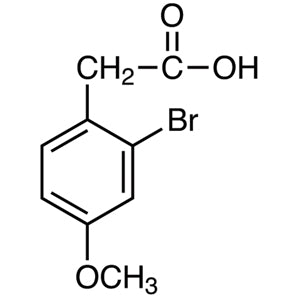
2-Bromo-4-methoxyphenylaceticAcid TCI B4737
Regular price From Rp 848.400,00Regular price -
3-Bromo-4-methoxyphenylaceticAcid TCI B4677
Regular price From Rp 689.850,00Regular price