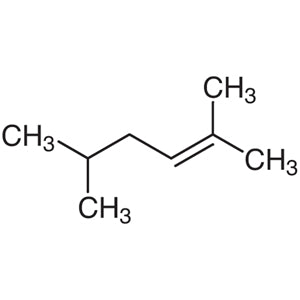
TCI D2076 2,5-Dimethyl-2-hexene, CAS number 3404-78-2, is an unsaturated hydrocarbon: a branched alkene whose double bond carries several methyl substituents in the immediate surroundings. As a non-heterocyclic building block, this compound serves as a model substrate and starting material across a wide range of organic chemistry experiments, particularly those that examine the behaviour of a sterically hindered, electron-rich double bond. In laboratory practice, alkenes of this type are frequently used to probe the activity and selectivity of new catalysts, to study the mechanisms of addition reactions, and to act as reference materials in the chromatographic analysis of hydrocarbons.
The property that leads chemists to select this compound is the high degree of substitution around its double bond. The resulting electron density on the π bond is comparatively large, making the alkene reactive towards electrophiles. Under these conditions it reacts rapidly in epoxidation, acid-catalysed hydration, hydroboration, halogenation, and selective oxidation, while at the same time presenting a steric challenge that is useful for testing how robust a given catalyst really is. Its physical form is that of a liquid with high volatility, so it can be measured conveniently with a syringe and separated from reaction mixtures by evaporation or distillation.
In Indonesian laboratories, a branched alkene of this kind fits naturally into university teaching and research work on reaction mechanisms, into catalyst development programmes at research institutes, and into method development and instrument calibration for hydrocarbon analysis. Because it is easy to dispense by syringe and easy to remove from a reaction mixture once the transformation is complete, it suits small-scale synthetic trials and repeated screening experiments where reaction workup needs to remain simple and quick.
- Catalyst activity and selectivity screening — the crowded, multiply substituted double bond provides a demanding test substrate that reveals whether a new catalyst can operate on a hindered alkene.
- Addition reaction mechanism studies — the electron-rich π bond reacts readily with electrophiles, making the compound a clear model system for teaching and investigating addition pathways.
- Epoxidation and selective oxidation trials — the high electron density of the double bond allows rapid conversion, so oxidant performance and chemoselectivity can be compared under mild conditions.
- Hydroboration and acid-catalysed hydration experiments — the substitution pattern around the double bond makes regiochemical outcomes pronounced and therefore straightforward to interpret analytically.
- Chromatographic reference material for hydrocarbon analysis — as a defined branched alkene it serves as a comparison standard when identifying or resolving hydrocarbon components in a sample.
| Brand | TCI |
|---|---|
| CAS number | 3404-78-2 |
| Molecular formula | — |
| Purity | — |
| Category | Chemistry > Building Blocks > Non-Heterocyclic Building Blocks |
| Pack sizes | available in the pack sizes offered by TCI for this catalogue item (D2076); please confirm the required size when ordering |
| Physical form | liquid, with high volatility |
| Storage | keep tightly closed in a cool, well-ventilated place away from ignition sources |
Store the container tightly closed in a cool, dry, well-ventilated area, away from heat, sparks, open flames, and oxidising agents. Keep the material in its original tightly sealed glass bottle or another container compatible with volatile hydrocarbons, and close it immediately after each withdrawal to limit evaporative loss. Handle in a fume hood, dispense by syringe rather than by open pouring, and wear safety glasses, gloves, and a laboratory coat. Ground equipment where appropriate, avoid the accumulation of vapours, and consult the manufacturer's safety data sheet before use and for disposal.
—
Produk Terkait
-
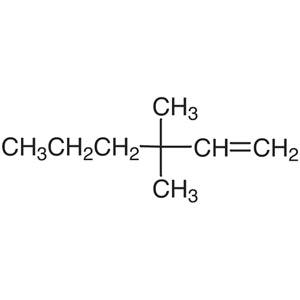
3,3-Dimethyl-1-hexene TCI D1243
Regular price Rp 4.213.650,00Regular price -
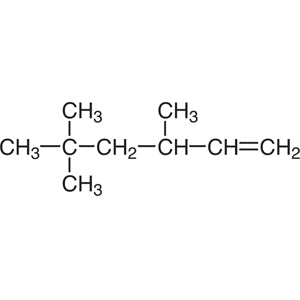
3,5,5-Trimethyl-1-hexene TCI T0779
Regular price Rp 4.982.250,00Regular price -
2,4,4-Trimethyl-1-hexene TCI T0778
Regular price Rp 3.896.550,00Regular price -
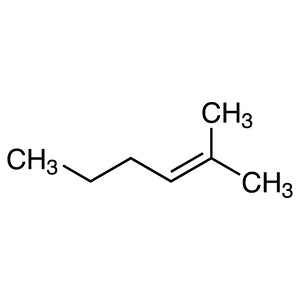
2-Methyl-2-hexene TCI M0526
Regular price Rp 4.293.450,00Regular price -
2-Methyl-1-hexene TCI M0525
Regular price From Rp 1.510.950,00Regular price -
5-Methyl-1-hexene TCI M0303
Regular price Rp 4.133.850,00Regular price -
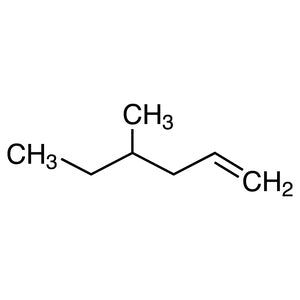
4-Methyl-1-hexene TCI M0302
Regular price Rp 5.778.150,00Regular price -
3-Methyl-1-hexene TCI M0301
Regular price Rp 8.506.050,00Regular price