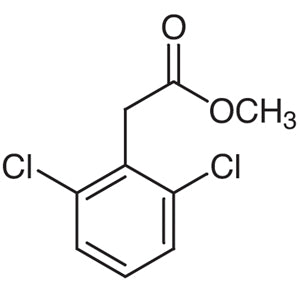
Methyl 2,6-Dichlorophenylacetate is a chemical compound widely used in organic synthesis reactions. It serves as a key building block in the creation of aromatic compounds and phenolic derivatives. In laboratory settings, this compound plays a crucial role in the synthesis of complex molecules due to its structural versatility. Its stability and reactivity make it a valuable tool for chemists working on various synthetic pathways. The compound's unique molecular structure, featuring two chlorine atoms at positions 2 and 6 on the phenyl ring, contributes to its effectiveness in chemical reactions. This structure allows it to participate in multiple reaction types, including esterification and nucleophilic substitution, making it a preferred choice for synthetic chemists.
The compound's chemical properties, such as its reactivity and stability, make it a preferred choice in laboratory environments. Its ability to undergo various chemical transformations enables researchers to explore a wide range of synthetic possibilities. The presence of chlorine atoms enhances its reactivity, allowing it to be a versatile reagent in different reaction conditions. Additionally, its molecular structure ensures compatibility with a variety of synthetic strategies, making it a reliable component in organic chemistry experiments. These characteristics make it an essential material for both academic and industrial research.
In Indonesian laboratories, Methyl 2,6-Dichlorophenylacetate is commonly used in organic chemistry research, particularly in pharmaceutical and industrial chemical development. It is frequently employed in experiments that require precise chemical reactions and controlled reactivity. Its application spans across various research institutions and universities, contributing to advancements in chemical synthesis and material science.
Related TCI products
- Organic synthesis is a key application where this compound is used to create complex aromatic and phenolic derivatives due to its reactivity and structural versatility.
- Pharmaceutical research benefits from its use in the development of new drugs, as it can participate in esterification and substitution reactions.
- Industrial chemical production utilizes this compound for the synthesis of various chemical intermediates, leveraging its stability and reactivity.
- Analytical chemistry experiments often incorporate this compound as a reference standard or reagent for testing reaction mechanisms and pathways.
- Material science research employs this compound to develop new materials with specific functional groups, enhancing their chemical properties and applications.
| Brand | TCI |
|---|---|
| CAS number | 54551-83-6 |
| Molecular formula | — |
| Purity | — |
| Category | Chemistry > Building Blocks > Non-Heterocyclic Building Blocks |
| Pack sizes | Available in various quantities as per supplier specifications |
| Physical form | Solid or liquid, depending on the specific product variant |
| Storage | Store in a cool, dry place away from direct sunlight and moisture |
This compound should be stored in a cool, dry environment, away from direct sunlight and moisture to maintain its chemical stability. It is recommended to use airtight containers made of glass or high-density polyethylene to prevent contamination and degradation. Due to its reactivity, it should be handled with appropriate personal protective equipment, such as gloves and safety goggles, to ensure laboratory safety. Proper ventilation is essential when working with this compound to minimize exposure. It is important to keep it away from incompatible substances, such as strong bases or oxidizing agents, to prevent unwanted chemical reactions. Regular monitoring of storage conditions ensures the compound remains suitable for use in laboratory applications.
—
Produk Terkait
-
Methyl2,4-Dichlorophenylacetate TCI M2528
Regular price From Rp 717.150,00Regular price -
Phenacyl4-(Bromomethyl)phenylacetate TCI B1315
Regular price From Rp 1.140.300,00Regular price -
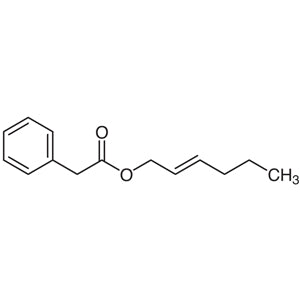
trans-2-Hexen-1-ylPhenylacetate TCI P1045
Regular price Rp 1.298.850,00Regular price -
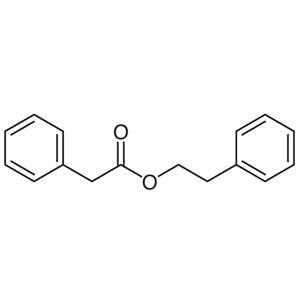
2-PhenylethylPhenylacetate TCI P0126
Regular price Rp 477.750,00Regular price -
MethylPhenylacetate TCI P0125
Regular price From Rp 505.050,00Regular price -
IsobutylPhenylacetate TCI P0124
Regular price Rp 477.750,00Regular price -
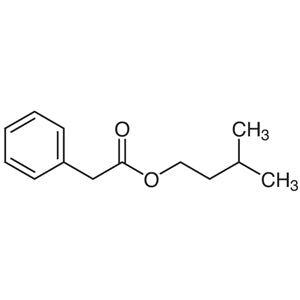
IsoamylPhenylacetate TCI P0123
Regular price Rp 2.809.800,00Regular price -
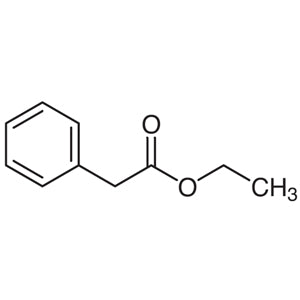
EthylPhenylacetate TCI P0122
Regular price From Rp 505.050,00Regular price