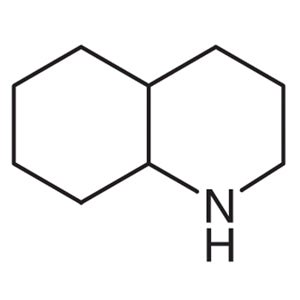
Trans-Decahydroquinoline is a chemical compound classified under the heterocyclic category, widely utilized in laboratory settings for its versatility in synthetic applications. As a building block, it plays a crucial role in the synthesis of complex molecules, particularly in organic and pharmaceutical research. Its molecular structure provides a stable foundation for further chemical modifications, making it a valuable resource for researchers aiming to develop new compounds with specific biological activities. This compound is essential in the creation of pharmaceuticals, agrochemicals, and other specialized materials due to its reactivity and compatibility with various reagents.
The compound's chemical properties, including its stability and moderate reactivity, make it a preferred choice for use in multiple synthetic pathways. It is particularly suited for substitution reactions and cyclic reactions, where its ability to form stable intermediates is advantageous. Its consistent chemical behavior ensures predictable outcomes in laboratory experiments, which is vital for reproducibility and accuracy in research. These characteristics make it a reliable component in both academic and industrial chemical synthesis processes.
In Indonesian laboratories, trans-Decahydroquinoline is commonly used by researchers in educational institutions and research organizations. It is particularly relevant in fields such as pharmacology, organic chemistry, and material science. Its availability in the local market supports ongoing research efforts, enabling scientists to access the necessary materials for their experiments and innovations.
- Pharmaceutical research utilizes trans-Decahydroquinoline for the synthesis of bioactive compounds due to its structural versatility and reactivity.
- Organic chemistry experiments benefit from its role as a building block in the creation of complex heterocyclic structures.
- Drug development projects incorporate this compound to design molecules with specific pharmacological properties and biological activity.
- Material science studies use it to develop new compounds with unique chemical and physical characteristics.
- Academic research in Indonesian universities relies on this compound for teaching and experimental purposes in synthetic chemistry courses.
| Brand | TCI |
|---|---|
| CAS number | 767-92-0 |
| Molecular formula | — |
| Purity | — |
| Category | Chemistry > Building Blocks > Heterocyclic Building Blocks |
| Pack sizes | Available in various quantities as per standard laboratory supply formats |
| Physical form | Solid, typically in crystalline or powder form |
| Storage | Store in a cool, dry place away from light and moisture |
Trans-Decahydroquinoline should be stored in a cool, dry environment, away from direct sunlight and sources of heat. It is recommended to keep the compound in a sealed container to prevent moisture absorption and maintain its chemical integrity. Due to its potential reactivity, it should be handled in a well-ventilated area, with appropriate personal protective equipment such as gloves and safety goggles. Avoid exposure to incompatible substances and ensure proper disposal according to local regulations. Regular inspection of storage conditions is advised to ensure the compound remains in optimal condition for use in laboratory applications.
—
Produk Terkait
-
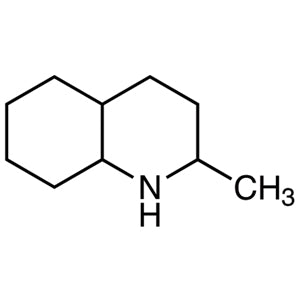
2-Methyldecahydroquinoline(mixtureofisomers) TCI M3189
Regular price From Rp 2.359.350,00Regular price -
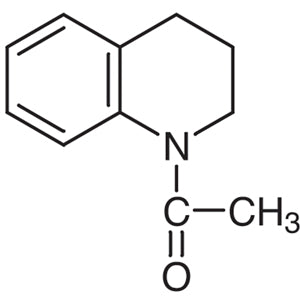
1-Acetyl-1,2,3,4-tetrahydroquinoline TCI A1641
Regular price From Rp 1.590.750,00Regular price -
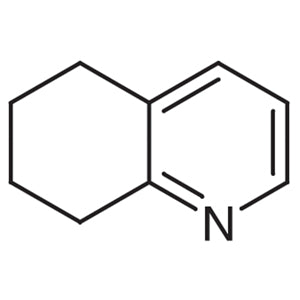
5,6,7,8-Tetrahydroquinoline TCI T1150
Regular price From Rp 1.353.450,00Regular price -
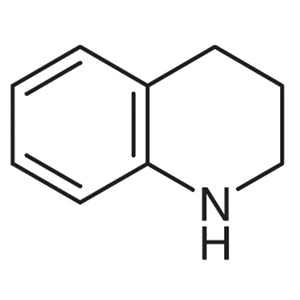
1,2,3,4-Tetrahydroquinoline TCI T0113
Regular price From Rp 664.650,00Regular price -
7-Nitro-1,2,3,4-tetrahydroquinoline TCI N0955
Regular price From Rp 1.298.850,00Regular price -
6-Methyl-1,2,3,4-tetrahydroquinoline TCI M1302
Regular price Rp 2.174.550,00Regular price -
2,2,4-Trimethyl-1,2-dihydroquinoline TCI T4332
Regular price From Rp 2.862.300,00Regular price -
1,2,3,4-Tetrahydroquinoxaline TCI T2999
Regular price From Rp 743.400,00Regular price