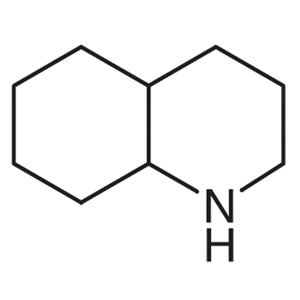
1,2,3,4-Tetrahydroquinoline from TCI is a bicyclic secondary amine made up of a benzene ring fused to a saturated six-membered nitrogen-containing ring. It is the partially hydrogenated form of quinoline, and its ring system is one of the heterocyclic frameworks most often found in natural products, pharmaceuticals and pesticides. In the laboratory, it is used as a synthetic building block, as a model substrate in catalysis research, and as a reference compound in studies of hydrogen storage using liquid organic carriers.
The main appeal of 1,2,3,4-Tetrahydroquinoline is its reactive secondary nitrogen atom. This nitrogen can be acylated, alkylated or used in C–N coupling reactions, so chemists can add new functional groups at a well-defined position. Because the nitrogen activates the aromatic ring, the ring also undergoes electrophilic substitution readily. Quinoline and tetrahydroquinoline can be converted into each other by hydrogenation and dehydrogenation. This makes the compound an important model in catalyst research and in the liquid organic hydrogen carrier concept. It can also act as a hydrogen donor in transfer hydrogenation reactions.
In Indonesian laboratories, this compound is useful for organic and medicinal chemistry groups at universities and research institutes that build heterocyclic scaffolds for new bioactive molecules. Catalysis groups can use it as a standard substrate to compare hydrogenation and dehydrogenation catalysts. Energy research teams studying hydrogen storage can use it as a reference compound. It also suits graduate and undergraduate projects in synthetic methodology, since it shows several classic amine and aromatic reactions in a single, well-characterised molecule.
Related TCI products
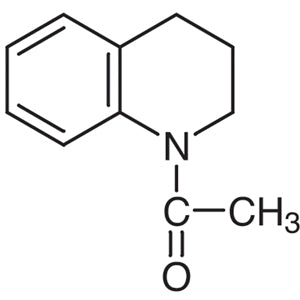
- TCI A1641 4169-19-1 1-Acetyl-1,2,3,4-tetrahydroquinoline
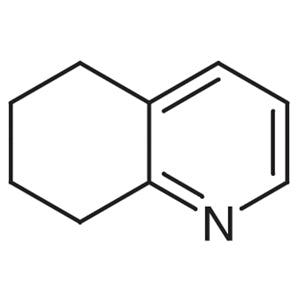
- TCI T1150 10500-57-9 5,6,7,8-Tetrahydroquinoline
- TCI N0955 30450-62-5 7-Nitro-1,2,3,4-tetrahydroquinoline
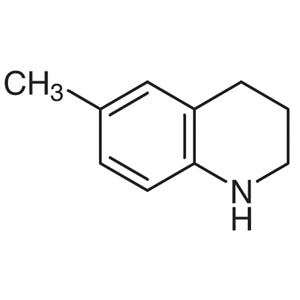
- TCI M1302 91-61-2 6-Methyl-1,2,3,4-tetrahydroquinoline
- TCI T2999 3476-89-9 1,2,3,4-Tetrahydroquinoxaline
- TCI T1403 34413-35-9 5,6,7,8-Tetrahydroquinoxaline
- Heterocyclic synthesis: its fused ring framework and reactive secondary nitrogen make it a convenient starting point for building more complex nitrogen-containing scaffolds for research compounds.
- Medicinal chemistry: the tetrahydroquinoline core is common in drug-like molecules, so this compound is a practical building block for making and studying new candidate structures.
- Catalysis research: the reversible conversion between quinoline and tetrahydroquinoline makes it a widely used model substrate for testing and comparing hydrogenation and dehydrogenation catalysts.
- Hydrogen storage studies: it serves as a reference compound in liquid organic hydrogen carrier research, where hydrogen is stored and released through reversible hydrogenation of organic liquids.
- Transfer hydrogenation: it can act as a hydrogen donor, so it is useful in studies that look for alternatives to gaseous hydrogen for reducing other substrates.
| Brand | TCI (product code T0113) |
|---|---|
| CAS number | 635-46-1 |
| Molecular formula | — |
| Purity | — |
| Category | Chemistry > Building Blocks > Heterocyclic Building Blocks |
| Pack sizes | available in the standard TCI pack sizes listed on the product page |
| Physical form | refer to the TCI product documentation and Certificate of Analysis |
| Storage | keep tightly closed in a cool, dark, well-ventilated place, following the TCI Safety Data Sheet |
Store 1,2,3,4-Tetrahydroquinoline in its original, tightly sealed container in a cool, dry, dark and well-ventilated area. Keep it away from heat, ignition sources and strong oxidising agents. Like many amines, it may degrade or discolour if exposed to air and light for a long time, so reseal the container promptly after each use. Handle it in a fume hood and wear suitable gloves, safety glasses and a laboratory coat. Avoid inhaling vapours and avoid contact with skin and eyes. Before use, always read the TCI Safety Data Sheet for full hazard, first-aid and disposal information. Dispose of waste according to your institution's chemical waste procedures.
—
Produk Terkait
-
1-Acetyl-1,2,3,4-tetrahydroquinoline TCI A1641
Regular price From Rp 1.643.250,00Regular priceRp 1.164.450,00Sale price From Rp 1.643.250,00 -
5,6,7,8-Tetrahydroquinoline TCI T1150
Regular price From Rp 1.405.950,00Regular priceRp 998.550,00Sale price From Rp 1.405.950,00 -
7-Nitro-1,2,3,4-tetrahydroquinoline TCI N0955
Regular price From Rp 1.351.350,00Regular priceRp 960.750,00Sale price From Rp 1.351.350,00 -
6-Methyl-1,2,3,4-tetrahydroquinoline TCI M1302
Regular price Rp 2.227.050,00Regular priceRp 1.572.900,00Sale price Rp 2.227.050,00 -
1,2,3,4-Tetrahydroquinoxaline TCI T2999
Regular price From Rp 795.900,00Regular priceRp 572.250,00Sale price From Rp 795.900,00 -
5,6,7,8-Tetrahydroquinoxaline TCI T1403
Regular price From Rp 900.900,00Regular priceRp 645.750,00Sale price From Rp 900.900,00 -
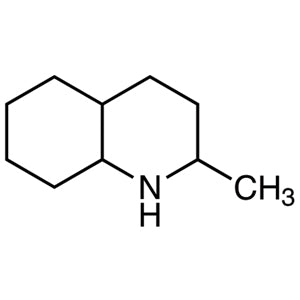
2-Methyldecahydroquinoline(mixtureofisomers) TCI M3189
Regular price From Rp 2.411.850,00Regular priceRp 1.702.050,00Sale price From Rp 2.411.850,00 -
trans-Decahydroquinoline TCI D2936
Regular price Rp 1.510.950,00Regular priceRp 1.072.050,00Sale price Rp 1.510.950,00