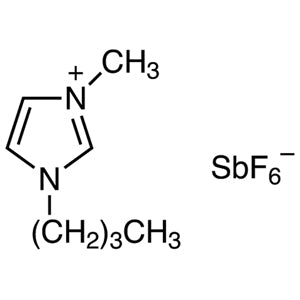
1,3-Dimethylimidazolium Chloride is a chemical compound widely used as a catalyst in various chemical reactions, particularly in the fields of catalysis and inorganic chemistry. This material plays a crucial role in laboratory settings where efficient and stable catalytic systems are required. Its unique ionic structure consists of a cationic 1,3-dimethylimidazolium ion paired with a chloride anion, which contributes to its effectiveness in promoting chemical reactions. It is especially valuable in reactions involving electrophilic activation or electron transfer processes.
The compound’s properties make it a preferred choice for laboratory applications. It exhibits good solubility in organic solvents such as ethyl acetate and methanol, which facilitates its use in a wide range of chemical reactions. Additionally, its thermal and chemical stability ensures that it remains effective under varying reaction conditions. These characteristics make it a reliable option for researchers seeking a consistent and durable catalyst.
In Indonesian laboratories, 1,3-Dimethylimidazolium Chloride is commonly used in chemical research, especially in catalysis and organic synthesis. It is also employed in studies related to chemical reactions that require stable and efficient catalytic agents. Its versatility and reliability make it a popular choice among scientists and researchers in the region.
- Catalytic Reactions: This compound is ideal for catalytic reactions due to its ability to activate electrophilic species and facilitate electron transfer processes.
- Organic Synthesis: Its solubility in organic solvents makes it suitable for use in organic synthesis where efficient catalysts are required.
- Inorganic Chemistry Experiments: The compound’s ionic structure and stability make it a valuable tool in inorganic chemistry experiments.
- Electrochemical Studies: Its role in electron transfer reactions makes it useful for electrochemical research applications.
- Environmental Chemistry Research: It is used in studies involving chemical transformations that require stable and effective catalytic systems.
| Brand | TCI |
|---|---|
| CAS number | 79917-88-7 |
| Molecular formula | — |
| Purity | — |
| Category | Chemistry > Catalysis and Inorganic Chemistry > Carbon-Donor Ligands [Catalysis] |
| Pack sizes | Available in various quantities as per supplier specifications |
| Physical form | Solid powder |
| Storage | Store in a cool, dry place away from moisture and direct sunlight |
This material should be stored in a cool, dry place, away from moisture and direct sunlight to maintain its stability and effectiveness. It is recommended to use airtight containers to prevent exposure to humidity and contaminants. Due to its ionic nature, it is important to handle it with care to avoid any potential reactions with incompatible substances. Always ensure proper ventilation in the laboratory when working with this compound. Standard laboratory safety practices, such as wearing appropriate personal protective equipment, should be followed to ensure safe handling and storage.
—
Produk Terkait
-
1-Butyl-3-methylimidazoliumTrifluoroacetate TCI B5526
Regular price From Rp 1.829.100,00Regular price -
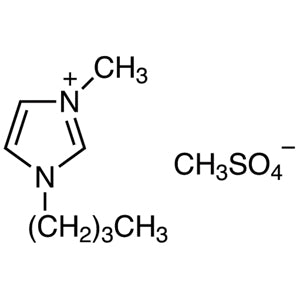
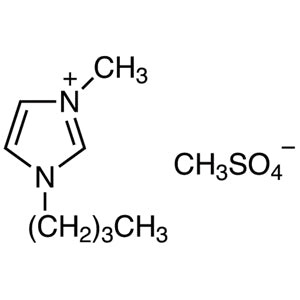
1-Butyl-3-methylimidazoliumMethylSulfate TCI B5527
Regular price From Rp 1.485.750,00Regular price -
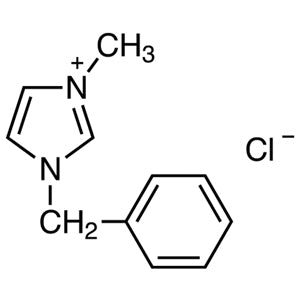
1-Benzyl-3-methylimidazoliumChloride TCI B5543
Regular price Rp 823.200,00Regular price -
1-Butyl-3-methylimidazoliumHydrogenSulfate TCI B5569
Regular price From Rp 823.200,00Regular price -
1-Butyl-3-methylimidazoliumAcetate TCI B5582
Regular price From Rp 875.700,00Regular price -
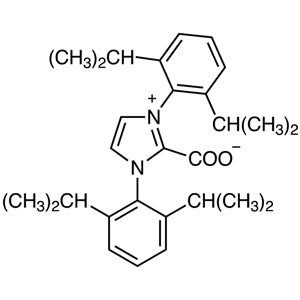
1,3-Bis(2,6-diisopropylphenyl)imidazolium-2-carboxylate TCI B5603
Regular price Rp 2.625.000,00Regular price -
1-Butyl-3-methylimidazoliumHexafluoroantimonate TCI B5724
Regular price From Rp 1.749.300,00Regular price -
1-Benzyl-3-methylimidazoliumTetrafluoroborate TCI B5725
Regular price Rp 717.150,00Regular price