![[N-[alpha-[2-(Dibutylglycinamido)phenyl]benzylidene]glycinato]nickel (CAS 847654-16-4) - TCI D3543 - AMI Scientific](http://amiscientific.com/cdn/shop/files/TCI2510D3543.jpg?v=1768817900&width=1946)
![[N-[alpha-[2-(Dibutylglycinamido)phenyl]benzylidene]glycinato]nickel (CAS 847654-16-4) - TCI D3543 - AMI Scientific](http://amiscientific.com/cdn/shop/files/TCI2510D3543.jpg?v=1768817900&width=1445)
[N-[alpha-[2-(Dibutylglycinamido)phenyl]benzylidene]glycinato]nickel is a well-defined nickel(II) complex that binds a multidentate ligand built around a benzylidene framework, a glycine amide unit, and a glycinato group. It belongs to the transition elements category for catalysis and inorganic chemistry, and in the laboratory it is used as a ready-to-use nickel complex rather than as a simple nickel salt that still has to be complexed in situ. Researchers therefore obtain a metal centre whose coordination environment is already organised and reproducible, so that the outcome of catalysis experiments or coordination studies is not disturbed by differences in how each laboratory prepares its complex.
The characteristic that makes a complex of this kind the preferred choice is the ligand framework, which clamps the nickel centre through several nitrogen and oxygen donor atoms at once. This multidentate chelation confers stability on the complex, restricts the geometric freedom around the metal, and produces a distinctive steric environment thanks to the phenyl group together with the two butyl chains on the amine nitrogen. Those butyl chains also assist the solubility of the complex in organic solvents, a practical advantage compared with simpler nickel starting materials that must first be brought into solution and coordinated before any useful chemistry can begin.
In Indonesian laboratories, a reagent of this type is typically drawn on in university and institutional research groups working on synthetic methodology, coordination chemistry, and homogeneous catalysis, where a defined nickel complex removes one variable from an already demanding experiment. Because it arrives as a discrete, characterised compound from TCI, it suits work carried out on a small scale, where consistency between batches and between researchers matters more than bulk quantity, and where preparation time in the laboratory is limited.
Related TCI products
- Homogeneous catalysis studies — the compound supplies a pre-formed nickel(II) centre in a fixed coordination environment, so catalytic performance can be attributed to the reaction conditions rather than to variable in-situ complex formation.
- Coordination chemistry investigations — the multidentate ligand binding nickel through several nitrogen and oxygen donors makes this a useful subject for examining chelation, donor-atom effects, and the restricted geometry imposed on a metal centre.
- Synthetic methodology development — as a discrete, characterised nickel complex it serves as a defined starting point when researchers screen new transformations and need every run to begin from an identical metal species.
- Reference and comparison experiments — because the complex is supplied ready to use, it functions as a consistent benchmark against which nickel systems prepared in-house from simple salts can be measured.
- Solution-phase reaction work in organic media — the two butyl chains on the amine nitrogen aid dissolution in organic solvents, allowing the nickel centre to be introduced directly into homogeneous reaction mixtures.
| Brand | TCI |
|---|---|
| CAS number | 847654-16-4 |
| Molecular formula | — |
| Purity | — |
| Category | Chemistry > Catalysis and Inorganic Chemistry > Transition Elements [Catalysis and Inorganic Chemistry] |
| Pack sizes | research-scale laboratory pack sizes as offered by TCI for this catalogue item |
| Physical form | — |
| Storage | keep in the tightly closed original container as indicated on the manufacturer's label |
- Catalogue number: D3543
Store the compound in its original tightly closed container, kept dry and protected from moisture and direct light, and follow the storage temperature stated on the manufacturer's label and safety data sheet. Amber glass or the supplied container is appropriate; transfer only what is needed and reclose promptly to limit exposure to air and humidity. Handle the material in a fume hood using nitrile gloves, safety glasses, and a laboratory coat, avoiding inhalation of dust and any skin contact. Weigh and manipulate the solid with clean, dry spatulas to prevent contamination between batches, keep it separate from incompatible chemicals, and collect residues and used solvents as chemical waste in accordance with local laboratory disposal procedures.
—
Produk Terkait
-
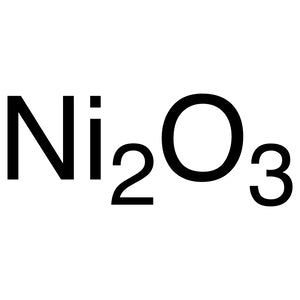
Nickel(III)OxideBlack TCI N1291
Regular price From Rp 2.121.000,00Regular price -
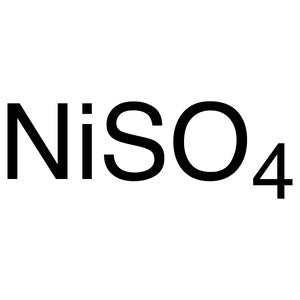
Nickel(II)Sulfate TCI N1264
Regular price From Rp 875.700,00Regular price -
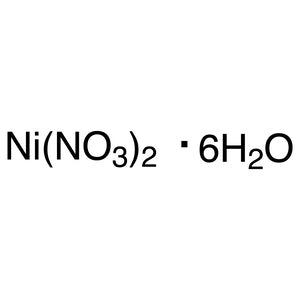
Nickel(II)NitrateHexahydrate TCI N1252
Regular price From Rp 610.050,00Regular price -
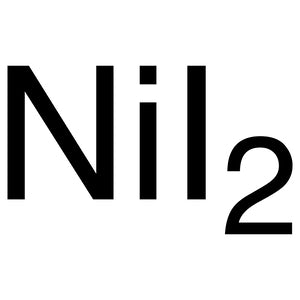
Nickel(II)Iodide TCI N1238
Regular price From Rp 1.644.300,00Regular price -
Nickel(II)Fluoride TCI N1215
Regular price From Rp 1.326.150,00Regular price -
Nickel(II)Bis(2,2,6,6-tetramethyl-3,5-heptanedionate) TCI N1207
Regular price From Rp 1.485.750,00Regular price -
Nickel(II)SulfateHexahydrate TCI N1203
Regular price From Rp 477.750,00Regular price -
Nickel(II)Hydroxide TCI N1202
Regular price From Rp 664.650,00Regular price